Tag Full Disk Encryption

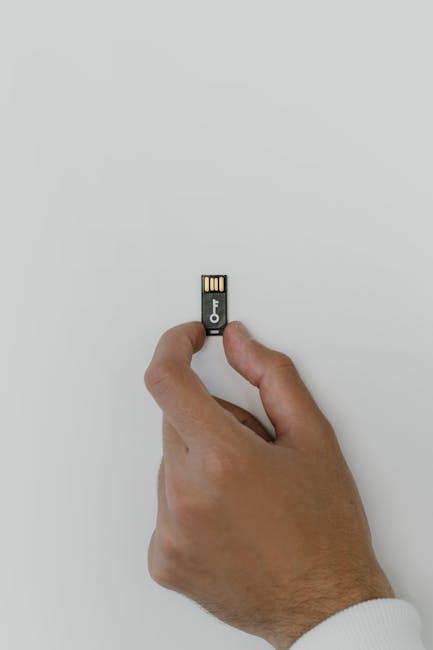
Full Disk Encryption: Securing Your Digital Life with Total Data Protection
Full Disk Encryption (FDE), also known as whole-disk encryption or entire-disk encryption, is a paramount cybersecurity practice that renders all data stored on a storage device—hard drive, solid-state drive (SSD), or even USB flash drive—unreadable to unauthorized individuals. This is achieved through the application of strong cryptographic algorithms that scramble the data, requiring a unique decryption key for access. In an era where data breaches are increasingly common and sophisticated, FDE serves as a fundamental layer of defense against physical theft, accidental loss, and targeted attacks. Without FDE, a stolen laptop or a compromised server can expose sensitive personal information, financial records, intellectual property, and classified data to anyone who gains physical possession of the device. Understanding the mechanics, benefits, implementation, and limitations of FDE is crucial for individuals and organizations alike to safeguard their digital assets.
The core principle of FDE lies in encrypting the entire storage medium at the block level. Unlike file-level encryption, which encrypts individual files or folders, FDE encrypts every sector of the disk, including the operating system, bootloader, applications, and all user data. This comprehensive approach ensures that even if a thief gains access to the physical drive, they will encounter nothing but gibberish without the correct decryption key. The encryption process is typically initiated during the operating system installation or as a post-installation configuration. When the system boots up, the operating system loads a small, unencrypted bootloader that prompts the user for a password, passphrase, or other authentication credentials. Upon successful authentication, the decryption key is derived or provided, which then allows the operating system to decrypt the rest of the disk on the fly as data is read and write operations are performed. This on-the-fly decryption/encryption is transparent to the end-user, meaning that once authenticated, the system functions normally without any perceived performance degradation for everyday tasks.
The cryptographic algorithms underpinning FDE are robust and extensively vetted. Advanced Encryption Standard (AES) is the de facto standard, often implemented with key lengths of 128-bit, 192-bit, or 256-bit. AES-256, for instance, employs a 256-bit key, making the number of possible keys astronomically large, rendering brute-force attacks practically impossible within a reasonable timeframe. The encryption process involves a symmetric key, meaning the same key is used for both encryption and decryption. However, securely managing this symmetric key is paramount. This is often achieved through a public-key cryptography scheme where a public key is used to encrypt the symmetric key, and a private key (held by the user) is used to decrypt it. Alternatively, a pre-boot authentication mechanism directly prompts for the symmetric key or a passphrase that can be used to derive it. The choice of FDE implementation and key management strategy significantly impacts the overall security posture.
The benefits of implementing Full Disk Encryption are substantial and multifaceted. Firstly, it provides robust protection against data exposure due to physical loss or theft. For individuals, this means safeguarding sensitive personal information like banking details, social security numbers, and personal correspondence. For businesses, it protects customer data, proprietary information, financial reports, and employee records, thus mitigating the risk of significant financial penalties and reputational damage stemming from data breaches. Secondly, FDE enhances regulatory compliance. Many data privacy regulations, such as GDPR (General Data Protection Regulation) and HIPAA (Health Insurance Portability and Accountability Act), mandate the protection of sensitive data. FDE is often a key component in meeting these compliance requirements, especially for organizations that handle personally identifiable information (PII) or protected health information (PHI). Thirdly, it simplifies data sanitization when a device is decommissioned. Instead of physically destroying a hard drive or performing complex wiping procedures, simply discarding the encryption key renders all the data on the drive irretrievable, providing a secure and efficient method for data disposal.
Implementing FDE can be achieved through various methods, categorized broadly into software-based and hardware-based solutions. Software-based FDE is integrated into the operating system or provided as third-party software. Examples include BitLocker Drive Encryption (Windows), FileVault (macOS), and dm-crypt/LUKS (Linux). These solutions leverage the CPU for encryption and decryption, which can introduce a slight performance overhead, though modern CPUs with dedicated AES instruction sets have significantly mitigated this impact. Hardware-based FDE, on the other hand, utilizes dedicated hardware components, often integrated into the storage device itself (e.g., self-encrypting drives or SEDs) or a Trusted Platform Module (TPM) chip on the motherboard. SEDs perform encryption and decryption operations internally, offloading the processing from the CPU and typically offering better performance and lower overhead. TPMs act as secure cryptoprocessors, storing encryption keys and performing cryptographic operations securely, often in conjunction with software-based FDE.
Choosing the right FDE solution depends on several factors, including the operating system, hardware capabilities, security requirements, and budget. For Windows users, BitLocker is a robust, built-in option that integrates seamlessly with the OS and can leverage TPMs for enhanced security. macOS users have FileVault, which is similarly integrated and user-friendly. Linux users have the flexibility of using dm-crypt with LUKS (Linux Unified Key Setup) for highly customizable FDE. For organizations, centralized management of FDE policies and keys is crucial. Solutions like Microsoft Endpoint Manager (formerly SCCM and Intune) can help manage BitLocker deployment and recovery across multiple devices. For hardware-based solutions, ensuring compatibility with existing infrastructure and selecting drives that support hardware encryption are important considerations.
While FDE offers significant security advantages, it is not an infallible solution and has certain limitations and considerations. One of the primary concerns is key management. If the decryption key is lost or forgotten, the data on the encrypted drive becomes permanently inaccessible. Therefore, robust key backup and recovery mechanisms are essential. This might involve storing recovery keys in a secure location, using a centralized key management server, or utilizing multi-factor authentication for access. Another potential vulnerability lies in the pre-boot authentication phase. If an attacker gains access to the device before it boots and is authenticated, they might be able to intercept the decryption key or compromise the boot process. This is where full-disk encryption combined with a TPM can offer an extra layer of security, as the TPM can securely store keys and attest to the integrity of the boot process.
Furthermore, performance can be a concern, particularly on older hardware or with computationally intensive tasks. While modern hardware has largely addressed this, it’s still a factor to consider, especially for high-performance computing environments. The encryption process itself can be time-consuming, especially for large drives, so it’s often recommended to perform FDE during the initial setup of a device rather than as a post-hoc measure on a drive already populated with data. Also, FDE primarily protects data at rest. It does not inherently protect data in transit (e.g., over a network) or data in use (in memory). For these scenarios, additional security measures like VPNs, TLS/SSL encryption, and secure coding practices are necessary.
The ongoing evolution of FDE solutions continues to address these limitations. Innovations in hardware acceleration, optimized algorithms, and more sophisticated key management techniques are constantly being developed. For instance, the integration of FDE with hardware security modules (HSMs) provides an even higher level of key protection, particularly for enterprise environments. The rise of cloud computing also brings new considerations, with cloud providers offering various encryption options, including FDE for virtual machines and storage instances. Understanding the specifics of these cloud-based FDE implementations is crucial for secure cloud adoption.
In summary, Full Disk Encryption is an indispensable security measure for protecting digital data from unauthorized access, loss, and theft. By encrypting the entire storage device at the block level, FDE ensures that data remains unintelligible without the correct decryption key. Its widespread adoption is driven by its effectiveness in safeguarding personal and corporate data, its role in regulatory compliance, and its contribution to secure data lifecycle management. While challenges related to key management and performance exist, ongoing advancements in cryptographic technology and implementation strategies continue to enhance the robustness and usability of FDE solutions, making it a foundational element of any comprehensive cybersecurity strategy. The strategic implementation of FDE, coupled with diligent key management and an understanding of its limitations, empowers individuals and organizations to significantly bolster their data security posture in an increasingly interconnected and data-centric world.


