South Park Targets Billionaires and AI Data Centers in Season 29 Episode Just as White House Praises Tech Leaders


The intersection of artificial intelligence infrastructure, political rhetoric, and satirical media reached a surreal convergence this week, neatly highlighting the growing friction between Silicon Valley expansionism and public pushback. While President Donald Trump delivered a comprehensive White House press conference lauding the artificial intelligence initiatives spearheaded by Meta CEO Mark Zuckerberg, Nvidia chief Jensen Huang, Anthropic leader Dario Amodei, and SpaceX founder Elon Musk, the cultural apparatus struck back from an unexpected direction. Just as the administration championed these industry titans for cementing American technological dominance, Comedy Central released a biting promotional clip for the upcoming sixth episode of South Park Season 29, demonstrating that creators Matt Stone and Trey Parker remain entirely unfazed by corporate sensitivities.
The timing could not have been more pointed. The logline released for the upcoming episode focuses squarely on domestic anxieties surrounding the rapid physical expansion of the tech sector: “Butters is unhappy with the data centers that the billionaires are building in our backyards.” In the newly dropped teaser, an exterminator from a company called X-Pest arrives at the Stotch family residence. Donning a protective chemical tank and wielding a heavy-duty sprayer wand, the technician asks, “I understand you’ve got some billionaires in your backyard.” Butters responds with characteristic exasperation, “Yeah, there’s more of these stupid billionaires every day!” Accompanying promotional stills depict the young character standing alongside the pest control worker, treating the tech moguls not as visionary innovators, but as an infestation requiring chemical eradication.
The Rise of AI Infrastructure and Local Communities
The satirical premise taps into a very real and increasingly contentious debate sweeping across suburban and rural landscapes throughout the United States. As generative artificial intelligence models demand unprecedented computational power, major technology firms have embarked on a massive land rush to construct sprawling data centers. These facilities require vast amounts of electrical energy and water for cooling, leading to mounting concerns from local residents regarding power grid reliability, surging utility bills, noise pollution, and the transformation of community aesthetics.
While tech executives frame these multi-billion-dollar facilities as the foundational engines of the future economy, local municipalities are frequently caught off guard by the sheer scale of the construction. Power companies are forced to reassess capacity constraints, sometimes keeping aging fossil-fuel plants operational or planning new nuclear and natural gas generation specifically to feed the insatiable energy appetites of server farms. For suburban communities, waking up to the hum of massive industrial cooling units and heavy transmission lines has turned the abstract concept of artificial intelligence into an intrusive physical reality, perfectly captured by South Park’s framing of billionaires as backyard pests.
Hollywood Tensions, Corporate Ownership, and the Ellison Factor
Beyond suburban friction, the theme of technological encroachment strikes a particularly raw nerve within the entertainment industry. Hollywood has spent the past several years grappling with the existential threats posed by generative artificial intelligence. Writers, actors, directors, and below-the-line union workers have expressed deep-seated fears regarding job displacement, unauthorized likeness usage, and the devaluation of human artistry.
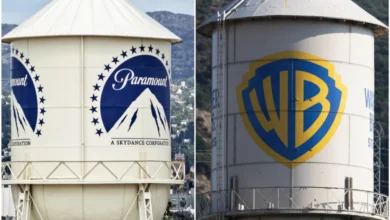
These industry-wide anxieties are further complicated by corporate real estate maneuvers within the media landscape itself. Among the most prominent figures driving the data center expansion is Oracle CEO Larry Ellison, whose immense wealth and technological infrastructure place him at the center of the artificial intelligence boom. Simultaneously, Ellison and his son, David Ellison, have been heavily involved in high-stakes financial maneuvers within the entertainment sector, notably through studio acquisition efforts involving Paramount and Warner Bros. Discovery.
Because South Park airs on Comedy Central—a network owned by Paramount—the satirical target of the upcoming episode carries an extra layer of internal irony. Matt Stone and Trey Parker have a decades-long history of lampooning their own corporate parent companies and biting the hand that feeds them, establishing a brand of institutional autonomy that remains rare in modern television.
The Public Backlash and Broader Political Discourse
The friction surrounding Larry Ellison’s expanding media footprint and technological interests has already spilled over into public spats between prominent cultural figures and corporate representatives. Earlier this year, actor Mark Ruffalo voiced severe public criticisms regarding the integration of what he termed "really profoundly scary technology" into the Hollywood ecosystem, specifically targeting the Ellison family’s impending influence over media outlets.
In a widely circulated critique, Ruffalo did not mince words regarding the concentration of corporate power. “Larry is a classic oligarch,” Ruffalo wrote in a public statement. “They are crushing workers and consolidating the wealth of the world for their own power and concentrated dominance.”
The commentary sparked a sharp rebuttal from corporate communications channels. Paramount pushed back strongly against Ruffalo’s assertions, arguing that his critique crossed a line by employing problematic tropes. The studio specifically took issue with how critics linked the Ellison family’s studio acquisition efforts to unrelated enterprise activities, such as Oracle’s corporate technological infrastructure work, setting off a broader conversation regarding the acceptable boundaries of corporate criticism and political discourse within the industry.
Broader Implications for Tech and Media Relations
The convergence of a White House endorsement of AI moguls and a satirical takedown of data centers by basic cable’s most anarchic animated series underscores a profound cultural disconnect. On one hand, the federal government views artificial intelligence as a geopolitical imperative, a modern space race against global competitors where speed, scale, and capital concentration are treated as matters of national security. On the other hand, the public—and the creative community tasked with reflecting cultural anxieties—increasingly views this industrial buildup with skepticism, viewing it through the lens of environmental strain, corporate oligarchy, and the erosion of human-scaled communities.
As Season 29 of South Park prepares to air its data center episode, the cultural commentary arrives at a critical juncture for both Silicon Valley and Hollywood. By reducing the tech elite to household pests that require an exterminator, the show taps into a potent undercurrent of populist fatigue. Whether the episode will prompt any introspection within the corporate boardrooms of the tech and media giants remains to be seen, but it guarantees that the societal cost of the artificial intelligence revolution will continue to be debated not just in congressional hearings and financial reports, but in the realm of popular culture where power is routinely stripped of its pretense.