SNL UK Weekend Update delivers biting satire targeting Donald Trump Harvey Weinstein and OpenAI leadership

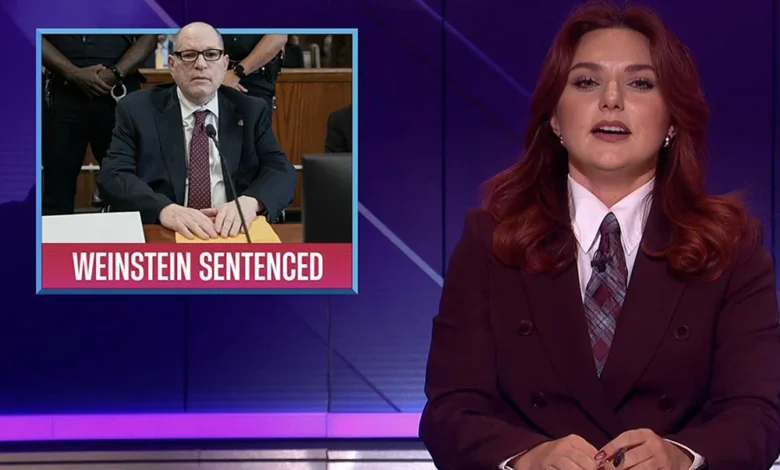
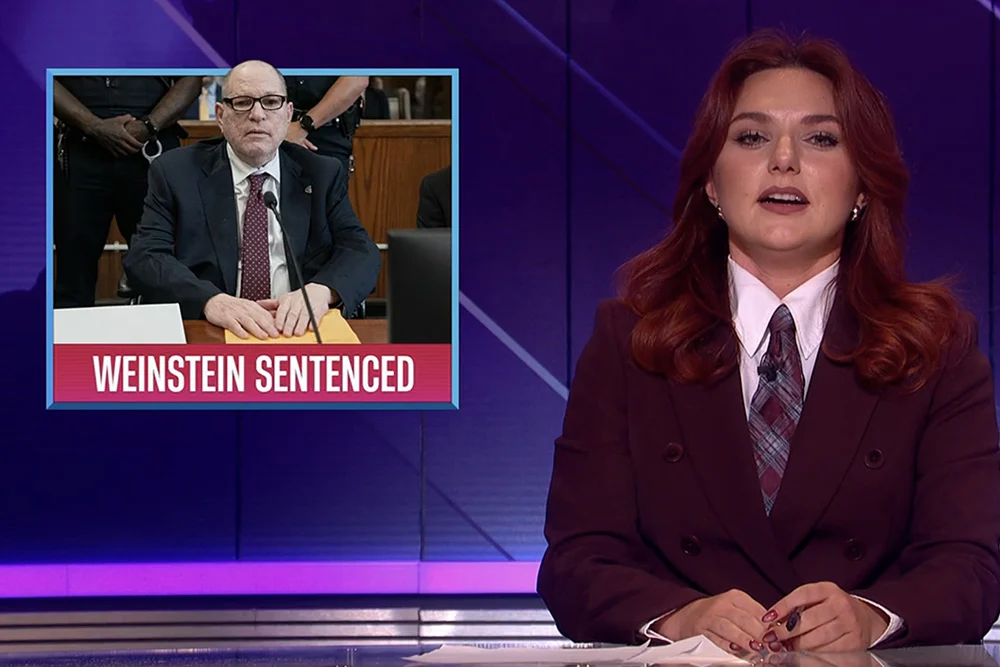
The latest installment of the British iteration of the long-running comedy franchise Saturday Night Live, known as SNL U.K., utilized its signature "Weekend Update" segment this week to deliver a scathing series of satirical commentaries on global politics, technology ethics, and high-profile criminal justice outcomes. Co-anchors Ania Magliano and Young led the broadcast, navigating a landscape of polarizing international events with a sharp, irreverent tone that has become the hallmark of the program’s fledgling tenure in the British television market. The broadcast targeted a wide spectrum of public figures, ranging from former U.S. President Donald Trump and OpenAI CEO Sam Altman to convicted producer Harvey Weinstein and Israeli Prime Minister Benjamin Netanyahu.
Chronology of the Satirical Broadcast
The segment began with a focus on high-level diplomacy, specifically the recent optics surrounding the interactions between U.S. President Donald Trump and Chinese President Xi Jinping. Magliano initiated the segment by lampooning the visual presentation of the two leaders during their recent White House summit. The comedy duo leveraged the attire of the heads of state to frame the encounter, mocking the symbolic use of color in their respective ties.
The broadcast quickly pivoted to the broader context of the summit, including a critique of the formal banquet hosted by the administration. By weaving in references to the menu and the logistical organization of the event, the show’s writers utilized the venue to comment on the broader state of U.S.-China relations. This was followed by a shift toward domestic political dynamics, as Young transitioned to the recent meeting between Trump and U.K. Prime Minister Andy Burnham. The segment drew sharp focus to the current discourse regarding the mental fitness of aging political leaders, a subject that has permeated mainstream political analysis for several years.
Following the political commentary, the show transitioned into the technological realm, specifically focusing on the recent United Nations appearances of OpenAI co-founder Sam Altman. The segment highlighted the juxtaposition between Altman’s warnings regarding the existential risks of artificial intelligence and his ongoing role in the aggressive expansion of these same technologies. The writers framed this tension as a performative contradiction, drawing laughs from the audience while touching upon the very real anxieties currently felt by policymakers and the general public regarding the regulation of generative AI.
Contextualizing the Targets
The decision to focus on Harvey Weinstein followed the recent developments in the disgraced producer’s legal saga. Weinstein, who has been a central figure in the #MeToo movement since 2017, was recently handed a 15-year prison sentence in New York, adding to his existing legal burdens. SNL U.K.’s treatment of this topic was particularly confrontational, utilizing the gravity of the legal outcome to expose the ongoing cultural friction surrounding the movement. The segment also referenced the 2016 intelligence-gathering operations conducted by Weinstein’s team, which sought to discredit his accusers. By invoking the musician Ed Sheeran to comment on the "nuanced" nature of the conflict between powerful predators and their victims, the writers sought to highlight the absurdity of attempts to find middle ground in cases of systemic abuse.
The final portion of the segment addressed the controversial address delivered by Israeli Prime Minister Benjamin Netanyahu at the United Nations. The show referenced the well-documented walkout of several foreign delegations during the speech, a symbolic protest that underscored the diplomatic isolation currently facing the Israeli government on the international stage. The show’s writers chose to sidestep a deep-dive analysis, opting instead for a brief, pointed remark regarding the difficulty of the diplomatic situation before moving on to the program’s sign-off.
Data and Sociopolitical Implications
The satire presented on SNL U.K. is reflective of a wider trend in late-night television where comedy is used as a vessel for processing complex geopolitical trauma. The focus on AI regulation, for instance, is rooted in the tangible legislative efforts currently underway in both the U.S. and the European Union. OpenAI, led by Altman, has been at the center of a debate concerning the "alignment problem"—the technical challenge of ensuring that AI systems act in accordance with human values. While the show utilized humor to highlight this, the underlying concern is supported by data from industry watchdogs and international bodies like the UN, which have held multiple emergency sessions to discuss the potential for automated disinformation and cyber-security threats.
Similarly, the focus on the Trump-Xi summit highlights the fragility of the current geopolitical "thaw" between Washington and Beijing. Trade data, particularly regarding semiconductor exports and tariffs, remains a volatile indicator of the relationship’s health. By mocking the optics of the summit, the show tapped into a growing sense of public fatigue regarding the performative nature of modern diplomacy, where symbolic gestures often fail to obscure deeper economic and security conflicts.
Official Responses and Media Reception
As is common with high-profile satirical programming, the response to the episode has been mixed. Critics of the show’s approach argue that by trivializing figures like Harvey Weinstein or dismissing complex conflicts like the one involving Israel and its regional neighbors, the show risks diminishing the severity of the issues at hand. Proponents, however, argue that the role of comedy in the tradition of Saturday Night Live is precisely to act as a pressure valve for public frustration, allowing for the public articulation of grievances that are often suppressed in more formal political discourse.
There have been no official responses from the offices of the individuals mocked in the broadcast, which aligns with the standard practice for political figures and corporate leaders when faced with late-night comedy sketches. Generally, responding to such content is viewed as counter-productive, as it draws further attention to the criticism. However, the media landscape in the U.K. has been particularly sensitive to the tone of such programs, given the ongoing discussions regarding the role of public broadcasting in providing balanced, yet critical, commentary on sensitive matters of state.
The Broader Impact of Political Satire
The inclusion of international figures like Netanyahu and the U.K. Prime Minister Andy Burnham indicates that SNL U.K. is positioning itself as a program of international relevance, rather than one strictly confined to British domestic affairs. This mirrors the trajectory of the original American version, which has historically served as a mirror for the nation’s political psyche.
The segment’s focus on the "nuance" of the Weinstein case, specifically, serves as a case study in how comedy can be used to challenge public discourse. By using the term "nuanced" in a derogatory fashion, the show’s writers were attacking the tendency of some media figures to soften the reality of criminal behavior under the guise of intellectual complexity. This specific critique resonated with the studio audience, suggesting that there is a significant appetite for media that rejects the "both-sides" journalism often criticized in the era of social media polarization.
As the program continues its run, the challenge for the writers will remain in balancing the need for comedic impact with the journalistic responsibility of addressing the facts. While the show is, by definition, an entertainment product, its influence on the public understanding of complex issues cannot be ignored. By distilling complicated legal outcomes, diplomatic stalemates, and technological risks into short, memorable segments, SNL U.K. is cementing its place as a significant, if often polarizing, voice in the modern media ecosystem.
Ultimately, the broadcast serves as a testament to the enduring power of political satire to hold the powerful to account. Whether through the mocking of a red tie or the sharp interrogation of a legal verdict, the show underscores that in a world of increasingly complex and often opaque power structures, comedy remains a vital tool for stripping away the veneer of authority and exposing the often messy reality beneath. As the season progresses, observers will be watching to see if the show maintains this high-octane pace or if it shifts toward more focused, issue-driven satire. For now, the program has successfully demonstrated its ability to command attention, ensuring that for the time being, the subjects of its ire remain at the center of the national conversation.