Reimagining the Prom Queen of Horror: Inside Mike Flanagan’s Radical New Vision for Carrie

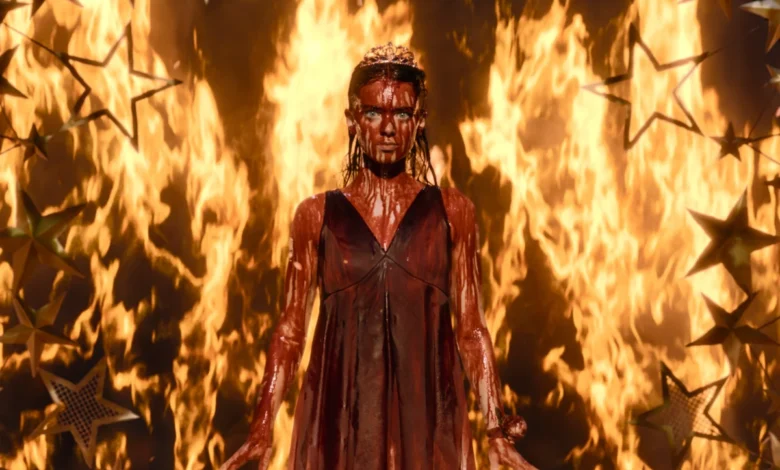
The image of Sissy Spacek, draped in a prom dress saturated with pig’s blood and eyes burning with telekinetic fury, remains one of the most indelible frames in the history of cinema. Since Brian De Palma’s 1976 adaptation of Stephen King’s debut novel, the story of Carrie White has served as a cultural touchstone for teenage alienation and the destructive power of unchecked rage. Nearly five decades later, the narrative has been subjected to countless reinterpretations, including two distinct remakes and a series of derivative works. However, the latest iteration of this horror staple—an eight-episode limited series directed by Mike Flanagan, released on Amazon Prime Video on October 7, 2026—seeks to fundamentally alter the trajectory of the source material. By shifting the focus from a singular act of bloody retribution toward a broader exploration of supernatural connection and contemporary societal pressures, Flanagan has sparked a critical dialogue about the necessity of updating canonical literature for the digital age.
The evolution of the Carrie franchise reflects the broader history of horror cinema’s relationship with intellectual property. When Stephen King published his debut novel in 1974, it was a modest success that gained momentum through its film adaptation. De Palma’s 1976 version did more than just launch a franchise; it established a visual lexicon for the supernatural thriller. Yet, as the decades passed, the property became increasingly diluted by substandard sequels and remakes that often failed to capture the thematic depth of the original text. The 2013 remake, directed by Kimberly Peirce, attempted to modernize the setting but struggled to escape the shadow of the 1976 classic. Flanagan’s approach, however, represents a departure from traditional remaking. Instead of merely polishing the edges of a well-worn story, he has introduced structural shifts that align the narrative with the complexities of 21st-century adolescence.
At the center of this new series is Summer H. Howell, who portrays Carrie White in a performance that emphasizes vulnerability and intellectual curiosity rather than the trembling, withdrawn persona seen in previous iterations. The series situates Carrie within a modern landscape dominated by the relentless scrutiny of social media, where the traditional bullying of the 1970s has evolved into persistent cyber-harassment. By incorporating elements such as fake Instagram accounts and viral memes, the series provides a visceral depiction of how modern technology amplifies the isolation that has always defined the character. Furthermore, the role of Margaret White, played by Samantha Sloyan, has been recalibrated; she is no longer merely a fanatical antagonist but a mother whose intense, misguided protective instincts underscore the tragedy of the situation.
The decision to expand the scope of the story to include a secret history of psychic sororities—a concept hinted at in King’s original novel but never fully realized—serves as the primary catalyst for the series’ narrative shift. Flanagan argues that while King’s original story functioned as a self-contained tragedy moving toward a fatal conclusion, the new series opens the door to a more expansive universe. This expansion is designed to frame the supernatural abilities of these women not as a curse isolated to one high school prom, but as a lineage that connects Carrie to a larger history of individuals with similar powers. This creative choice has drawn mixed reactions from purists who value the claustrophobic nature of the original story, yet it aligns with the modern trend of world-building in episodic television.

From a production standpoint, the challenge of staging the climactic prom sequence was significant. Given the cultural weight of De Palma’s original, which utilized split-screen techniques and specific camera movements to heighten the sense of chaos, Flanagan had to develop a visual language that felt distinct. By choosing to avoid the technical hallmarks of the 1976 film, such as split-diopter shots, and instead focusing on subjective, character-driven perspectives, the series aims to offer a fresh experience for the audience. The production team spent weeks storyboarding the sequence, prioritizing a fragmented, epistolary approach that mirrors the book’s structure, ensuring the climax served the series’ themes rather than acting as a mere stylistic homage.
The implications of this adaptation extend beyond the screen, touching upon the broader discourse surrounding the ethics of reinterpreting classic works. Stephen King, who collaborated closely with Flanagan on this project, reportedly endorsed the shift in narrative direction. This partnership highlights a growing trend where original authors are increasingly involved in the modernization of their works, providing a level of institutional legitimacy to radical changes. For the audience, the series prompts a necessary reassessment of why we return to certain stories. If the 1976 version was about the inevitability of violence, the 2026 version posits that tragedy is a systemic failure of empathy, one that can be examined through different lenses as society evolves.
Horror, as a genre, has long been a vehicle for empathy, forcing viewers to confront the vulnerability of the human condition. Flanagan’s career, defined by his work on The Haunting of Hill House and The Fall of the House of Usher, has consistently utilized the genre to explore familial trauma and the persistence of memory. With Carrie, he suggests that horror’s true value lies in its ability to serve as a form of exposure therapy—a way for audiences to process fear in a controlled environment. By positioning the story as a tragedy rather than a horror-revenge fantasy, the series challenges the viewer to move past the "wish fulfillment" of seeing tormentors punished, and instead engage with the grief of a young woman who never desired to be a harbinger of destruction.
As the series gains traction, it invites an objective analysis of how legacy franchises can survive in a market that is often skeptical of remakes. The success of this endeavor may not be measured solely by viewership numbers, but by its ability to hold its own alongside the original. By stripping away the expectation of a direct, beat-for-beat retelling and instead offering a thematic expansion, the 2026 Carrie establishes a new blueprint for adaptation. It remains a high-stakes endeavor, as the audience for such iconic stories is inherently critical and possessive. However, the willingness to take such "big swings" is arguably what keeps the horror genre vital.
The cultural impact of the 1976 film is not easily diminished, nor should it be. It remains a masterpiece of its time. Yet, the 2026 series provides a necessary, if contentious, update that acknowledges the passage of time. The transition from a story that drives toward a grave to one that opens a road to a larger world is a thematic shift that reflects the changing priorities of modern storytelling. As Flanagan prepares for his next major challenge—the upcoming The Exorcist: Martyrs—the discourse surrounding Carrie serves as a reminder that even the most sacred texts are not immune to the process of evolution. Whether this new iteration will stand the test of time remains to be seen, but its commitment to radical change in the service of thematic relevance is a notable development in the landscape of contemporary horror. In the final estimation, the series challenges the audience to consider whether the story of Carrie White is a fixed point in cinematic history or a flexible narrative that can continue to grow as the world around it changes.