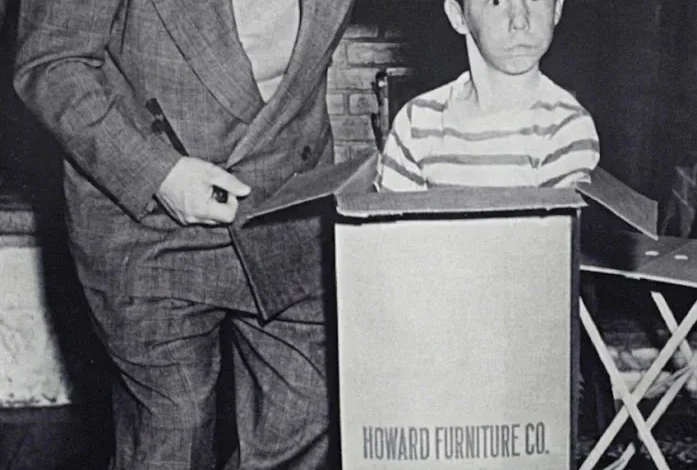
A Life Tethered to Hollywood History
Born on July 8, 1935, in New York City, Paul Howard’s arrival was the stuff of legend, often recounted by his sister, author Joan Howard Maurer. His birth occurred at the height of his father’s professional ascent. Moe Howard, the stoic, bowl-cut centerpiece of the act, had long expressed a desire for a son. When the news of the impending arrival reached him during a vaudeville tour, his reaction was a mixture of characteristic wit and profound sentimentality.
The story of his birth, detailed in Maurer’s book "Growing Up Stooge," captures a quintessential piece of Hollywood lore. Moe, performing at the Metropolitan Theatre in Boston alongside Larry Fine and Curly Howard, received a telegram from his wife, Helen, confirming the birth of an eight-pound boy. The telegram famously included a playful jab: "Keep out of the gutter."
The events that followed Paul’s birth were, as Moe famously noted, something that could have been ripped straight from a Stooges script. Days after the delivery, while driving his wife and newborn son home through a torrential Manhattan rainstorm, Moe was involved in a severe vehicular accident. The car skidded into a concrete lamppost, which collapsed onto the hood of the vehicle. In a twist of fate that mirrored the slapstick timing of his career, the stress of the event sent his sister-in-law, who was a passenger, into premature labor. Moe arrived at the hospital to collect his new son sporting a black eye and facial lacerations—a sight that led him to joke that, for once, his injuries were not the result of his stage performance.
Preserving a Legacy: From Private Memory to Public Docuseries
Throughout his adult life, Paul Howard remained an active participant in the preservation of the Three Stooges’ cultural impact. In an era where many classic Hollywood icons are forgotten, Howard was instrumental in keeping the trio’s brand relevant. He frequently appeared at conventions, fan gatherings, and retrospective events. These appearances were not merely for show; they served as a vital link for historians and fans who sought to understand the creative dynamics of the act.
Perhaps his most significant contribution to the public record was his work as the host of the 2015 docuseries "Hey Moe, Hey Dad!" The nine-part series served as a definitive account of the group’s evolution from their early days in vaudeville through the transition to Columbia Pictures shorts and their eventual resurgence in the television era of the 1950s and 60s.
The series was notable for its access, utilizing rare archival footage and intimate interviews with the descendants of the other Stooges, including the families of Larry Fine, Shemp Howard, Curly Howard, and "Curly Joe" DeRita. By including celebrity testimonials from the likes of Whoopi Goldberg, legendary film historian Leonard Maltin, and voice actor Billy West, the docuseries successfully contextualized the Stooges’ influence on modern comedy, framing their work not just as low-brow physical humor, but as a sophisticated exercise in comedic timing and character archetypes.
The Stooges’ Cultural Footprint
The death of Paul Howard invites a broader look at the endurance of the Three Stooges, a group that produced 190 short films for Columbia Pictures between 1934 and 1958. Their transition to television in 1958 introduced their work to a new generation of baby boomers, turning the trio into an omnipresent force in American pop culture.
Data from the long-term syndication of the Stooges’ shorts demonstrates an unusual longevity. Even decades after the passing of the original performers, the "Stooge" brand has maintained a steady commercial presence. Through licensing, the preservation of their film catalog, and the persistent interest of the fan community—which Paul Howard helped foster—the trio remains one of the most profitable and recognizable intellectual properties in classic cinema.
The sociological impact of the Stooges is often debated by film critics, but their influence is undeniable. They set the standard for ensemble physical comedy, influencing everything from the anarchic sketches of Saturday Night Live to the slapstick choreography of modern animated films. Paul Howard’s dedication ensured that the "human" element—the struggle of the performers, their financial battles with studios, and their personal relationships—was never overshadowed by the masks they wore on screen.
Reflecting on a Family Guardian
Those who knew Paul Howard described him as a man of quiet intelligence and deep devotion to his family history. He lived much of his life in the Yorkville section of Manhattan, remarkably close to the hospital where he was born over nine decades ago. His commitment to his father’s legacy was not driven by ego, but by a sense of responsibility to the history of the entertainment industry.
In a professional landscape where families of celebrities often seek to sanitize or exploit the past, Paul Howard took a different approach. He was transparent about the difficulties his father faced, the grueling nature of the vaudeville circuit, and the internal politics of the troupe. By doing so, he provided a more authentic and valuable historical record.
The reaction from the entertainment community has been one of somber respect. Historians who worked alongside Howard during the production of "Hey Moe, Hey Dad!" noted that his contribution was essential for verifying the timeline of the group’s early years. Without his memory and the records he safeguarded, many of the nuanced details regarding the group’s transition from their original "Ted Healy and His Stooges" act to their own independent entity would have been lost to history.
Broader Implications and Legacy
The passing of Paul Howard serves as a poignant reminder of the passage of time for the "Golden Age" of Hollywood. As the last direct descendants of these iconic performers age, the task of maintaining the primary-source history of these figures shifts from family members to professional archivists and scholars.
The implications for the Three Stooges’ legacy are clear: the focus will now shift entirely toward digital preservation and academic study. The archival footage, personal letters, and anecdotes that Paul Howard curated will become the bedrock for future biographies and documentaries. While his passing is a personal tragedy for his wife, Joanne, and his daughter, Jennifer, it is also a milestone for the fans who viewed him as the unofficial "keeper of the flame."
Paul Howard’s life was defined by the intersection of a massive, public cultural force and the private, grounded reality of family life. He moved through the world as the son of an icon, yet he remained remarkably grounded, never seeking the spotlight for himself. Instead, he chose to keep his father’s history in the light, ensuring that the legacy of Moe Howard—and by extension, the entire Three Stooges ensemble—remained a vibrant, living piece of American history. As the final chapters on the original Stooge era continue to close, the work performed by individuals like Paul Howard becomes increasingly vital, acting as a bulwark against the inevitable fading of the past. He leaves behind a legacy of stewardship, a testament to the idea that even the most chaotic, fictional comedy routines are rooted in very real, very human stories that deserve to be told with care and respect.
Related posts: