John Turturro Reflects on Four Decades of Cinema, The Joy of Acting, and His Latest Career Triumph at the Zurich Film Festival

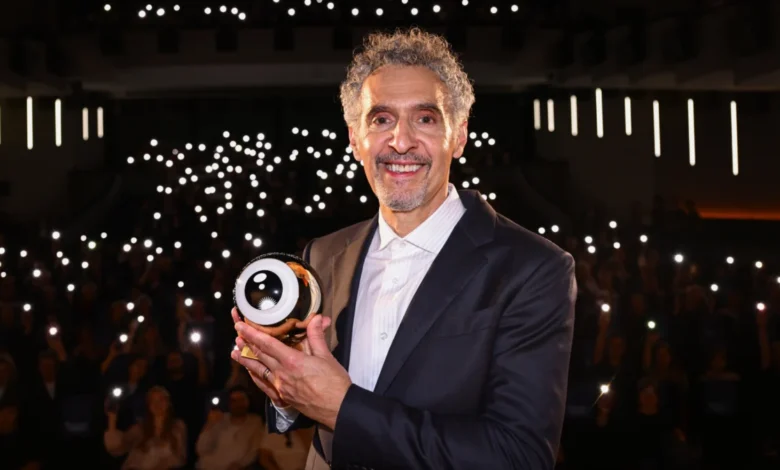
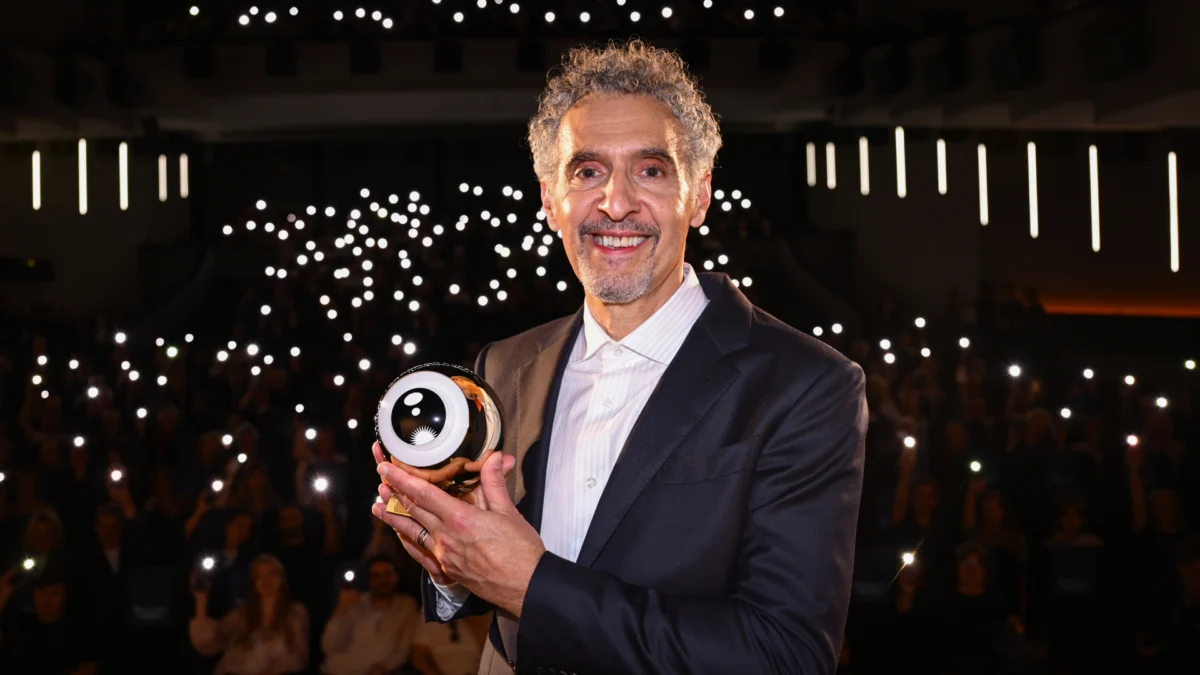
Fresh off receiving the prestigious Golden Eye award on a Saturday night in Switzerland, veteran actor and filmmaker John Turturro stepped onto the stage at the Zurich Film Festival on Sunday to deliver a masterclass that offered a profound retrospective of his illustrious career. The Emmy-winning star, whose creative footprint spans four decades of independent cinema, Hollywood blockbusters, and critically acclaimed television, captivated a packed audience with candid anecdotes, reflections on aging in the entertainment industry, and a surprising glimpse into his future projects.
Nestled neatly between the actor and interviewer Melanie Goodfellow of Deadline was the shining Golden Eye trophy—a physical manifestation of a career built on artistic integrity, versatility, and an unwavering commitment to complex character work. Turturro’s appearance at the festival underscored not only his enduring relevance in modern cinema but also the rising tide of critical acclaim surrounding his latest cinematic venture, Noah Segan’s The Only Living Pickpocket in New York.
Main Facts and the Zurich Spotlight
The masterclass served as the centerpiece of Turturro’s weekend at the 22nd edition of the Zurich Film Festival, which runs from September 24 to October 4. Turturro finds himself in esteemed company at this year’s festival, joining fellow high-profile honorees Julianne Moore and Tom Hiddleston. The festival appearance directly follows a weekend dedicated to celebrating his body of work, highlighted by the Saturday night tribute where he was presented with the Golden Eye award.
During the weekend’s events, Turturro accepted the accolade by invoking the words of Italian novelist Cesare Pavese. Addressing the appreciative audience, Turturro remarked that Pavese "once said that the only great thing in life is to begin. I still consider myself a beginner in many ways." He added, "I’m very fortunate. I wanted to make a living doing something that interested me and to do interesting work—to share that with an audience, [and that] wouldn’t diminish their intelligence at the same time. I consider this an encouragement to continue."
The conversation quickly pivoted to his latest role in The Only Living Pickpocket in New York, a Sundance success that has thrust the veteran actor back into the heart of awards season conversations. In the film, Turturro portrays Harry, a seasoned pickpocket whose meticulously managed existence is upended when a single job spirals out of control during a tense 36-hour window. Despite his storied career—one that has remarkably never yielded an official Oscar nomination—Turturro discussed the prospect of entering the best actor race with characteristic humility.
"I never really have gone the whole hog with it," Turturro said regarding an upcoming awards campaign. "But now I’m the lead in the film, so I’m going to support the film because I love the film." He acknowledged that while awards buzz can be instrumental in securing future financing and opening doors for subsequent projects, accolades are not the primary driving force behind his artistic choices. "Is it nice to be acknowledged? Great, but that’s not why you do it. Just because a film is really popular doesn’t mean it will have staying power, but it’s nice to be in the conversation. I don’t look upon myself as being a competitive person. I’m competitive with myself. I want to get the most out of what I can do, but it’s not sports!"
Chronology and Evolution of a Master Craftsman
Turturro’s journey to this latest career peak spans a remarkable timeline of collaboration with some of the most influential filmmakers in cinematic history. Emerging from an immigrant household in New York, Turturro carved a unique path through the theatrical stage before transitioning into film in the early 1980s. His early breakthrough on the international stage was forged through vital partnerships with director Spike Lee, notably appearing in landmark cultural touchstones such as Do the Right Thing (1989) and Jungle Fever (1991). These early performances established his reputation as an intense, chameleon-like presence capable of embodying complex socio-political tensions.
Following his work with Lee, Turturro became an indispensable fixture in the filmography of Joel and Ethan Coen. His collaborations with the auteur brothers produced an extraordinary run of cinema in the late 20th century, including Miller’s Crossing (1990), Barton Fink (1991), O Brother, Where Art Thou? (2000), and The Big Lebowski (1998), where he etched his name into pop culture history as the eccentric, bowling-obsessed Jesus Quintana. For his tour-de-force performance as the tortured playwright in Barton Fink, Turturro claimed the Best Actor award at the Cannes Film Festival in 1991, an achievement he reflected upon fondly during the Zurich masterclass.
Reflecting on how his approach to the craft has transformed over the decades, Turturro noted that aging has provided him with an invaluable emotional toolkit. Expressing surprise at the warm critical reception of his work at Sundance, he admitted, "Finally, I’m in something that people will see. My job is I like to try to improve, and I feel like being an actor is one of the few things you can improve in. You may not be able to run as fast as you did when you were younger, but I have a lot of life experience, and as you get older, you accumulate that, and you can distill things in a way that you couldn’t do when you were young, because you didn’t really experience all those things."
He elaborated on how personal milestones—life, death, loss, marriage, and parenthood—have shifted his perspective. "And now I’ve experienced life, death, loss, being a parent, being married—what it is to really love someone versus falling in love. That’s a huge difference," he said with a laugh.
Television Triumphs and Future Prospects
Beyond his extensive filmography, Turturro has experienced a powerful career resurgence in prestige television over the past decade. During the masterclass, he naturally gravitated toward discussing two of his most defining recent television roles: HBO’s critically acclaimed limited series The Night Of (2016) and Apple TV+’s speculative workplace thriller Severance.
Recalling his Emmy-nominated turn as John Stone, the eczema-afflicted defense attorney in The Night Of, Turturro expressed enduring pride in the project. "The Night Of is something I’m very proud of," he told the Zurich audience. "It was originally a BBC thing, which I actually never watched because I didn’t want to be influenced." He revealed that he had actively campaigned for a second season of the crime drama. "They couldn’t agree on what the story would be, but I loved doing it. It was one of those great experiences in my life."
Turning to Severance, Turturro delighted fans by coyly confirming his return as data-refiner Irving Bailiff in the upcoming third season of the Emmy-winning series created by Dan Erickson and directed in part by Ben Stiller. When pressed about reprising his role alongside Adam Scott, Turturro eventually relented, stating, "Yeah. As long as they give me interesting things to do, then I’m interested."
The conversation naturally flowed into his deep professional and personal bond with co-star Christopher Walken, whose character, Burt Goodman, engaged in a poignant, slow-burning romance with Turturro’s Irving during the show’s first season. Turturro shared the charming backstory of how that pairing came to be.
"Who’s going to be my love interest?" Turturro recalled asking the production team before joining the show. "And they were like, ‘All these younger guys.’ I said, ‘Well no, I’ve worked with Chris Walken,’ and I said, ‘I want Chris, because I love Chris.’ And I don’t have to act that I love him because I love him."
Despite Walken famously admitting that he "didn’t understand a lot of the show," Turturro stepped in as a supportive anchor and director-turned-scene-partner. "I said, ‘Don’t worry about it. You just look at me.’ We have so much fun because I directed him like three times, and we’ve acted, and we’ve worked together a lot. And he’s a wonderful theater actor, and people obviously think he plays only strange [characters] but he can do a lot of different things. He’s also very sensitive, but he has a childlike joy in his work, and when that happens, anything is possible."
Broader Industry Impact and Global Perspectives
Turturro’s masterclass also shed light on the structural differences between working within the Hollywood studio system and the European filmmaking landscape. Throughout his storied career, Turturro has worked with a pantheon of international masters, including Martin Scorsese, Robert Redford, Robert De Niro, Nanni Moretti, and Pedro Almodóvar.
Reflecting on these transnational collaborations, Turturro confessed that he frequently finds himself offered more nuanced, "normal" character roles in European productions than he does within the American studio apparatus. This distinction has guided his script choices over the years; he revealed during the session that he has turned down film scripts "again and again" when they relied on lazy tropes involving his character displaying gratuitous violence toward women.
As the 22nd Zurich Film Festival continues its run through October 4, John Turturro’s masterclass stands out as a masterclass in longevity, artistic humility, and professional reinvention. By refusing to rest on the laurels of his extensive cinematic legacy—ranging from the gritty streets of Spike Lee’s Brooklyn to the surreal corporate cubicles of Severance—Turturro continues to demonstrate why he remains one of the most respected and vital figures in contemporary storytelling. Whether navigating the awards circuit with The Only Living Pickpocket in New York or returning to the labyrinthine halls of Lumon Industries, Turturro approaches each new chapter with the curiosity of a beginner and the wisdom of a master.