Bong Joon Ho on Restoring ‘The Host’ and Why It Still Resonates 20 Years On: ‘We Are Repeating Our Mistakes’

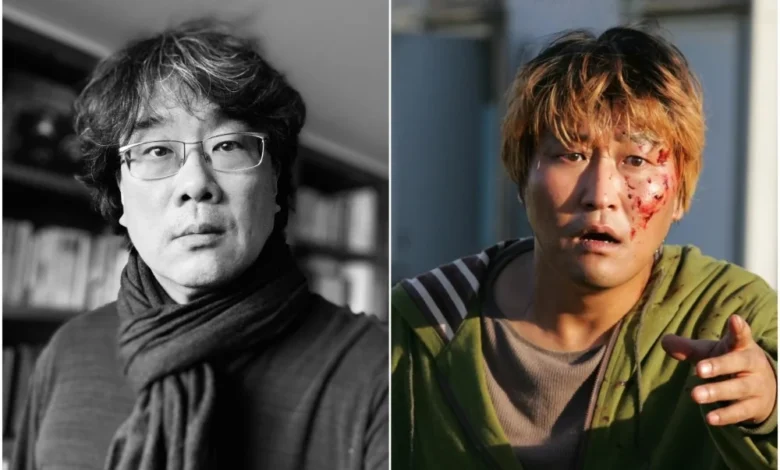
The South Korean cinematic landmark, which fundamentally altered the landscape of the monster movie genre, is set to return to theaters nationwide on November 20. This 4K restoration, helmed by director Bong Joon Ho, serves as both a technical celebration of the film’s legacy and a somber reflection on the geopolitical anxieties that inspired its creation two decades ago. Magnolia Pictures, the distributor behind this theatrical reissue, has confirmed that select screenings on November 21 and 23 will feature a special recorded conversation between Bong and acclaimed filmmaker Edgar Wright, offering audiences a rare deep dive into the craft behind the creature.
A Legacy of Genre-Defying Cinema
Released in 2006, The Host arrived at a pivotal moment in global cinema. At the time, South Korean film was experiencing an unprecedented rise in international prestige, and Bong’s creature feature—a blend of family drama, political satire, and high-stakes horror—became the highest-grossing South Korean film in history at the time of its release. The narrative centers on Gang-du, a lackluster snack-bar worker played by the iconic Song Kang-ho, whose life is shattered when a grotesque, mutant creature emerges from the Han River to snatch his young daughter, Hyun-seo (Ko A-sung).
The film’s production was an ambitious undertaking for its era. Bong utilized the expertise of New Zealand’s Weta Workshop for physical creature models, while the visual effects house The Orphanage managed the complex digital integration. The result was a creature that felt physically present, a stark contrast to the often sterile CGI seen in contemporary blockbusters. For this 4K restoration, Bong sought to recapture the specific visual texture of the original 35mm prints. By leveraging modern digital tools, the team worked to replicate the unique color science of the Fuji film stock used during the 2005 shoot, balancing technical enhancement with the raw, gritty aesthetic that defined the director’s early career.
The Satirical Roots of a Modern Pandemic
While the film is ostensibly a monster movie, Bong Joon Ho has consistently maintained that its core lies in its sharp political commentary. Writing the screenplay with the memory of the 2003 SARS outbreak fresh in his mind, Bong injected the script with a deep-seated distrust of official state narratives. A central sequence in the film—where U.S. lawmakers admit that the viral threat they have been using to control the public is entirely fabricated—served as a pointed satire of the misinformation surrounding the 2003 invasion of Iraq and the search for nonexistent weapons of mass destruction.
Reflecting on the film two decades later, Bong notes that the world has traversed several global crises, including the COVID-19 pandemic and ongoing international conflicts. "Time flies," Bong remarked in an interview with Variety. "Now we’re in the thick of the Iran War and we’re still in the midst of an ongoing war, and whether it’s good history or bad history, it seems like we as a community, as a whole, are repeating our mistakes. Although the film has stayed the same, the history is repeating itself and making the film relevant again."
This thematic circularity underscores the film’s lasting impact. By highlighting the incompetence and self-interest of state bureaucracy during a public health emergency, The Host anticipated the global erosion of trust in institutional communications that has become a defining characteristic of the 21st century.
Technical Restoration and the Philosophy of the Archive
The restoration process presented unique challenges, particularly regarding the visual effects produced nearly twenty years ago. Because the original VFX were finished before 4K workflows were standard, the team had to meticulously upscale these assets without compromising the film’s grounded realism. Bong admitted that while he can identify minor flaws in the CGI today, he ultimately rejected the impulse to "fix" them.
Drawing a parallel to the literary practice of leaving one’s journals unedited, Bong emphasized that the film serves as an archeological record of his development as a director. He cited the example of Ridley Scott’s various revisions to Alien, noting that while he felt the temptation to excise one or two shots, he ultimately opted to preserve the work in its original form. "I believe that the film is a record of what I was as a filmmaker at the time," Bong explained. "I do not have any wishes to correct that. Just like we don’t edit or rewrite our journals, I feel like it should just be left as it is."
The sound design, which was a labor-intensive process in 2006, remains a point of pride. Working at the Seoul-based facility Livetone, Bong utilized a library of sound effects that included the processed vocalizations of a sea lion, layered with the voice acting of Oh Dal-su. The director is currently assessing whether to implement a Dolby Atmos mix for the North American theatrical run, keeping in line with the high-fidelity standards established by his later, natively 4K projects such as Okja and the Academy Award-winning Parasite.
A Trajectory of Success: From The Host to Parasite
The success of The Host provided the foundational capital and international reputation that allowed Bong to eventually achieve the historic sweep of Parasite in 2019. Parasite broke barriers by becoming the first non-English-language film to secure the Academy Award for Best Picture, solidifying Bong’s status as one of the most influential directors of the modern era.
Despite his move toward larger, global productions, Bong’s interest in the nuances of film format remains. His experimentation with black-and-white versions of both Mother and Parasite—which saw limited theatrical and festival runs—reflects a director deeply invested in the medium’s tactile history. "I have great admiration for black-and-white films," he stated. "It’s a process that I enjoyed very much."
Future Implications and the Return to Genre
As the industry prepares for the 20th-anniversary reissue of The Host, focus is also turning toward the director’s future slate. Having confirmed that his upcoming projects will include a return to the crime and horror genres following his foray into animation with Ally, the director appears to be cycling back to the dark, genre-bending storytelling that launched his international career.
"I want to return home," Bong remarked when asked about his future plans. This return to the genre space signifies a desire to synthesize the lessons learned from his high-budget international projects with the grounded, socially conscious storytelling that characterized his breakout era.
The re-release of The Host provides more than just a nostalgic viewing experience; it offers a diagnostic lens through which to view current global instability. By examining how an audience in 2006 responded to the fear of state-mandated misinformation versus how a modern audience reacts to the same themes, film historians and critics alike have noted that the work has transitioned from a contemporary thriller into a timeless cautionary tale.
As The Host prepares to occupy screens once again, the restoration stands as a testament to the idea that, in cinema, the most effective monsters are often those that mirror the failures of the human institutions tasked with protecting us. Whether through the lens of a monster emerging from the Han River or the quiet, creeping class warfare of Parasite, Bong Joon Ho’s body of work continues to resonate because it refuses to blink in the face of uncomfortable truths. The upcoming 4K release ensures that a new generation of filmgoers can witness the inception of that vision, preserved exactly as it was intended two decades ago.
Related posts: