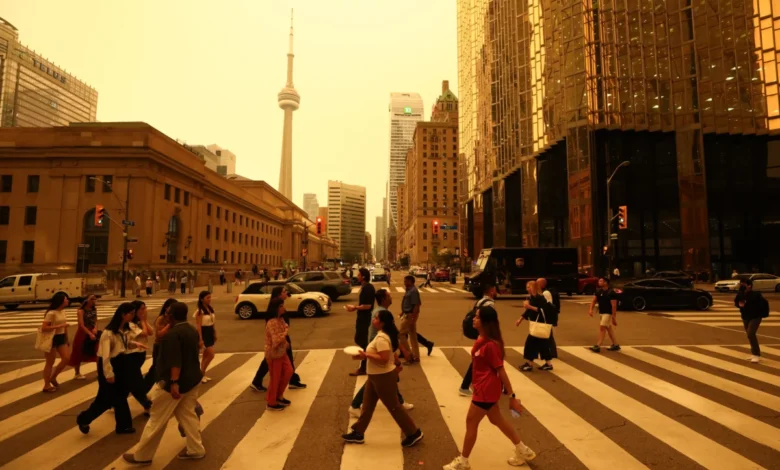
Film crews working on Hollywood and local productions across Ontario are facing an unprecedented challenge as fast-moving wildfires continue to rage across the province’s far north and southwest. The blazes have generated thick smoke plumes that have blanketed southern Ontario and, at times, extended as far as the U.S. Eastern Seaboard, prompting advisories for increased health precautions. Despite the widespread environmental impact, the provincial film sector has, for the most part, managed to navigate what is shaping up to be Ontario’s most severe wildfire season on record without widespread cancellations or major disruptions.
The Unfolding Crisis: A Province Under Siege
The current wildfire situation in Ontario is a stark reminder of the increasing vulnerability of the region to extreme weather events, exacerbated by climate change. As of Wednesday, approximately 146 wildfires remained active across the province, a significant number that underscores the intensity of the ongoing crisis. These fires are not merely localized incidents; they represent a formidable environmental and logistical challenge for the province.
The production hubs in northern Ontario, including cities like Sudbury, Sault Ste. Marie, and Thunder Bay, are bearing the brunt of the impact. Film crews in these areas have found themselves sharing accommodation with residents displaced by the advancing flames, highlighting the direct human cost of the wildfires. A particularly concerning blaze, spanning an estimated 3,200 square kilometers (1,235 square miles) north of Thunder Bay within Wabakimi Provincial Park, has become a focal point for firefighting efforts. The sheer scale of this fire underscores the immense resources and coordination required to combat such infernos.
Thunder Bay’s Resilience and Proximity Concerns
While Thunder Bay has undeniably been affected by the wildfires, official statements indicate that the immediate danger to the city itself has been mitigated. A spokesperson for the City of Thunder Bay, located a two-hour flight from Toronto, stated, "While Thunder Bay has been affected by the wildfires in several ways, the active fires remain approximately 150 to 250 kilometers from the city and at the moment we aren’t in danger of being evacuated." This statement, provided to The Hollywood Reporter, offers a degree of reassurance for productions operating in or near the city, emphasizing that while smoke is a factor, direct evacuation orders are not currently in place for the urban center.
Contrasting Impacts: Ontario vs. California Wildfires
The situation in Ontario presents a notable contrast to the direct impact of wildfires on Hollywood productions experienced in and around Los Angeles in previous years, such as the events of 2025. In those instances, fires directly encroached upon filming locations and studio infrastructure, leading to immediate halts in production. In Ontario, the devastating wildfires are largely concentrated in sparsely populated northern and southwestern regions. This geographical distribution has allowed fire crews to focus their efforts on containment and suppression in areas where the risk to human life and infrastructure, including film sets, is comparatively lower, though communities have been destroyed and others evacuated.
Navigating Smoke and Airspace Restrictions
Despite the geographical separation of the most intense fires from major production centers, the pervasive spread of wildfire smoke has necessitated cautionary measures for the film industry. The provincial government is actively urging film crews to limit outdoor filming when air quality levels are deemed poor. This advisory is a direct response to the health risks associated with prolonged exposure to smoke, which can include respiratory issues and other adverse health effects.
Furthermore, both Transport Canada and the Ontario Ministry of Natural Resources have issued specific directives to film and television productions. These departments have requested that productions refrain from using drones during filmmaking operations. The rationale behind this request is to prevent potential interference with essential firefighting aircraft, including vital water bombers and helicopters. Maintaining clear and unobstructed airspace is paramount for the efficient and safe deployment of these critical aerial resources in the ongoing battle against the wildfires.
Sudbury’s Unaffected Production Landscape
In Sudbury, another significant filmmaking hub located just an hour’s flight from Toronto, the impact of the forest fires on local production has been minimal. City officials have informed THR that forest fires have not directly affected filming activities in the region, and local shoots are currently operating without any specific forest fire-related restrictions while cameras are rolling within the city limits.
However, the city acknowledges the nuanced nature of safety decisions in such circumstances. A statement provided to THR by Sudbury officials added, "Typically, safety-related decisions of this nature are left to the discretion of the production team. We would recommend that they follow applicable public health guidance regarding air quality." This approach places the onus on individual productions to assess risks and adhere to public health advisories, underscoring the importance of proactive risk management within the industry.
The Economic Significance and Future Concerns
The robust presence of major studios and streamers engaging in soundstage and location shooting across Ontario in recent years has solidified the province’s position as a major business destination for the film industry. The current spate of wildfires, while posing logistical and health challenges, has not yet led to significant cancellations or major disruptions that would threaten this economic engine.
However, the industry’s resilience is being tested against a backdrop of previous significant disruptions. The lingering effects of the global pandemic and the extensive Hollywood strikes of 2023 have already placed considerable strain on the Ontario production sector. The ongoing wildfire crisis adds another layer of uncertainty, raising concerns about the long-term recovery and stability of the province’s film industry. The ability to adapt to and mitigate the impacts of environmental emergencies will be crucial for maintaining Ontario’s competitive edge in the global film production landscape.
Supporting Data and Context
The severity of the current wildfire season in Ontario is not an isolated event but rather a manifestation of broader environmental trends. Data from Natural Resources Canada consistently shows an increase in the frequency and intensity of wildfires across Canada in recent decades, often linked to rising global temperatures and prolonged periods of drought. The 2023 season, in particular, has seen an unprecedented number of hectares burned across the country, with Ontario experiencing a significant portion of this activity.
The economic impact of wildfires extends beyond direct production disruptions. Smoke pollution can affect tourism, outdoor recreation, and public health, creating a ripple effect that can indirectly influence the business environment for film productions. The cost of fighting these fires also places a substantial burden on provincial resources, diverting funds that might otherwise be allocated to economic development initiatives, including those supporting the arts and entertainment sectors.
Timeline of Events and Production Response
While a precise, day-by-day chronology of the film industry’s response is complex, the situation has evolved rapidly throughout the summer months. Initial reports of widespread wildfires began to emerge in late spring and early summer, intensifying as the season progressed. As smoke plumes became more visible and widespread across southern Ontario, advisories for outdoor activities, including filming, began to be issued.
The directives from Transport Canada and the Ministry of Natural Resources regarding drone usage represent a more formal and coordinated response from provincial and federal authorities. Production companies, in turn, have been adapting their shooting schedules, prioritizing indoor scenes when air quality is poor and re-evaluating the feasibility of outdoor shoots. The reliance on indoor soundstages, a growing trend in recent years, has likely provided a crucial buffer against the direct impacts of smoke.
Official Statements and Public Health Guidance
The consistent message from provincial authorities emphasizes preparedness and adherence to public health guidelines. Beyond the specific advisories to the film industry, broader public health campaigns have been launched to inform residents about the risks of wildfire smoke and recommended precautions. These include staying indoors, limiting strenuous outdoor activity, and using air purifiers.
For film productions, this translates into a heightened awareness of air quality monitoring systems and a willingness to adapt daily operations. Industry associations, while not directly quoted in the initial report, are likely engaged in discussions with provincial bodies to ensure that the needs of the production sector are considered while prioritizing public safety and environmental protection.
Broader Implications and Future Outlook
The ongoing wildfire crisis in Ontario serves as a significant case study for the resilience of the film industry in the face of escalating environmental challenges. It highlights the need for adaptability, robust contingency planning, and close collaboration between industry stakeholders and government agencies. The long-term implications may include:
- Increased reliance on indoor filming: Productions may further invest in soundstage facilities to mitigate the risks associated with outdoor filming during wildfire seasons.
- Technological adaptation: The development and adoption of advanced air quality monitoring and forecasting tools specifically for production planning could become more prevalent.
- Insurance and risk assessment: The insurance landscape for film productions may evolve to incorporate specific clauses and higher premiums related to environmental risks like wildfires.
- Policy and regulation: Future policy discussions may address the integration of environmental resilience strategies into film production incentives and permitting processes.
As Ontario continues to grapple with its most severe wildfire season on record, the film industry’s ability to navigate these challenges will be a testament to its adaptability and foresight. The current situation, while demanding, also presents an opportunity to strengthen the sector’s resilience and ensure its continued growth in an increasingly unpredictable world.