Massachusetts Launches Innovative Vehicle-to-Grid Pilot Program to Transform Electric Vehicles into Resilient Power Sources for the Regional Grid

The perception of the electric vehicle (EV) is undergoing a fundamental shift from a mere mode of transportation to a critical component of national energy infrastructure. While the primary function of an EV remains the transport of passengers from one location to another, a new technological frontier known as vehicle-to-grid (V2G) is beginning to unlock what many experts call the "superpower" of the electric car: the ability to act as a mobile, high-capacity battery that can stabilize the electric grid. In a landmark move for the New England energy landscape, a coalition of major utilities and technology providers—including Eversource, National Grid, EnergyHub, Sunrun, and The Mobility House—has officially launched a pilot program in Massachusetts. This initiative aims to integrate EVs into the state’s existing demand-response framework, offering a glimpse into a future where the cars parked in suburban driveways and city garages serve as a collective "virtual power plant."
The Mechanics of the Massachusetts V2G Initiative
The newly launched program in Massachusetts builds upon an established utility framework known as ConnectedSolutions. For several years, ConnectedSolutions has allowed Massachusetts residents with home battery systems, such as the Tesla Powerwall or Sunrun’s residential storage units, to discharge energy back into the grid during periods of peak demand. In exchange for this service, participants receive financial compensation, effectively lowering their monthly utility bills. The current expansion of this program to include EVs represents a significant scaling of the concept.
Under the new system, EV owners who possess bidirectional charging hardware can opt into the program. When the grid experiences a "demand response event"—typically during extreme heat waves when air conditioning usage surges—utilities can remotely signal the EV batteries to discharge a portion of their stored energy back into the local distribution system. This process helps the grid maintain its frequency and voltage without the need to activate expensive and carbon-intensive "peaker" plants, which are gas-fired facilities used only during the highest periods of electricity consumption.
According to Chip Silverman, director of grid services at Sunrun, the participation of Massachusetts is a pivotal step for the industry. The data collected from this pilot will provide essential insights into how utilities can coordinate thousands, and eventually millions, of decentralized batteries. The goal is to move beyond the experimental phase and prove that V2G can be a reliable, scalable resource for grid operators across the United States.
Understanding the Growing Strain on the American Power Grid
The push for V2G technology arrives at a critical juncture for the American utility sector. The U.S. power grid is currently facing a "triple threat" of escalating challenges that make traditional management strategies increasingly obsolete.
First, the demand for electricity is projected to grow at its fastest rate in decades. This surge is driven by the rapid expansion of power-hungry data centers—fueled by the rise of artificial intelligence—and the broader electrification of the economy. As households transition from internal combustion engines to EVs and replace gas-fired furnaces with electric heat pumps, the total load on the grid is set to rise significantly.
Second, the transition to renewable energy sources like wind and solar introduces the challenge of intermittency. Unlike coal or gas plants, which can provide a steady "baseload" of power, solar panels only produce energy when the sun is shining, and wind turbines only spin when there is a breeze. This creates a temporal mismatch between when energy is generated and when it is needed, often referred to by engineers as the "Duck Curve."
Third, the physical infrastructure of the grid is aging and increasingly vulnerable to extreme weather events exacerbated by climate change. Utilities are currently spending billions of dollars to "harden" the grid by burying power lines and upgrading transmission facilities. These costs are often passed on to consumers, leading to skyrocketing energy prices. V2G offers a potential solution to mitigate these costs by utilizing existing assets—the batteries already sitting in people’s cars—rather than building massive new storage facilities from scratch.
The Economic Case for Vehicle-to-Grid Integration
From a financial perspective, V2G creates a rare "win-win-win" scenario for drivers, utilities, and the general public. For the EV owner, the technology turns a depreciating asset into a revenue stream. By selling energy back to the grid during peak hours (when electricity prices are highest) and recharging during off-peak hours (when prices are lowest), drivers can significantly offset the total cost of ownership of their vehicles.
For utilities, V2G represents the most cost-effective form of flexible energy storage available. Russell Vare, vice president of vehicle-grid integration at The Mobility House North America, notes that a typical EV battery holds roughly six times the energy capacity of a standard residential backup battery. When aggregated, a fleet of EVs represents a massive reservoir of energy that can be tapped at a fraction of the cost of building new utility-scale battery farms.
Furthermore, V2G has the potential to lower electricity rates even for those who do not own an electric vehicle. By reducing the need for expensive infrastructure upgrades and "peaker" plant activations, the overall cost of operating the grid decreases. In theory, these systemic savings can lead to lower base rates for all utility customers.
Technical Requirements and the Path to Mainstream Adoption
While the promise of V2G is immense, the technology faces several hurdles before it can reach mainstream adoption. The most significant barrier is the requirement for bidirectional charging hardware. Most EVs currently on the road are designed only for "one-way" charging—taking power from the grid to the car. To send power back, the vehicle must have an onboard inverter capable of bidirectional flow, and the owner must install a specialized bidirectional charger at home.
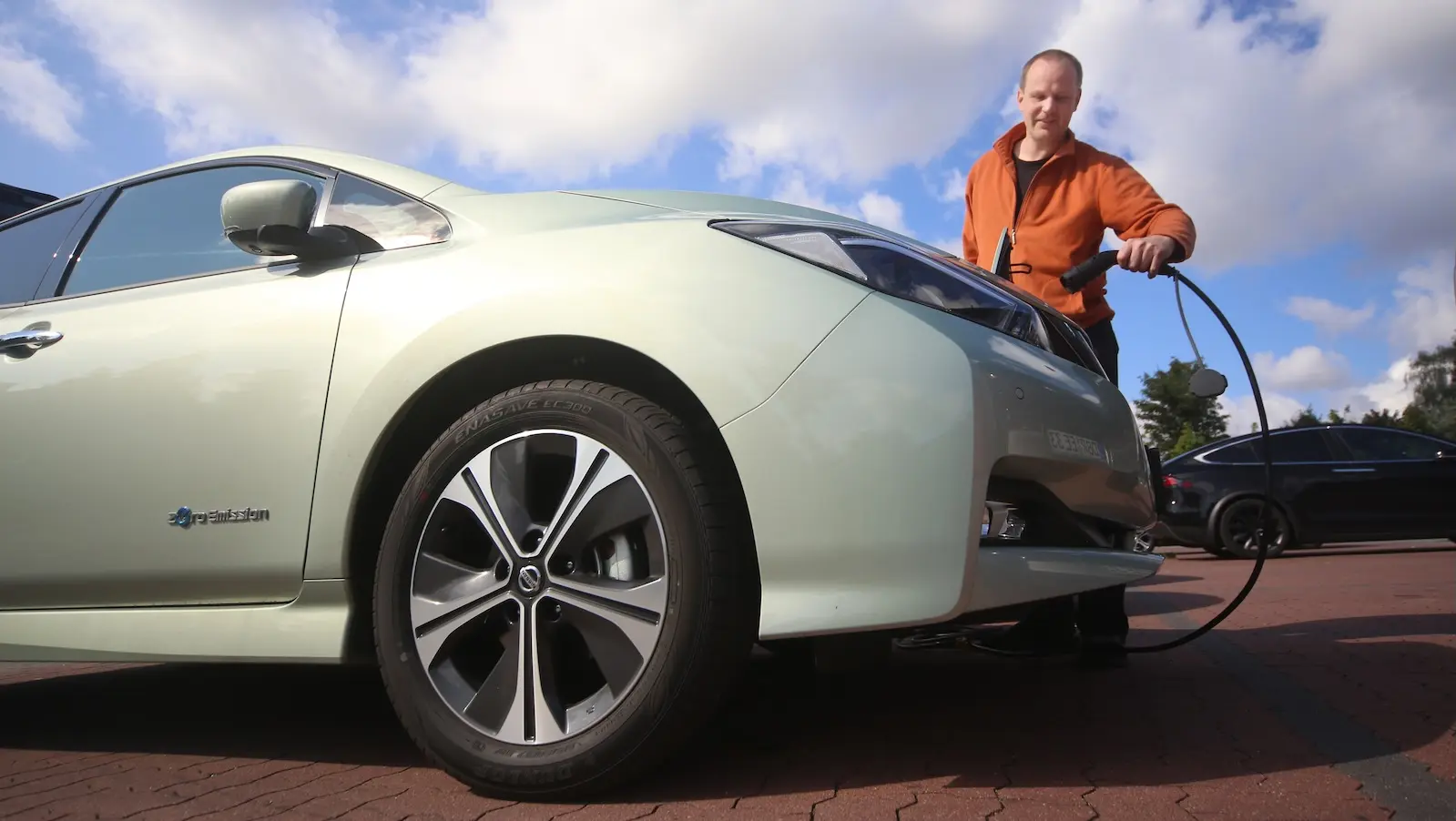
Currently, only a handful of EV models, such as the Nissan Leaf and the Ford F-150 Lightning, are fully equipped for V2G out of the box. However, the industry is moving rapidly toward standardization. Major manufacturers, including Hyundai, Kia, and General Motors, have announced plans to include bidirectional capabilities in their upcoming models. As hardware costs decrease and installation becomes more streamlined, the accessibility of V2G is expected to increase dramatically.
Another area of focus for the Massachusetts pilot is the development of user-friendly software interfaces. To ensure that V2G does not interfere with a driver’s daily needs, apps are being developed that allow participants to set "minimum state of charge" limits. For example, a commuter can specify that their car must always have at least 50% battery life by 7:00 a.m., ensuring they are never left stranded because the grid tapped too much of their energy overnight.
A Chronology of V2G Development
The concept of using EVs as grid assets is not entirely new, but its transition from theory to practice has taken decades.
- Late 1990s: Dr. Willett Kempton of the University of Delaware publishes the first theoretical papers on V2G, outlining the potential for EVs to provide "spinning reserves" for the grid.
- 2010-2015: Early pilot projects emerge in Denmark and Japan, primarily using the Nissan Leaf and the CHAdeMO charging standard, which supported bidirectional flow early on.
- 2020-2022: The launch of the Ford F-150 Lightning brings "Vehicle-to-Home" (V2H) technology to the American mainstream, allowing the truck to power a house during a blackout.
- 2023: California passes legislation (SB 233) requiring all new EVs sold in the state to have bidirectional charging capabilities by 2030, signaling a major regulatory shift.
- 2024: The Massachusetts coalition launches its V2G pilot, marking one of the first large-scale attempts to integrate EVs into a multi-utility demand-response program in the Eastern United States.
Strategic Impact and Future Outlook
The broader implications of the Massachusetts pilot extend far beyond the state’s borders. As more regions look to decarbonize their economies, the "virtual power plant" model is becoming a cornerstone of energy policy. By aggregating thousands of small energy resources into a single, controllable entity, grid operators can manage the transition to 100% renewable energy with greater confidence.
The role of commercial fleets—such as electric school buses and delivery vans—is particularly significant in this context. These vehicles have massive batteries and follow highly predictable schedules, making them ideal candidates for V2G. A school bus, for instance, is typically idle during the late afternoon and evening hours—precisely when the grid experiences its highest demand.
In the long term, V2G represents a fundamental democratization of the energy sector. It moves the grid away from a centralized, top-down model toward a distributed, participatory system where consumers are also producers. As the planet continues to warm and the demand for cooling increases, the ability to tap into a "hidden" network of millions of batteries may be the key to preventing grid collapse and ensuring a stable, affordable, and clean energy future. The lessons learned from the streets of Massachusetts today will likely form the blueprint for the global energy systems of tomorrow.