Casey Wasserman’s Agency, The Team, Nears Sale to Private Equity Firm Amidst Scandal Fallout

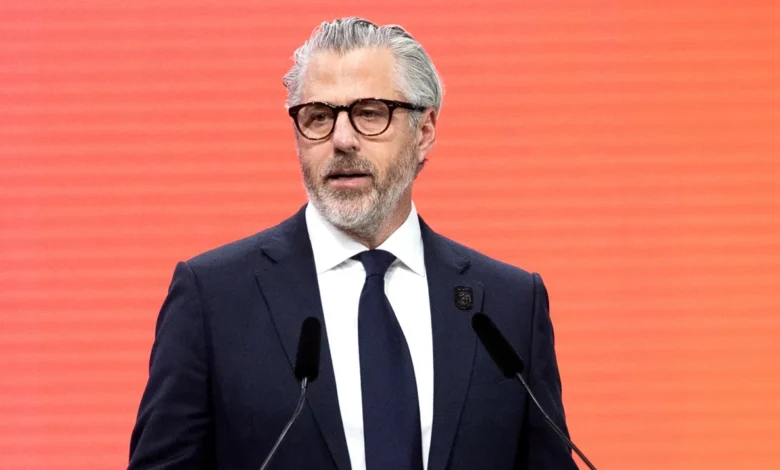
The future of The Team, the prominent talent representation firm founded by Casey Wasserman, is poised for a significant shift, with reports indicating a potential sale of Wasserman’s stake to Providence Equity Partners. This development comes after a turbulent period for the agency, marked by a public auction process and the lingering shadow of Wasserman’s association with Jeffrey Epstein and Ghislaine Maxwell. While external parties showed interest in acquiring the Westwood-based firm, it now appears the most likely outcome is an internal buyout, solidifying Providence Equity Partners’ already substantial influence within the company.
A Shift in Ownership Structure
Sources close to the matter, as reported by Matthew Belloni at Puck, reveal that Wasserman is in active discussions to sell his ownership in The Team to Providence Equity Partners. This private equity firm is not a new player in the agency’s story; they had previously acquired a significant stake in November 2022, a move intended to fuel the company’s expansion. This prior investment laid the groundwork for substantial growth, most notably the acquisition of Brillstein Entertainment less than a year later. Should this deal materialize, it would mean that the firm’s strategic direction would remain under the purview of Providence, the entity that has been instrumental in its recent trajectory.
The impending deal breakthrough arrives approximately three months after the initial round of bids were submitted in April. The auction process, managed by investment bank Moelis & Co., saw interest from several prominent entities, including United Talent Agency and Patrick Whitesell’s nascent venture, WIN. The involvement of Moelis & Co. also carries a notable connection, as the bank’s leader, Ken Moelis, holds a position on Wasserman’s LA28 Olympics Committee board, adding another layer of interconnectedness to the unfolding events.
The Epstein-Maxwell Controversy and Its Repercussions
The pressure to initiate an auction for the agency and the subsequent discussions around a sale were significantly amplified by a wave of negative publicity surrounding Casey Wasserman. In late January, Wasserman’s name surfaced in Department of Justice documents pertaining to convicted sex trafficker Jeffrey Epstein and his accomplice, Ghislaine Maxwell. This revelation triggered a swift and severe backlash.
Timeline of the Controversy and Its Impact
- January 2024: Department of Justice documents are unsealed, revealing past communications between Casey Wasserman and Ghislaine Maxwell. The documents detail a series of flirtatious messages exchanged in 2003, though no criminal activity was explicitly mentioned. Additionally, it was revealed that Wasserman, along with other prominent figures like Bill Clinton, Chris Tucker, and Kevin Spacey, had flown on Epstein’s private jet in 2002 for a purported AIDS research trip to Africa.
- January 31, 2024: Wasserman issues a public apology, stating, "I deeply regret my correspondence with Ghislaine Maxwell which took place over two decades ago, long before her horrific crimes came to light. I never had a personal or business relationship with Jeffrey Epstein."
- February 2024: The fallout intensifies. Over 20 artists, including notable names like Laufey, Chappell Roan, Best Coast, and John Summit, publicly announce their decision to sever ties with Wasserman. The agency’s social media platforms are inundated with calls for other talent to distance themselves from the mogul.
- February 14, 2024: In response to the mounting pressure and the artist exodus, Providence Equity Partners issues a statement publicly supporting Mike Watts, the company’s president. The statement reaffirms Providence’s commitment to the agency’s growth and its diverse representation across sports, music, and entertainment.
- March 2024: The agency undergoes a rebranding, changing its name from Wasserman to "The Team." This rebranding effort, which previously marketed itself as "Team Wass," is widely seen as a strategic move to distance the company from its founder amidst the ongoing controversy.
- April 2024: The auction process for the agency, managed by Moelis & Co., commences with the submission of the first round of bids.
- July 2024: Reports emerge that Casey Wasserman is in talks to sell his stake in The Team to Providence Equity Partners, potentially averting a sale to an outside entity.
In an internal email to employees in February, Wasserman acknowledged his role in the unfolding situation, conceding, "I have become a distraction" to the company’s business operations. This admission underscored the severity of the crisis and the need for decisive action.
Providence Equity Partners, a source previously indicated to The Hollywood Reporter, exerted pressure on Wasserman following the barrage of negative headlines and the subsequent artist rebellion. This pressure was a significant factor in the decision to explore a sale of the agency.
The Structure and Scope of The Team
The rebranding to "The Team" in March was a clear signal of an effort to decouple the company’s identity from its founder. Prior to this, the agency was widely recognized as Wasserman, or "Team Wass." Regardless of its moniker, the firm remains a formidable force in the sports representation landscape. The increasing integration of professional athletes into the broader entertainment economy has made sports representation one of the most lucrative and sought-after sectors in the talent agency business.
An S&P Global report from June of last year detailed the impressive financial performance of Wasserman’s sports division, which generated $266 million in revenue in 2024, accounting for 29% of the company’s total revenue. This figure positions the agency’s sports arm as the second-largest in Hollywood, trailing only CAA’s sports division, which reported a staggering $578 million in revenue during the same period.
Beyond its dominant presence in sports, The Team boasts a robust music agency group, significantly bolstered by the 2021 acquisition of Paradigm’s music division. Furthermore, the company encompasses the production-management firm Brillstein, a dedicated marketing services unit, and a portfolio of other valuable properties. Since its inception in 2002, Wasserman has strategically acquired numerous creative firms and boutique agencies, employing approximately 4,000 individuals as of early this year.
Providence Equity Partners’ investment in Wasserman came after previous investors, RedBird Capital and Madrone Capital Partners, divested their stakes. Their prior involvement was complicated by their ownership stakes in sports teams – AC Milan, a football club, and the NFL’s Denver Broncos. Such affiliations are often incompatible with direct ownership in sports talent representation firms due to potential conflicts of interest.
Wasserman’s Role in LA28 and Ongoing Scrutiny
Concurrent with these business developments, Casey Wasserman continues to hold a high-profile position as the chair of LA28, the organizing committee for the 2028 Olympic Games in Los Angeles. The controversy surrounding his association with Epstein and Maxwell has not gone unnoticed by city officials. Mayor Karen Bass and other city leaders have publicly called for Wasserman’s resignation from his Olympic role. However, these decisions ultimately rest with the LA28 board, which has, to date, maintained its support for Wasserman.
In February, LA28 announced that it had engaged an external law firm to conduct an investigation into Wasserman’s correspondence with Maxwell. The findings of this investigation, as released by LA28, concluded that his "relationship with Epstein and Maxwell did not go beyond what has already been publicly documented." This internal review, while providing some reassurance, has not entirely silenced the calls for his departure from the Olympic organizing committee.
Broader Implications for the Talent Representation Industry
The potential sale of Casey Wasserman’s stake in The Team to Providence Equity Partners carries several significant implications for the broader talent representation industry.
- Consolidation and Private Equity Influence: This potential deal underscores the increasing trend of private equity firms playing a pivotal role in the ownership and strategic direction of major talent agencies. Providence’s deep involvement suggests a long-term commitment to growth and expansion, potentially through further acquisitions or strategic partnerships.
- Impact of Scandals on Business Operations: The saga highlights the profound and often immediate impact that personal controversies can have on a business, particularly in industries heavily reliant on reputation and public trust. The artist rebellion and the subsequent pressure on Wasserman demonstrate the power of talent in shaping the operational landscape of their representation firms.
- Strategic Repositioning: The rebranding to "The Team" signifies a conscious effort by agencies to adapt to changing public perceptions and to distance themselves from potentially damaging associations. This strategic maneuver aims to preserve client relationships and attract new talent by projecting an image of stability and forward-thinking.
- Resilience and Adaptation: Despite the significant challenges, the fact that The Team is reportedly on the verge of a deal with a long-term financial partner suggests a degree of resilience within the organization. Providence’s continued investment indicates a belief in the underlying strength of the agency’s business model, its talent roster, and its future potential, even amidst adversity.
- The Interplay of Sports and Entertainment: The continued strength of The Team’s sports division, as evidenced by its substantial revenue generation, reinforces the growing importance of sports within the broader entertainment ecosystem. This trend is likely to encourage further investment and innovation in sports representation.
As Casey Wasserman navigates this transition away from direct management, his continued leadership of LA28 remains a subject of public and political scrutiny. The resolution of the agency sale will undoubtedly shape the future trajectory of The Team and provide further insight into the evolving dynamics of the talent representation world.