Google expands its AI ecosystem with the launch of CC a shared family intelligence agent designed to synthesize household data

While Google’s generative AI models have faced stiff competition from rivals like OpenAI’s GPT-4 and Anthropic’s Claude, the technology giant is leveraging its most formidable asset—the vast, interconnected ecosystem of personal user data—to carve out a distinct niche in the consumer market. The latest development from Google Labs, an experiment known as CC, marks a strategic pivot toward multi-user AI integration. By extending the capabilities of individual-centric AI to the domestic sphere, Google is attempting to solve the fragmentation of family scheduling, information management, and collaborative task tracking through a centralized, intelligent agent.
The Evolution of Personalized AI: A Chronological Overview
The genesis of the CC project can be traced back to the broader strategic initiatives Google announced in early 2025. At the time, the company signaled its intention to move beyond static search results and chatbots toward "agentic" AI—systems capable of performing actions across various applications. The original iteration of this technology culminated in the launch of "Gemini’s Daily Brief," a feature that parsed a user’s Gmail, Calendar, and Drive to synthesize actionable summaries.
By late 2026, Google engineers had identified a significant gap in the market: while personal AI agents were effective for individuals, modern households function as complex, multi-person organizations. The transition from the solitary Daily Brief to the collaborative CC model represents an effort to map the AI onto the social structure of a family. The development timeline suggests a rapid deployment phase, moving from internal testing to the current Google Labs experiment within an eighteen-month window, reflecting the company’s aggressive push to embed Gemini into the daily routines of its billion-plus user base.
Functional Mechanics: How CC Operates within the Household
Unlike standard AI chatbots that function as standalone tools, CC operates as a distinct entity within the Google ecosystem. It is configured as its own Google account, which serves as a nexus for up to six family members. This architecture is intentional, designed to solve the perennial privacy concerns associated with shared accounts. Because CC exists as a separate user entity, it does not automatically ingest the entirety of a family member’s private data.
Instead, the system relies on a "permission-first" framework. Users must explicitly designate which information the agent can access. For instance, a parent might authorize CC to monitor emails from a specific school domain to track upcoming events, permission slips, or extracurricular scheduling. This granular control extends to Google Chat, where users can tag the agent in conversations to relay information, or a shared Google Drive folder, which acts as a repository for invoices, permission documents, and household planning assets.
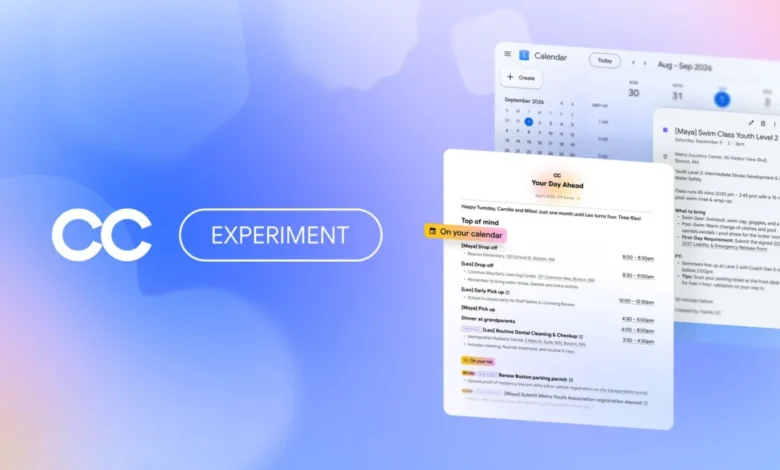
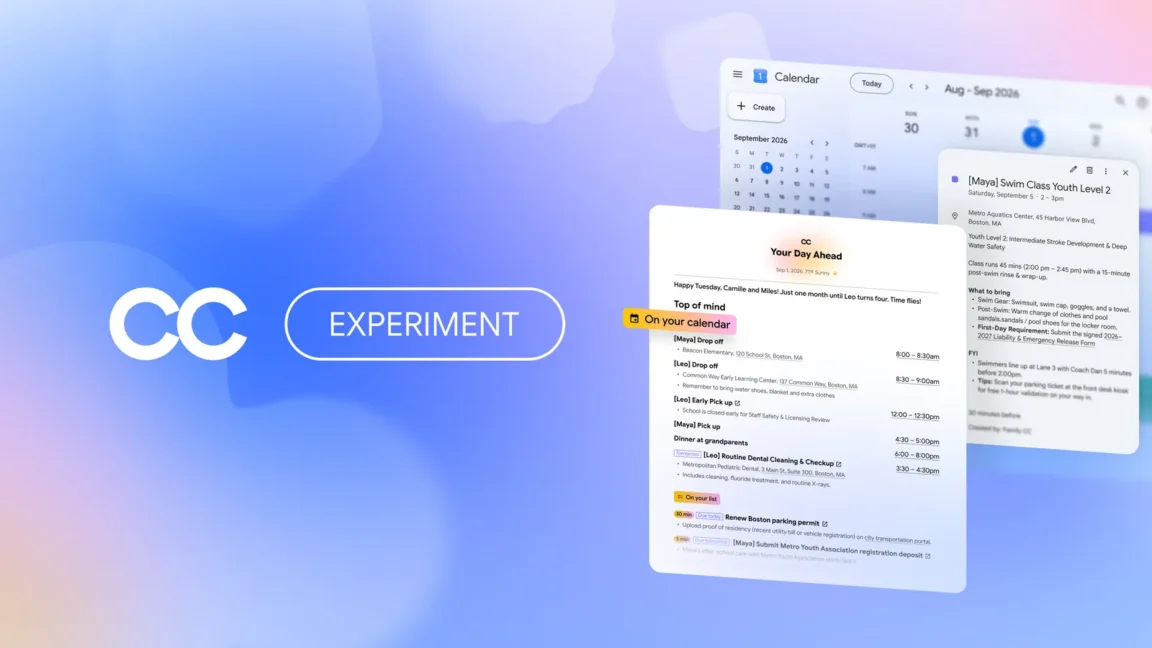
The core utility of CC is the "Your Day Ahead" brief. This morning digest is not merely a list of calendar events; it is a synthesis of the household’s collective obligations. By cross-referencing the shared calendar with the emails and documents entrusted to the agent, CC provides a comprehensive snapshot of the day, flagging potential conflicts, overdue tasks, and upcoming deadlines that affect multiple family members.
Supporting Data and Market Context
The move into family-oriented AI is supported by data indicating a growing reliance on digital coordination tools. According to recent industry reports on domestic productivity, the average household manages between four and seven distinct digital calendars or task lists, leading to what researchers call "coordination friction." Google’s strategy is to mitigate this friction by centralizing these disparate data points into a single "source of truth."
Market penetration for Google Workspace and Google’s broader consumer apps remains high, with over 3 billion monthly active users across its suite of products. By layering an AI agent over this existing infrastructure, Google minimizes the barrier to entry for consumers. Unlike third-party automation tools that require manual integration, CC functions natively within the tools families already utilize. This integration is crucial for adoption; historical data in the tech sector shows that utility-based AI tools are most successful when they reduce the "cognitive load" of the user rather than requiring them to learn new, complex workflows.
Official Responses and Strategic Implications
While Google has not released specific internal metrics regarding the uptake of the CC experiment, representatives from Google Labs have characterized the rollout as a "listening phase." The primary objective, according to official communications, is to observe how families interact with an agent that has a memory of their collective life.
Industry analysts view this as a critical test for the "Agentic Era." If successful, CC could set a new standard for how households interact with machine learning. However, the move also carries significant implications for data privacy and antitrust scrutiny. By consolidating the digital lives of six family members into a single AI agent, Google is deepening its data moat. This "contextual advantage"—the ability to understand the complex, messy reality of daily life through emails, chats, and documents—is something that competitors without a robust suite of consumer applications struggle to replicate.
Broader Impact and Ethical Considerations
The deployment of CC raises questions regarding the boundaries of digital convenience and parental supervision. Because the agent can be configured to track information for up to six users, it has the potential to function as a powerful monitoring tool within a household. Google has attempted to address this by maintaining a transparent interaction log, where each user can see what information the agent has ingested or summarized. Nevertheless, the societal impact of delegating household coordination to an algorithm remains a subject of ongoing debate among privacy advocates.
Furthermore, the integration of CC into the Google ecosystem suggests that the company is moving toward a future where the AI is no longer a tool you "visit," but a presence that "lives" within your workspace. This shift is consistent with the broader industry trend of "ambient computing." As these models grow more sophisticated, the distinction between a passive document repository and an active, organizing intelligence will continue to blur.
Analytical Outlook: The Future of Collaborative Intelligence
The CC project is not just a feature update; it is a template for the next generation of digital assistance. By focusing on the family unit, Google is targeting one of the most data-rich environments in existence. The challenges moving forward will be twofold: technical and ethical. Technically, the AI must prove it can accurately synthesize information without producing hallucinations that could lead to missed appointments or lost documents. Ethically, Google must ensure that the convenience of a shared agent does not come at the cost of individual autonomy or excessive data surveillance.
As the experiment progresses, the integration of generative AI into the domestic sphere will likely become more seamless. The ability of CC to move from passive summarization to active participation—such as drafting documents or suggesting schedule adjustments—represents a significant leap in the capability of household management software. Whether this leads to a new standard of domestic efficiency or a new set of privacy-related hurdles remains to be seen. However, by positioning Gemini as the central node of the family’s digital life, Google has signaled that the future of AI is not just about intelligence, but about the context in which that intelligence is applied.
In the coming months, the success of CC will be measured by user retention and the depth of the integrations requested by families. If the agent proves its value in reducing the daily friction of household management, it will likely serve as a blueprint for similar enterprise-level tools, where teams rather than families rely on shared AI agents to navigate the complexities of collaborative work. For now, CC remains an experimental, yet highly indicative, glimpse into how artificial intelligence is being re-engineered to serve the collective, rather than just the individual.
Related posts: