Climate Reserve Emerges as a Critical Lifeline for Displaced Scientists Amidst Federal Funding Retrenchment

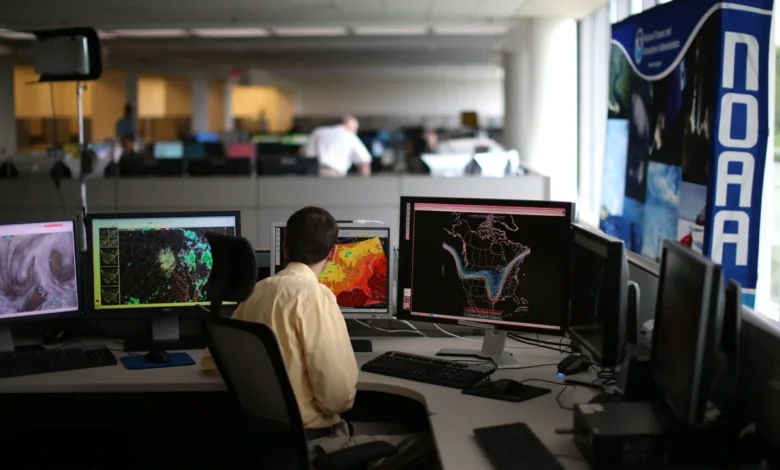

The landscape of American climate science, once considered the gold standard of global research, underwent a seismic shift last year. Following the inauguration of President Donald Trump for his second term, the federal government initiated a sweeping policy realignment that effectively dismantled vast swathes of the nation’s environmental research apparatus. The resulting budgetary austerity saw billions of dollars in research grants rescinded, with thousands of career scientists, data analysts, and policy experts at agencies such as the Environmental Protection Agency (EPA) and the National Oceanic and Atmospheric Administration (NOAA) facing sudden termination. This abrupt transition left a vacuum in critical infrastructure, threatening to erase decades of institutional knowledge and jeopardize ongoing longitudinal studies essential for global climate mitigation.
A Chronology of Institutional Disruption
The erosion of federal climate science did not happen overnight, but its acceleration in the first quarter of the new administration was unprecedented. By the end of the first 100 days of the second Trump administration, the scope of the cuts had become clear. Key climate-focused divisions were shuttered, and access to internal databases—some of which provided real-time monitoring of greenhouse gas emissions—was restricted or deactivated.
For the scientific community, the period was defined by confusion and professional precarity. By mid-spring, the impact had permeated every level of the academic and governmental hierarchy. Senior officials, many of whom had spent decades developing the regulatory frameworks for environmental health, found themselves outside the halls of power, their projects stalled and their data repositories orphaned. It was within this climate of uncertainty that informal networks began to coalesce, driven by the shared realization that the loss of human capital was as damaging as the loss of funding.
The Formation of the Climate Reserve
In July, a pivotal workshop hosted by the Aspen Global Change Institute in Colorado served as the crucible for what would become the Climate Reserve. More than 30 experts, including former high-ranking administration officials, gathered to address the critical question of how to preserve essential climate work in a hostile political environment. Aparna Shrivastava, a former senior climate official in the Biden administration, emerged as the lead architect of the initiative.
The Climate Reserve was structured not as a replacement for federal government functions, but as a strategic "parachute" for the scientific community. It functions as a rapid-response network designed to identify "orphaned" projects—vital research currently in limbo—and pair them with nonprofit, academic, or private-sector hosts. By providing the necessary bridge funding and institutional support, the Reserve ensures that these projects do not collapse during periods of federal neglect.
Strategic Impact and Operational Scope
As of late this year, the Climate Reserve has successfully funded and placed more than 50 climate experts into new roles. These fellows are currently embedded within a diverse range of organizations, including the Environmental Protection Network, the University of Minnesota, and various international NGOs.
The scope of the work being rescued is extensive. Perhaps most notably, the initiative has successfully resuscitated the EJScreen project, an essential digital mapping tool that provides granular data on pollution exposure in vulnerable American communities. Without the intervention of the Climate Reserve and its partners, such as the Open Environmental Data Project, this tool would have become obsolete, leaving local policymakers without the data required to address environmental justice concerns.
Internationally, the Reserve is funding critical climate monitoring in five African nations, focusing on greenhouse gas emission tracking and sea-level rise modeling in coastal regions. These projects, often deemed "unsexy" by the standards of mainstream media, provide the foundational data necessary for global climate treaties and local adaptation strategies.

The Philosophy of Movement Generosity
Central to the success of the Climate Reserve is the concept of "movement generosity." As described by participants such as Ben Poulter, who oversees emissions-monitoring programs at the nonprofit Spark, the initiative operates on the premise that the scarcity of resources requires unprecedented levels of institutional collaboration. Rather than competing for limited private grants, organizations under the Reserve’s umbrella are encouraged to share data, divide the labor of complex research, and coordinate policy outreach.
This collaborative model is particularly evident in the technical work performed by groups like the Data Foundation. By standardizing the methodologies used to process satellite data for methane detection, the Reserve-funded experts are preventing the "siloing" of information that often leads to conflicting climate models. By harmonizing these datasets, the initiative increases the reliability of climate data for government officials and private stakeholders alike, effectively insulating the science from political interference.
Addressing the Human Cost of Policy Shifts
The human impact of these political changes is profound. Many of the scientists displaced by the federal cuts possess specialized, decades-long expertise that is difficult to replace. Shrivastava notes that the professional displacement is so pervasive that she encountered a former climate advisor working as a rideshare driver while en route to a funding meeting.
John Balbus, a former senior official at the Department of Health and Human Services (HHS), highlights the psychological and ethical weight of this transition. For professionals who have dedicated their lives to public service, the inability to continue their work is not merely a career setback but a profound societal loss. Balbus, who now continues his work on the health impacts of wildfire smoke and extreme heat through the Federation of American Scientists, argues that the demand for climate expertise is increasing even as the political support for it wanes. "The need is only going to get stronger every year," Balbus remarked, emphasizing that the health and safety of the American public remain inextricably linked to the science that the government has chosen to deprioritize.
Challenges and Future Implications
The Climate Reserve faces a delicate balancing act. While it seeks to be transparent about its goals to attract more funding, it must also maintain a level of operational security. The current administration has demonstrated a willingness to target programs or organizations that remain critical of its environmental agenda. Consequently, many researchers within the network maintain a degree of discretion to protect their future eligibility for federal grants, should the political climate shift in the coming years.
The financial goal of the organization is equally ambitious: leadership aims to triple its current funding by the end of next year. This expansion is essential to address the backlog of projects still requiring support. However, the reliance on private and philanthropic funding creates its own set of long-term questions. While private capital can sustain research in the short term, it lacks the scale and the regulatory mandate of the federal government.
Conclusion: A Resilient Future for Climate Data
The emergence of the Climate Reserve represents a significant evolution in how the scientific community responds to political pressure. By creating an infrastructure for "movement generosity," the organization has managed to maintain continuity in projects that are vital to public health, environmental safety, and global climate goals.
As the organization looks toward the future, its leaders emphasize that they are not a permanent substitute for federal research agencies. The goal is to build a more collaborative and resilient scientific ecosystem that can withstand future shifts in political priorities. Whether the Climate Reserve can scale sufficiently to replace the massive federal infrastructure that was lost remains to be seen, but its progress thus far suggests that the commitment of the scientific community to public service remains as robust as ever. By acting as a bridge between the era of federal climate leadership and the current period of retrenchment, the Climate Reserve is ensuring that, despite the political noise, the essential work of understanding and adapting to a warming planet continues.