Cats Dogs Bird Flu Questions
Understanding H5N1 Avian Influenza: Cats, Dogs, and Your Pet’s Safety
The emergence of highly pathogenic avian influenza (HPAI), commonly known as bird flu, particularly the H5N1 strain, has generated significant public concern, especially regarding its potential impact on domestic animals like cats and dogs. While primarily a disease of birds, H5N1 has demonstrated an expanding host range, leading to sporadic infections and fatalities in mammals, including canids and felids. This article delves into the current scientific understanding of H5N1 transmission and infection in cats and dogs, addresses common questions, and outlines crucial preventative measures for pet owners to ensure the safety of their animals and to mitigate potential zoonotic risks.
The H5N1 virus is an influenza A virus. Influenza A viruses are classified into subtypes based on two surface proteins: hemagglutinin (HA) and neuraminidase (NA). The H5N1 subtype is characterized by the fifth HA subtype and the first NA subtype. While avian species are the natural reservoir for many influenza A viruses, including H5N1, the virus can occasionally spill over into other animal populations. Historically, H5N1 outbreaks in birds have been the primary driver of human infections, often linked to direct or close contact with infected poultry. However, recent developments have highlighted the increasing concern over mammalian infections.
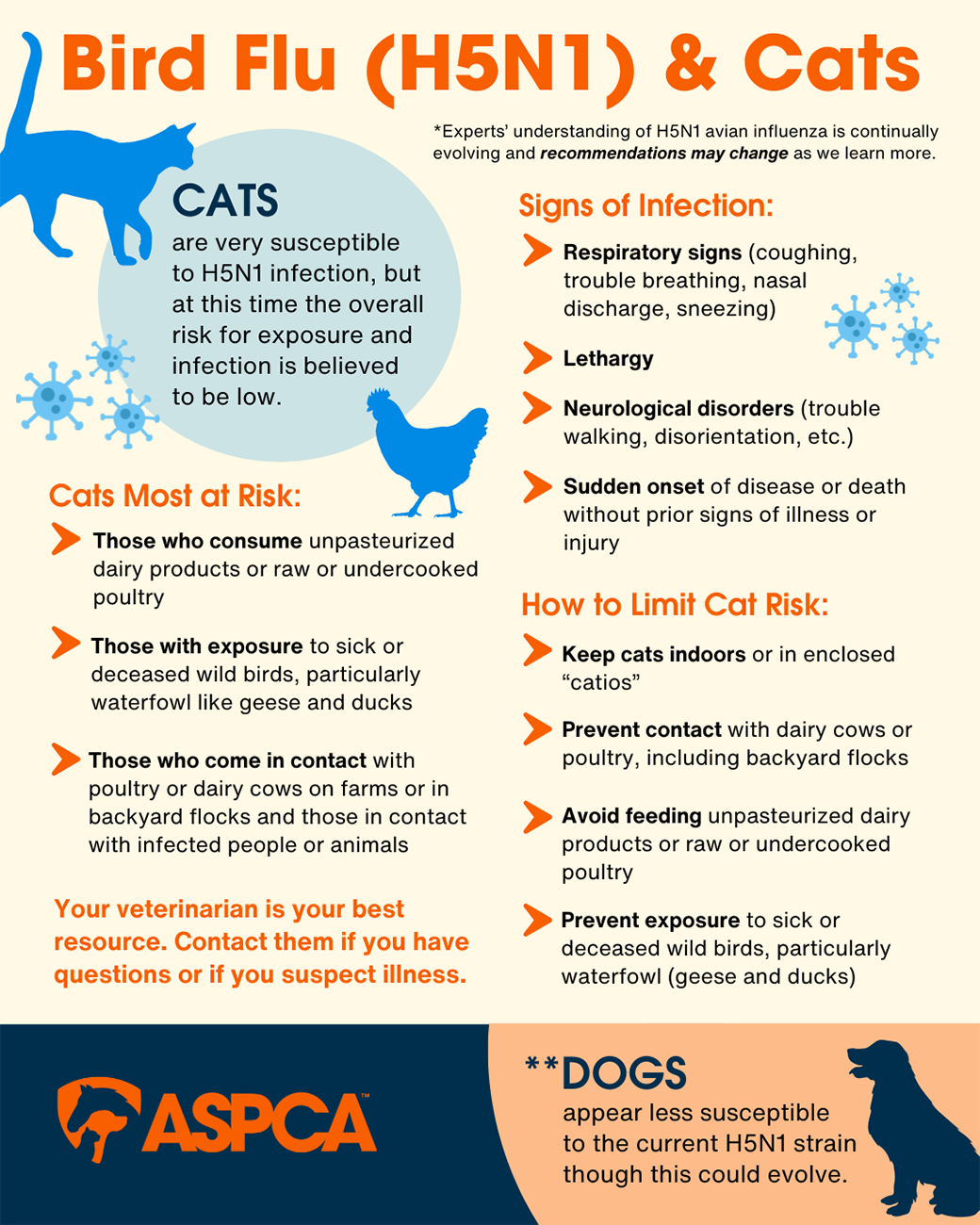
The pathway for H5N1 transmission to cats and dogs is multifaceted and largely depends on their exposure to infected avian sources. In domestic settings, cats are more susceptible to infection due to their predatory behavior and scavenging habits. They may come into contact with infected wild birds, either through direct predation of sick or dead birds or by scavenging carcasses. In environments with high H5N1 prevalence in wild bird populations, the risk to domestic cats is elevated. Dogs, while generally less likely to prey on birds than cats, can still be exposed through scavenging, consuming raw or undercooked infected poultry, or through close contact with infected animals, including cats. The ingestion of infected tissues or fluids, or contact with contaminated feces or respiratory secretions, are primary routes of exposure.
Symptoms of H5N1 infection in cats and dogs can be varied and may mimic other common feline and canine illnesses, making a definitive diagnosis based solely on clinical signs challenging. However, a constellation of symptoms should raise suspicion, especially in regions with ongoing avian flu outbreaks. For cats, common signs include sudden onset of severe lethargy, fever, loss of appetite, difficulty breathing (dyspnea), coughing, sneezing, nasal discharge, vomiting, diarrhea, neurological signs such as disorientation or seizures, and conjunctivitis. In some severe cases, cats may exhibit rapid deterioration of their health, leading to respiratory failure and death. The mortality rate in infected cats can be alarmingly high.
Dogs can present with similar, though often less pronounced, symptoms. These may include fever, lethargy, loss of appetite, coughing, sneezing, nasal discharge, vomiting, and diarrhea. Neurological signs can also occur. While some dogs may recover from mild infections, more severe cases can lead to pneumonia and other complications. It’s crucial to note that asymptomatic or subclinical infections are also possible in both species, meaning an animal could be infected and shed the virus without displaying obvious signs of illness. This poses a significant challenge for surveillance and control efforts.
Diagnosing H5N1 infection in cats and dogs requires veterinary intervention and specific laboratory testing. A veterinarian will conduct a thorough physical examination and gather information about the animal’s history, including any potential exposure to wild birds or contaminated environments. Diagnostic tests typically involve collecting biological samples such as nasopharyngeal swabs, fecal samples, or blood. These samples are then analyzed using techniques like real-time reverse transcription polymerase chain reaction (RT-PCR) to detect the presence of viral RNA. Serological tests may also be employed to detect antibodies produced by the animal’s immune system in response to the virus, though these are more useful for diagnosing past infections.
The risk of H5N1 transmission from infected cats or dogs to humans, known as zoonotic transmission, is a significant concern, though currently considered low. The primary route of human infection has historically been direct or close contact with infected birds. However, documented cases of H5N1 infection in cats and dogs, and subsequent transmission to humans, underscore the need for caution. These rare instances have typically involved individuals with prolonged and intense exposure to infected animals, often without adequate personal protective equipment. The specific factors that facilitate or hinder such transmission are still under investigation, but it highlights the importance of minimizing direct contact with sick or potentially infected animals.
Preventing H5N1 infection in cats and dogs is paramount and relies on a multi-pronged approach focusing on limiting exposure to the virus. For pet owners, understanding and implementing these preventative measures is critical. The most effective strategy is to prevent your pets from interacting with wild birds, especially sick or dead ones. This includes keeping cats indoors, particularly during periods of high avian flu activity in your region. For dogs, maintaining leash control during walks and preventing them from scavenging or consuming dead animals is essential. Avoid areas where wild birds congregate, such as parks with large waterfowl populations, if avian flu is a concern.
Maintaining excellent hygiene practices is also crucial. Regularly clean and disinfect pet food and water bowls, bedding, and any areas where pets may come into contact with potentially contaminated materials. Wash your hands thoroughly with soap and water after handling pets, especially if they have been outdoors or if you suspect they may have been exposed to infected birds. If you own poultry and also have cats or dogs, implement strict biosecurity measures to prevent cross-contamination. This includes keeping poultry and pets separated and thoroughly cleaning any equipment or clothing that has been in contact with poultry before interacting with pets.
If you suspect your cat or dog is showing symptoms suggestive of H5N1 avian influenza, or if they have had known contact with a sick or dead bird, contact your veterinarian immediately. Do not attempt to treat the animal yourself. It is crucial to inform your veterinarian about your concerns and any potential exposure. They will be able to advise on the necessary precautions to take when bringing your pet in for examination, including potential isolation protocols to protect other animals and veterinary staff. Wear gloves and a mask when handling a potentially sick animal, and wash your hands thoroughly afterward.
The role of wild birds as the primary reservoir for H5N1 cannot be overstated. Public awareness campaigns and reporting mechanisms for finding sick or dead wild birds are vital for early detection and response to outbreaks. If you encounter a dead wild bird, do not touch it with your bare hands. Report it to your local wildlife authorities or public health department. They have the expertise and protocols for safely collecting and testing these birds. This information is crucial for tracking the virus’s spread and informing risk assessments for both domestic animals and humans.
While the focus is often on cats and dogs, it’s important to acknowledge that other mammals can also be infected with H5N1. This includes ferrets, which are known to be susceptible to influenza viruses, and larger mammals like seals and foxes. The expanding host range of H5N1 underscores the dynamic nature of this virus and the ongoing need for surveillance and research. Understanding the ecological and epidemiological factors that contribute to these cross-species transmissions is essential for predicting and preventing future outbreaks.
The global response to avian influenza is a collaborative effort involving public health organizations, veterinary authorities, and researchers. International cooperation is vital for sharing information, coordinating surveillance efforts, and developing effective control strategies. The World Health Organization (WHO) and the World Organisation for Animal Health (OIE) play crucial roles in this global effort. Continuous monitoring of influenza viruses in both animal and human populations is essential for detecting novel strains and assessing pandemic potential.
Vaccination is a critical tool in controlling influenza viruses. While vaccines for H5N1 exist for poultry and some human strains, specific H5N1 vaccines for cats and dogs are not widely available or routinely recommended for the general pet population at this time. The decision to vaccinate would depend on specific risk assessments, the prevalence of the virus in a particular region, and veterinary guidance. Research into developing effective and safe vaccines for companion animals is an ongoing area of interest, particularly in high-risk scenarios.
The scientific understanding of H5N1 avian influenza in cats and dogs is constantly evolving. Ongoing research focuses on understanding the pathogenesis of the virus in these species, identifying factors that influence susceptibility and transmissibility, and developing more sensitive diagnostic tools. Furthermore, epidemiological studies are crucial for tracking the spread of the virus and assessing the level of risk to both animal and human populations. This continuous research effort is vital for informing public health policies and veterinary recommendations.
In conclusion, while H5N1 avian influenza remains primarily a disease of birds, its capacity to infect and cause severe illness in cats and dogs presents a significant concern. Pet owners must remain vigilant and informed about the potential risks. By implementing stringent preventative measures, including limiting exposure to wild birds, practicing good hygiene, and seeking prompt veterinary care when necessary, owners can significantly reduce the likelihood of their pets contracting the virus. Furthermore, by contributing to public health efforts, such as reporting sick wild birds, individuals play a vital role in the broader control of this zoonotic threat. The low but present risk of zoonotic transmission from infected pets to humans emphasizes the importance of a cautious and informed approach to animal husbandry and public health.