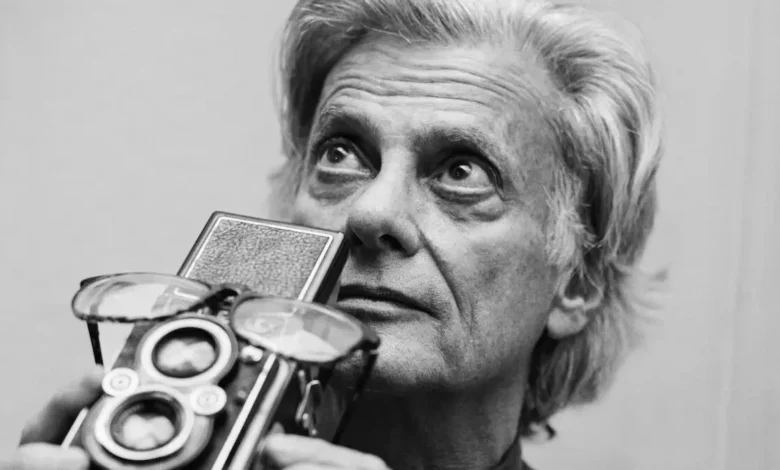
The release of Avedon, the latest documentary feature directed by Ron Howard, marks a significant milestone in the preservation and analysis of 20th-century visual culture. The film, which meticulously chronicles the life and career of Richard Avedon, serves as both a biographical study and a masterclass in the evolution of portraiture. Through the expert editing of Andrew Morreale, the documentary navigates the vast archives of the Richard Avedon Foundation to present a cohesive narrative of a man who fundamentally altered the metaphysical approach to the photographic medium.
A Chronology of a Visionary
Born in New York City in 1923, Richard Avedon’s trajectory began long before he held a professional camera. His early life was marked by a hyper-observational quality, a self-described practice of blinking to "capture" mental images of the world around him. This foundational period of visual development preceded his entry into the U.S. Merchant Marines at age 19, a tenure that would prove pivotal to his professional identity.
Tasked with capturing approximately 100,000 identification photographs for service members, Avedon encountered a repetitive, utilitarian environment. It was within this constrained, bureaucratic setting that he discovered the power of the blank white background. By stripping away environmental context, Avedon forced a focus on the subject’s internal state, a stylistic hallmark that would define his career from the mid-1940s through his death in 2004. Over these six decades, Avedon completed an estimated 16,000 sittings, maintaining an average of one session per working day for 60 years.
The Paradox of the Lens
Avedon’s career was defined by a central contradiction: he was simultaneously a titan of high-fashion photography—a realm associated with artifice and impossible standards of beauty—and a radical democratic humanist. While his work for Harper’s Bazaar and Vogue established the visual language of mid-century glamour, his personal projects often veered toward the raw, the unflattering, and the existential.
The documentary highlights this duality by contrasting his commercial success with his more challenging series, such as his 1980 documentation of the American West. When Avedon presented these portraits of oil workers, drifters, and social outcasts, the aesthetic was so jarringly authentic that many contemporary New York galleries initially declined to exhibit them, fearing they lacked the "polish" expected of a high-profile photographer. However, Avedon’s refusal to compromise his vision eventually redefined the boundaries of fine art photography, proving that the same eye which captured the elegance of a fashion model could extract profound humanity from an unknown subject in a remote town.
Technical Mastery Through Invisibility
One of the most compelling aspects of the film is its exploration of Avedon’s methodology. Rather than relying on complex lighting rigs or technical post-processing, Avedon’s technique was rooted in psychological engagement. As noted by subjects and collaborators, including Isabella Rossellini, Avedon favored shorter, high-intensity sessions over long, repetitive shoots.
His process was often designed to catch a subject in a moment of vulnerability or cognitive fatigue. By reducing the duration of a session—sometimes spending the majority of an hour in conversation before executing only a handful of exposures—he stripped away the subject’s public performance. This approach is exemplified in his 1957 portrait of Marilyn Monroe. After a day of capturing the star in her "glamour" persona, Avedon waited for the final moments of the session when her exhaustion took over. The resulting image, which captures a somber, reflective woman rather than the iconic bombshell, remains one of the most cited examples of his ability to bypass the curated image.
Collaborative Perspectives
The documentary features a robust cast of contributors who provide critical context to Avedon’s influence. Industry figures including Tina Brown, Calvin Klein, and art dealer Larry Gagosian provide testimonials on his impact on media and the art market. Furthermore, the inclusion of his son, John Avedon, offers a rare, intimate look at the photographer’s private struggles, including his complex relationships and the impact of his sister’s mental illness on his artistic output.
James Martin, executive director of the Richard Avedon Foundation, serves as a guide through the labyrinthine archives. His insights underscore the sheer volume of Avedon’s output, which encompasses everything from iconic portraits of John Lennon, Orson Welles, and J. Robert Oppenheimer to his experimental work with models in motion. These segments provide the audience with a tangible sense of the scale of Avedon’s legacy, illustrating that his work was not merely a collection of isolated images, but a continuous, six-decade-long interrogation of the human condition.
Analysis: The Evolution of the Image
The implication of Avedon’s work, as articulated in the film, is that the camera is not a tool for objective reality, but a device for creating a psychological encounter. By rejecting the "rules" of photography—such as traditional lighting or formal staging—Avedon created a new standard for what a portrait should achieve.
His transition from the military mug shots of the 1940s to the gritty realism of his later career demonstrates a consistent trajectory: the elimination of the frame as a barrier between the viewer and the subject. Whether photographing the Chicago 7 or the residents of the American West, Avedon sought to remove the "noise" of the subject’s life to reveal their core identity. This "Avedon touch" remains a defining element of contemporary portraiture, influencing generations of photographers who have adopted his preference for stark, high-contrast imagery and unadorned backgrounds.
Legacy and Cultural Impact
The documentary does not shy away from the darker aspects of Avedon’s life, such as his strained familial dynamics and the pressures of maintaining his position at the apex of the fashion industry. Yet, it frames these experiences as essential components of his artistic development. His advertising work, such as the surrealist Obsession fragrance campaigns, is presented not as a departure from his portraiture, but as a continuation of his search for human desire and performance.
In an era where digital manipulation and filter-heavy aesthetics are the norm, the film serves as a timely reminder of the power of the "unfiltered" image. Avedon’s work remains timeless because it focused on the eternal: the tension in a shoulder, the uncertainty in a gaze, and the profound individuality of the human face. By documenting this legacy, Ron Howard has created more than just a biography; he has produced a visual record of a man who taught the world how to look at itself.
Ultimately, Avedon provides a comprehensive look at an artist who transformed the photograph from a passive record into an active, transformative experience. His work continues to inform the visual language of the 21st century, serving as a testament to the belief that with the right approach, a simple piece of white paper and a lens can hold the entirety of a person’s existence. As the film demonstrates, Richard Avedon did not merely photograph the world; he reshaped the way the world was perceived, ensuring his images would remain a permanent part of the global cultural canon.
Related posts: