Beyond the Spring Break Stereotype: How Cancun’s All-Inclusive Resorts Matured Into Global Luxury Destinations

The Evolution of Mexico’s Premier Coastal Hub
Cancún, Mexico, has long occupied a polarized space in the global tourism consciousness. For decades, the coastal city on the northeast coast of the Yucatán Peninsula was predominantly recognized as a high-energy magnet for college students on spring break, characterized by bustling nightclubs, high-density beachfront hotels, and a straightforward model of volume-driven tourism. However, a comprehensive analysis of the region’s hospitality sector over the past twenty years reveals a profound structural transformation. The city that was once defined almost exclusively by accessible, mass-market all-inclusive packages has methodically repositioned itself as a premier destination for sophisticated global travelers seeking hyper-personalized luxury, architectural innovation, and high-end culinary arts.
This evolution did not happen by accident. Driven by shifting consumer demographics, substantial foreign investment, and targeted infrastructure developments by both municipal and federal authorities, Cancún’s hospitality landscape has undergone a multi-phase maturation. Today, the destination spans several distinct micro-regions—ranging from the high-octane energy of the traditional Hotel Zone to the secluded, low-density luxury enclaves of Playa Mujeres and the intimate island atmosphere of Isla Mujeres.
A Historical Chronology of Cancún’s Tourism Development
To understand the current state of Cancún’s luxury all-inclusive market, it is necessary to examine the historical trajectory of the region as orchestrated by Mexico’s national tourism development board, Fonatur.
- The 1970s—Inception and Planning: Fonatur selected the uninhabited barrier island of Cancún as the site for a master-planned resort destination designed to inject foreign currency into the Mexican economy. The initial phase focused heavily on infrastructure, establishing the 22-kilometer, 7-shaped Hotel Zone flanked by the Caribbean Sea and the Nichupté Lagoon.
- The 1980s and 1990s—Mass Tourism Expansion: During this period, international hotel chains recognized the viability of the all-inclusive model in the region. Standardized resorts proliferated, offering predictable amenities, buffet-heavy dining, and standardized entertainment tailored primarily to North American vacationers seeking hassle-free getaways.
- The 2000s—The Spring Break Pinnacle and Diversification: By the turn of the millennium, Cancún was firmly entrenched as the epicenter of North American youth travel. Yet, this era also sowed the seeds of diversification. Developers began acquiring prime land north of the traditional Hotel Zone—most notably Playa Mujeres—laying the groundwork for low-rise, ultra-luxury properties that catered to an entirely different clientele.
- The 2010s—The Rise of Elevated All-Inclusive Concepts: Recognizing that travelers were becoming increasingly discerning, major hospitality brands began dismantling the traditional all-inclusive stigma. Buffets were replaced by Michelin-starred or internationally trained chefs offering à la carte gastronomic experiences. Spa facilities expanded, and personalized concierge and butler services became standard offerings in premier suites.
- The 2020s to Present—Resilience, Modernization, and Hyper-Personalization: Following the disruptions of the global pandemic, Cancún experienced a historic surge in tourism demand. Rather than reverting to older models, new and renovated properties doubled down on wellness integration, sustainability initiatives, advanced digital guest services, and privacy-centric accommodations such as private plunge pools and secluded beachfront villas.
Economic Data and Tourism Metrics
The transformation of Cancún’s hospitality sector is underscored by robust macroeconomic data. According to reports from the Quintana Roo Tourism Board and the federal Ministry of Tourism (Sectur), the state of Quintana Roo—which houses Cancún, the Riviera Maya, and Cozumel—consistently accounts for nearly half of all international tourist arrivals to Mexico.
Furthermore, flight connectivity has served as a primary catalyst for this sustained growth. Cancun International Airport (CUN) operates as Mexico’s second-busiest airport and the country’s primary hub for international arrivals. Direct, nonstop flight corridors connect Cancún to virtually every major metropolitan area in the United States and Canada, alongside an expanding network of long-haul routes connecting major European financial and cultural capitals.
Data regarding average daily rates (ADR) and revenue per available room (RevPAR) within the region reflect a clear pivot toward the luxury segment. Over the past decade, investment in four- and five-star all-inclusive resorts has outpaced construction in the mid-scale category. Industry analysts attribute this trend to travelers’ willingness to pay a premium for friction-free travel experiences that bundle high-end dining, wellness, and accommodations into a single upfront cost.
Geographic Segmentation: Choosing the Right Micro-Destination
Cancún is no longer a monolithic destination. Prospective travelers evaluating the local all-inclusive market must navigate distinct geographical zones, each offering a fundamentally different atmospheric profile and guest experience.
The Traditional Hotel Zone
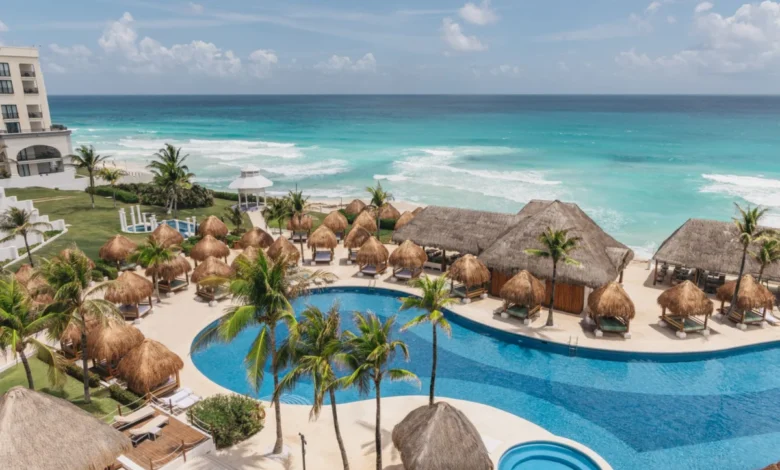
Stretching along the 22-kilometer sandbar, the classic Hotel Zone remains the commercial heartbeat of Cancún. Properties here offer immediate proximity to high-end shopping centers, vibrant nightlife, and cultural landmarks. While historical perceptions associate this area strictly with high-density crowds, modern luxury properties within the Hotel Zone have masterfully engineered private sanctuaries. Guests can experience expansive stretches of pristine white sand and turquoise water while remaining just minutes away from urban conveniences.
Playa Mujeres
Located just north of downtown Cancún, Playa Mujeres represents the tranquil, master-planned antidote to the bustling Hotel Zone. Characterized by wider beaches, dense mangrove ecosystems, and a notable absence of high-density foot traffic, this region has become the preferred location for ultra-luxury brands. Properties in Playa Mujeres generally feature lower architectural profiles, larger footprint sizes per guest, and an atmosphere geared toward seclusion, wellness retreats, and quiet relaxation.
Isla Mujeres
Accessible via a short, scenic ferry ride from the mainland, Isla Mujeres offers an intimate island dynamic. While day-trippers frequently visit its famous beaches, staying at an all-inclusive or boutique property on the island provides an entirely different pace of life. The emphasis here shifts toward golf-cart exploration, local marine life conservation efforts, and a slower, more deliberate island tempo.
Industry Perspectives and Expert Analysis
Hospitality executives and tourism analysts frequently point to Cancún as a case study in destination adaptability.
"The traditional all-inclusive model of twenty years ago was built on predictability and volume," notes a prominent hospitality asset manager specializing in Latin American resort real estate. "Today’s luxury consumer demands authenticity, culinary credibility, and seamless service delivery. Resorts in Cancún that failed to adapt to these shifts lost market share, while those that invested in top-tier culinary talent, holistic wellness infrastructure, and architectural distinctiveness have achieved record-breaking occupancy rates."
Moreover, travel advisors emphasize that the modern all-inclusive resort addresses a specific psychological need for contemporary travelers: the desire to eliminate micro-transactions and logistical friction from the vacation experience. When executed at a high level—featuring world-class wine cellars, bespoke wellness programming, and intuitive butler service—the all-inclusive model transitions from a budget-conscious compromise to the ultimate expression of frictionless luxury.
The Broader Economic and Environmental Implications
The maturation of Cancún’s resort sector carries significant implications for the broader regional economy and environmental stewardship.
On the economic front, the elevation of the tourism product has raised average wages within the hospitality sector, created specialized employment opportunities in culinary arts and high-end guest relations, and stimulated local supply chains. Premium resorts increasingly source produce, spirits, and artisanal goods from regional Mexican producers, strengthening the economic ties between the coast and the interior of the Yucatán Peninsula.
Concurrently, the rapid growth of the region has necessitated heightened scrutiny regarding environmental sustainability. With delicate coastal ecosystems, coral reef systems, and mangrove habitats sitting adjacent to major resort developments, modern operators face mounting pressure from both regulators and eco-conscious consumers. Leading resorts in Cancún have implemented advanced wastewater treatment systems, eliminated single-use plastics, invested in beach preservation and sargassum management technologies, and achieved internationally recognized environmental certifications.
Conclusion: A Definitive Re-evaluation of Cancún
The narrative of Cancún as a singular destination dominated by spring break revelry is fundamentally outdated. While those legacy elements persist in localized pockets, they represent only a fraction of what the destination delivers today. For travelers willing to look beyond outdated stereotypes, Cancún’s contemporary resort ecosystem offers a sophisticated fusion of natural beauty, culinary excellence, and intuitive luxury. Two decades after its initial mass-market boom, the destination has successfully redefined itself, proving that all-inclusive travel can coexist with the highest standards of global hospitality.