Best Applicant Tracking System

The Best Applicant Tracking System: Streamlining Recruitment for Peak Efficiency
Implementing the right Applicant Tracking System (ATS) is no longer a luxury but a critical necessity for organizations seeking to optimize their recruitment processes, enhance candidate experience, and ultimately, hire top talent more effectively. An ATS serves as a centralized database and workflow management tool, automating and streamlining every stage of the hiring lifecycle, from job posting and candidate sourcing to interviewing, offer management, and onboarding. The "best" ATS is not a one-size-fits-all solution; rather, it’s the system that most closely aligns with an organization’s specific needs, budget, and existing technological infrastructure. Key features to evaluate when selecting an ATS include robust search and filtering capabilities, seamless integration with job boards and other HR tools, advanced reporting and analytics, user-friendly interface, mobile accessibility, customizable workflows, security protocols, and comprehensive candidate communication tools. The ultimate goal of any effective ATS is to reduce time-to-hire, minimize recruitment costs, improve the quality of hires, and ensure compliance with labor laws.
Key Features and Functionality of a Top-Tier ATS
When evaluating potential ATS solutions, a deep dive into core features is paramount. At the forefront is job posting and distribution. An ideal ATS will allow for effortless creation of job descriptions and provide one-click posting to a wide array of internal career pages, external job boards (both free and paid), and social media platforms. This multi-channel approach maximizes reach and attracts a more diverse candidate pool. Equally important is candidate sourcing and management. Advanced systems offer features like resume parsing, which extracts key information from resumes and CVs, populating candidate profiles automatically. This saves significant administrative time and reduces manual data entry errors. Furthermore, the ability to build and maintain a talent pool of past applicants and passive candidates is invaluable for future hiring needs. Screening and shortlisting capabilities are crucial for handling high volumes of applications. Effective ATS platforms employ intelligent search filters, keyword matching, and knockout questions to quickly identify the most qualified candidates, allowing recruiters to focus their efforts on those who truly fit the requirements. Interview scheduling and management is another area where an ATS can revolutionize efficiency. The best systems integrate with calendars (e.g., Outlook, Google Calendar) to automate interview scheduling, send automated reminders to both candidates and interviewers, and facilitate the collection of feedback through standardized scorecards. This minimizes back-and-forth communication and ensures a smooth interview process. Offer management and onboarding are often overlooked but are vital components of the candidate experience. A comprehensive ATS will facilitate the creation and electronic signing of offer letters, track offer acceptance, and seamlessly transition new hires into the onboarding process, often with pre-boarding tasks and document submission capabilities. Reporting and analytics are the backbone of data-driven recruitment. The best ATS platforms provide detailed reports on key metrics such as time-to-hire, cost-per-hire, source of hire, candidate pipeline velocity, diversity metrics, and interview effectiveness. These insights empower recruiters to identify bottlenecks, optimize strategies, and demonstrate the ROI of recruitment efforts. Finally, compliance and security are non-negotiable. An ATS must adhere to data privacy regulations (e.g., GDPR, CCPA) and offer robust security measures to protect sensitive candidate data. Features like audit trails and role-based access control are essential for maintaining data integrity and preventing unauthorized access.
Evaluating ATS Software: Critical Considerations for Selection
The selection process for an ATS should be strategic, involving input from key stakeholders across HR, hiring managers, and even IT. A thorough needs assessment is the foundational step. This involves identifying current recruitment pain points, desired outcomes, and the specific features that will address these needs. For instance, a company experiencing high volume recruitment may prioritize automated screening and bulk communication features, while a niche organization might focus on advanced sourcing tools and integrations with specialized talent platforms. User experience (UX) and ease of use are paramount. A clunky or unintuitive interface will lead to low adoption rates among recruiters and hiring managers, negating the system’s potential benefits. Demonstrations and pilot programs are crucial for assessing UX. Integration capabilities are also critical. The chosen ATS should seamlessly integrate with existing HR technology stack, including HRIS (Human Resources Information Systems), payroll systems, background check providers, and assessment platforms. This prevents data silos and ensures a unified flow of information. Scalability is another vital consideration, especially for growing organizations. The ATS should be able to handle increasing volumes of job postings and candidate data without compromising performance. Vendor support and training are essential for successful implementation and ongoing utilization. Assess the vendor’s reputation for customer support, the availability of training resources, and the responsiveness of their support team. Cost and ROI are, of course, significant factors. While budget is a constraint, it’s crucial to look beyond the sticker price and consider the total cost of ownership, including implementation fees, training costs, and ongoing subscription fees, weighed against the potential cost savings and efficiency gains. A detailed ROI analysis, factoring in reduced time-to-hire, lower recruitment expenses, and improved quality of hire, will justify the investment. Customization and flexibility allow organizations to tailor the ATS to their unique workflows and branding. The ability to customize fields, statuses, workflows, and communication templates ensures the system adapts to the company’s specific hiring practices rather than forcing a rigid, one-size-fits-all approach. Finally, mobile accessibility is increasingly important as recruiters and hiring managers often manage recruitment tasks on the go. A well-designed mobile application or responsive web interface ensures productivity regardless of location.
The Impact of ATS on Recruitment Metrics and Business Outcomes
The adoption of a best-in-class ATS has a profound and measurable impact on key recruitment metrics and, consequently, on overall business success. Reduced Time-to-Hire is perhaps the most immediate and widely recognized benefit. By automating manual tasks like resume screening, interview scheduling, and offer letter generation, recruiters can significantly accelerate the hiring process. This means critical positions are filled faster, minimizing lost productivity and revenue opportunities. Lowered Cost-per-Hire is another significant advantage. Reduced reliance on manual administration, less time spent by recruiters on repetitive tasks, and optimized job board spending through targeted postings all contribute to a lower cost associated with acquiring each new employee. Furthermore, improved candidate experience fostered by an efficient ATS can lead to higher offer acceptance rates, reducing the cost associated with failed hires or re-recruiting. Improved Quality of Hire is a more nuanced but equally critical outcome. By enabling more rigorous screening, standardized interview processes with structured feedback mechanisms, and access to a wider and more qualified talent pool, an ATS helps ensure that the individuals being hired are not only a good fit for the role but also for the company culture. This leads to higher employee retention, increased productivity, and a more engaged workforce. Enhanced Candidate Experience directly correlates with a stronger employer brand. A streamlined, transparent, and communicative recruitment process leaves a positive impression on all candidates, whether hired or not. This positive experience can lead to greater brand advocacy, future applicant interest, and even customer loyalty. Conversely, a poor candidate experience can damage an employer’s reputation, making it harder to attract top talent in the future. Increased Recruiter Productivity and Efficiency frees up valuable time for recruiters to focus on strategic initiatives, such as talent sourcing, building candidate relationships, and developing employer branding strategies, rather than being bogged down by administrative tasks. Improved Compliance and Reduced Risk is a crucial but often overlooked benefit. An ATS helps ensure adherence to equal employment opportunity laws, data privacy regulations, and other labor laws by providing standardized processes, audit trails, and secure data management. This mitigates the risk of legal challenges and associated penalties. Finally, Data-Driven Decision Making empowers HR departments and leadership with actionable insights. The analytics provided by an ATS allow for continuous optimization of recruitment strategies, identification of successful sourcing channels, and better forecasting of future talent needs, aligning recruitment efforts with business objectives.
Best-in-Class ATS Solutions and Their Unique Strengths
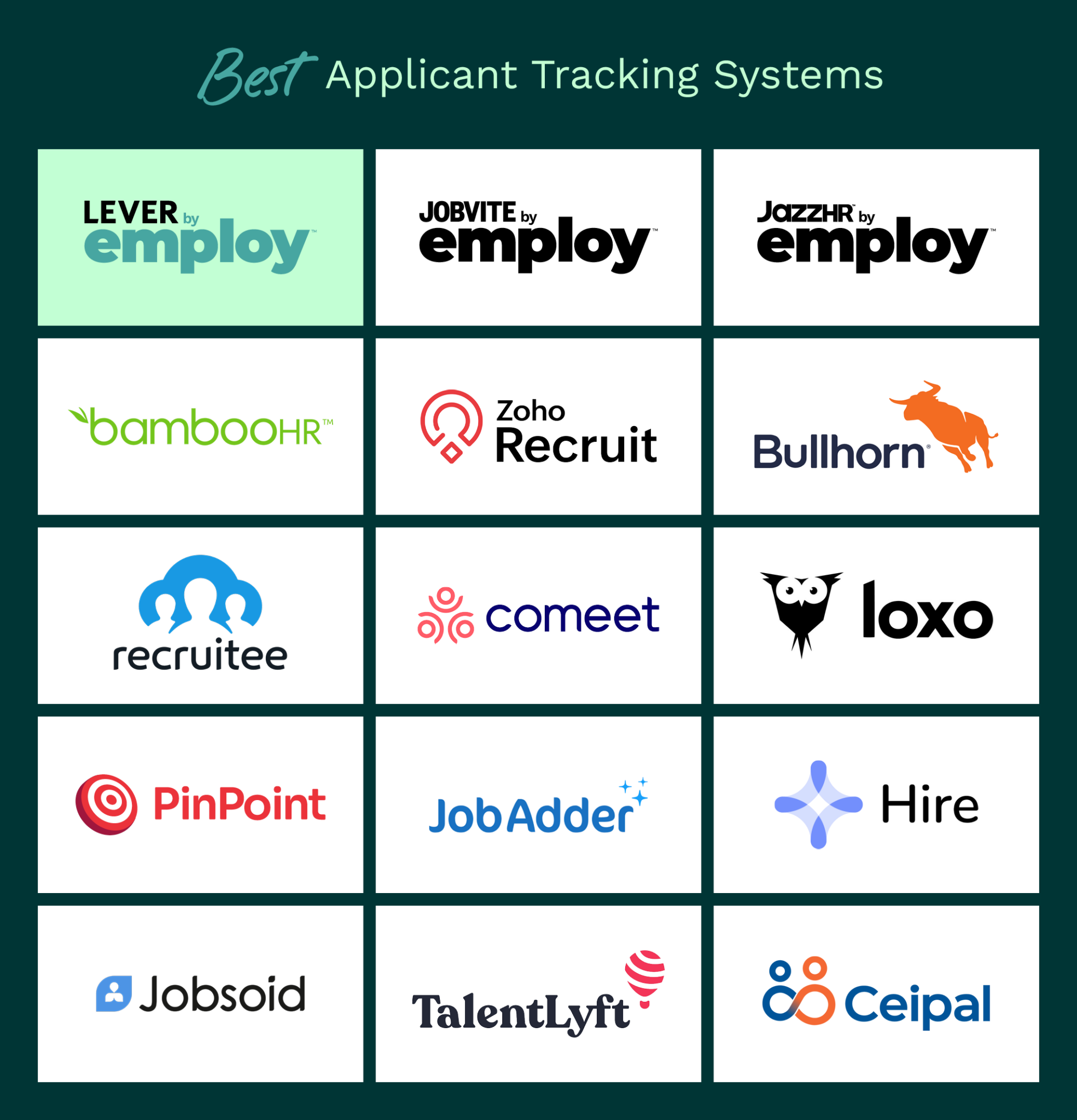
While a definitive "best" ATS remains subjective and dependent on specific organizational needs, several platforms consistently rank high due to their comprehensive feature sets, user-centric design, and robust capabilities. Workday Recruiting is a powerful, cloud-based solution that integrates seamlessly with its broader HR suite, offering end-to-end recruitment management from sourcing to onboarding. Its strengths lie in its advanced analytics, robust compliance features, and sophisticated workflow automation, making it ideal for large enterprises. Greenhouse is renowned for its user-friendly interface, strong emphasis on candidate experience, and excellent hiring team collaboration tools. It excels in structured interviewing, feedback collection, and reporting, making it a popular choice for growing companies seeking to scale their hiring efforts efficiently. Lever positions itself as a modern talent acquisition suite, blending ATS functionality with CRM-like capabilities for proactive candidate engagement and talent pipelining. Its strengths include its visually appealing interface, powerful sourcing tools, and ability to manage both active and passive candidates effectively. Zoho Recruit offers a comprehensive and often more budget-friendly ATS solution, particularly appealing to small and medium-sized businesses (SMBs). It provides a wide range of features, including AI-powered resume parsing, a candidate portal, social media integration, and built-in reporting, all within an intuitive platform. SAP SuccessFactors Recruiting is another enterprise-grade solution, part of SAP’s extensive HR suite. It offers deep integration with other SAP modules, robust global capabilities, and advanced functionalities for talent acquisition and management, suitable for large, complex organizations. Oracle Taleo Cloud Service is a long-standing player in the ATS market, known for its scalability, extensive customization options, and comprehensive suite of recruitment and talent management tools. It’s a robust solution often favored by large corporations with complex hiring processes. BambooHR is particularly popular among SMBs for its ease of use, intuitive design, and affordable pricing. While it might not have the depth of enterprise-level solutions, it covers essential ATS functionalities effectively, including job posting, candidate tracking, and onboarding. Paylocity’s ATS offers a streamlined approach to recruitment, tightly integrated with its payroll and HR platform. This provides a unified view of employee data from hire to retire, simplifying administrative tasks for businesses already using their ecosystem. Each of these platforms, and many others, offer distinct advantages. The key to identifying the "best" for any given organization lies in meticulously mapping the system’s capabilities against the organization’s unique requirements, budget, and strategic hiring goals. A thorough evaluation process, including demos, free trials, and reference checks, is essential before making a final decision.