What Is Thought Leadership Marketing

Thought Leadership Marketing: Defining Your Authority and Driving Business Growth
Thought leadership marketing is a strategic approach that positions an individual or organization as a recognized authority and trusted source of expertise within a specific industry or niche. It goes beyond simply selling products or services; instead, it focuses on sharing valuable insights, novel perspectives, and actionable knowledge to solve problems, address challenges, and advance understanding for a target audience. The core objective is to cultivate a reputation for being ahead of the curve, possessing deep understanding, and offering solutions that others may not have considered. This cultivates trust, builds credibility, and ultimately influences purchasing decisions by demonstrating a genuine commitment to the audience’s success and progress. It’s about contributing to the industry conversation, not just participating in it, and in doing so, establishing a unique and indispensable voice.
The foundation of effective thought leadership marketing lies in identifying and articulating a distinct point of view. This viewpoint should be informed by deep expertise, extensive experience, and a genuine understanding of the evolving landscape of the relevant industry. It’s not enough to simply repeat existing knowledge; true thought leaders offer fresh interpretations, challenge conventional wisdom, and present innovative approaches. This distinct perspective allows for differentiation in a crowded marketplace, making the individual or organization memorable and sought-after. The process of developing this viewpoint often involves rigorous research, critical analysis, and a willingness to engage with complex issues. It requires a commitment to continuous learning and a proactive approach to staying abreast of emerging trends and technologies. Without a unique and well-articulated perspective, attempts at thought leadership will likely blend in with the noise and fail to resonate with the intended audience.
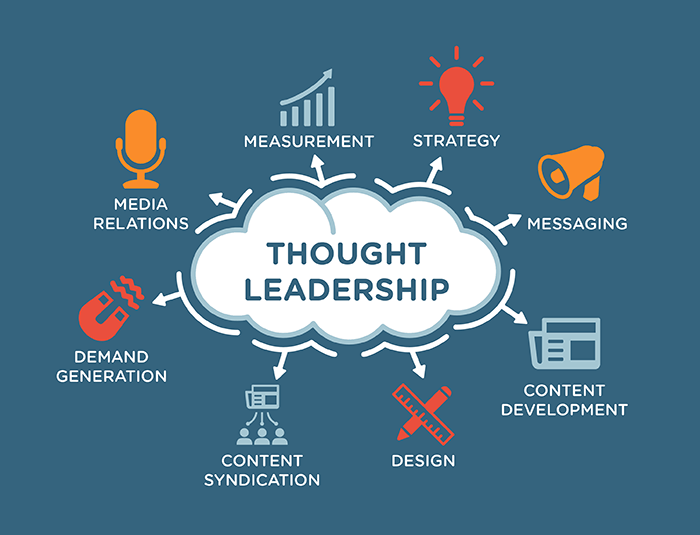
Content creation is the engine of thought leadership marketing. This involves developing and distributing high-quality, informative, and engaging content across various channels. The objective is to educate, enlighten, and empower the target audience, demonstrating the thought leader’s expertise in a tangible way. Common content formats include in-depth articles, white papers, research reports, blog posts, webinars, podcasts, presentations, and social media updates. Each piece of content should be tailored to address the specific needs and interests of the audience, offering practical advice, insightful analysis, or strategic guidance. The key is to provide genuine value that goes beyond superficial information. Content should aim to solve problems, offer solutions, or inspire new ways of thinking. Consistency in content creation and distribution is crucial for maintaining visibility and reinforcing the thought leader’s position in the minds of the audience. A sporadic approach will dilute impact and hinder the development of a strong reputation.
Distribution is as critical as creation in thought leadership marketing. Once valuable content is produced, it must be strategically disseminated to reach the intended audience effectively. This involves leveraging a multi-channel approach, utilizing platforms where the target audience congregates. Key distribution channels include industry-specific publications, professional networking sites like LinkedIn, company blogs, social media platforms, email newsletters, and industry conferences. SEO (Search Engine Optimization) plays a vital role in ensuring that thought leadership content is discoverable by individuals actively searching for solutions and information related to the expertise being shared. This involves optimizing content with relevant keywords, building backlinks, and ensuring a strong website presence. Paid promotion can also be used to amplify reach and target specific demographics. The goal is to ensure that the valuable insights and perspectives developed are seen and consumed by the right people at the right time, maximizing their impact.
Building and nurturing an audience is a direct outcome of successful thought leadership marketing. As individuals and organizations consistently provide value through their expertise, they begin to attract and retain a loyal following. This audience comprises potential customers, partners, influencers, and even future employees who are drawn to the insights and credibility being demonstrated. The relationship with this audience is cultivated through ongoing engagement, responsiveness to feedback, and a continued commitment to providing value. This involves actively participating in discussions, answering questions, and fostering a sense of community around the shared interests and challenges addressed by the thought leader. A strong, engaged audience becomes a powerful asset, driving organic reach, generating leads, and providing valuable market intelligence. This audience is not merely a passive recipient of information but an active participant in the dialogue.
Measurement and refinement are integral to optimizing thought leadership marketing efforts. To ensure the strategy is effective and delivering desired outcomes, it’s essential to track key performance indicators (KPIs) and analyze the data. Metrics can include website traffic, content engagement rates (shares, likes, comments), lead generation numbers, brand mentions, media coverage, and shifts in audience perception. Analyzing these metrics provides insights into what content resonates most, which channels are most effective, and where improvements can be made. This data-driven approach allows for the continuous refinement of content strategy, distribution tactics, and audience engagement methods. It ensures that resources are allocated efficiently and that the thought leadership marketing efforts remain aligned with broader business objectives. Without a process of measurement and adaptation, the strategy can become stagnant and less impactful over time.
Thought leadership marketing offers significant business benefits. One of the most prominent is enhanced brand credibility and trust. When an organization is consistently perceived as an expert and a reliable source of information, it builds a powerful reputation that transcends transactional relationships. This credibility directly influences purchasing decisions, as consumers and businesses are more likely to engage with and buy from entities they trust and perceive as knowledgeable. Furthermore, thought leadership marketing can lead to increased lead generation and conversion rates. The valuable content attracts highly qualified leads who are already familiar with the organization’s expertise and solutions. This pre-qualification shortens sales cycles and improves conversion effectiveness.
Another key benefit is improved customer loyalty and retention. By continuing to provide valuable insights and support, thought leaders foster deeper relationships with their existing customer base. This ongoing engagement helps customers feel more valued and supported, leading to increased loyalty and reduced churn. Thought leadership also plays a crucial role in attracting top talent. Individuals seeking to work with industry leaders and be part of innovative environments are more likely to be drawn to organizations that demonstrate a strong commitment to thought leadership. This can significantly enhance recruitment efforts and build a more skilled and motivated workforce. Finally, effective thought leadership marketing can differentiate a company from its competitors, establishing it as a go-to resource and a market influencer, thereby securing a competitive advantage.
The strategic implementation of thought leadership marketing requires a deep understanding of the target audience. This involves conducting thorough market research to identify their pain points, challenges, aspirations, and information consumption habits. Without this foundational understanding, content creation and distribution efforts are likely to miss the mark, failing to resonate with the intended recipients. The goal is to provide solutions and insights that are directly relevant and valuable to the audience’s specific needs. This customer-centric approach ensures that thought leadership efforts are not merely self-serving but genuinely beneficial to those they aim to influence. Understanding the nuances of the audience’s industry, professional roles, and current business climate is paramount.
Leveraging digital marketing channels is indispensable for modern thought leadership. The internet provides a vast and accessible platform for disseminating expertise. Search engines, social media, and content management systems are critical tools for reaching and engaging with a global audience. Optimizing content for search engines ensures discoverability, while social media platforms facilitate direct interaction and community building. Email marketing remains a powerful tool for nurturing leads and distributing exclusive content to a subscribed audience. The integration of various digital marketing tactics creates a synergistic effect, amplifying the reach and impact of thought leadership initiatives. The ability to track user behavior and engagement within these digital ecosystems provides invaluable data for refining strategies.
Brand positioning and differentiation are fundamental outcomes of a well-executed thought leadership strategy. In a competitive landscape, it is imperative to stand out from the crowd. By consistently offering unique perspectives and valuable insights, an organization can carve out a distinct position in the market. This positioning elevates the brand beyond its products or services, establishing it as a trusted advisor and an industry innovator. Differentiation through thought leadership is not about simply having a unique product but about possessing a unique way of thinking and approaching industry challenges. This intellectual capital becomes a powerful differentiator that is difficult for competitors to replicate.
The long-term commitment is a non-negotiable aspect of thought leadership marketing. It is not a campaign with a defined end date but an ongoing strategic endeavor. Building a reputation as a thought leader takes time, consistent effort, and a sustained commitment to delivering value. Early results may be subtle, but the cumulative effect of consistent, high-quality contributions can lead to profound and lasting impact. Organizations and individuals must be prepared to invest resources, both in terms of time and budget, and to remain patient as the strategy unfolds. The rewards of sustained thought leadership, including enhanced brand equity, customer loyalty, and market influence, are significant but require a long-term perspective to fully realize.
The ethical considerations in thought leadership marketing are paramount. Authenticity and transparency are key. Thought leaders must genuinely possess the expertise they claim to have and should not engage in misleading or deceptive practices. Claims must be substantiated, and biases, if any, should be disclosed. The primary focus should always be on providing genuine value and contributing positively to the industry, rather than solely on self-promotion or immediate sales. Maintaining integrity builds long-term trust and reinforces the credibility of the thought leader. Any deviation from ethical practices can quickly erode reputation and undermine the entire strategy. The goal is to be a trusted source of information, not a purveyor of propaganda.
The evolving nature of the digital landscape necessitates continuous adaptation in thought leadership marketing. New platforms emerge, algorithms change, and audience behaviors shift. Staying abreast of these changes and adapting content and distribution strategies accordingly is crucial for maintaining relevance and impact. This includes exploring emerging technologies like AI for content creation assistance or personalization, and understanding how new social media trends can be leveraged for engagement. A flexible and agile approach ensures that thought leadership efforts remain effective in the long run. The ability to experiment with new formats and channels, analyze their performance, and pivot as needed is a hallmark of successful thought leadership marketing in the contemporary digital age.
In conclusion, thought leadership marketing is a sophisticated and powerful strategy for building authority, cultivating trust, and driving sustainable business growth. It requires a deep understanding of one’s audience, a commitment to creating and distributing high-quality, valuable content, and a long-term perspective on building a reputation as a recognized expert. By consistently offering unique insights, solving problems, and contributing to the advancement of their industry, individuals and organizations can differentiate themselves, attract loyal audiences, and ultimately achieve their business objectives. It’s a journey of continuous learning, strategic communication, and unwavering dedication to delivering genuine value.