Artificial Intelligence Technology Delivery Management
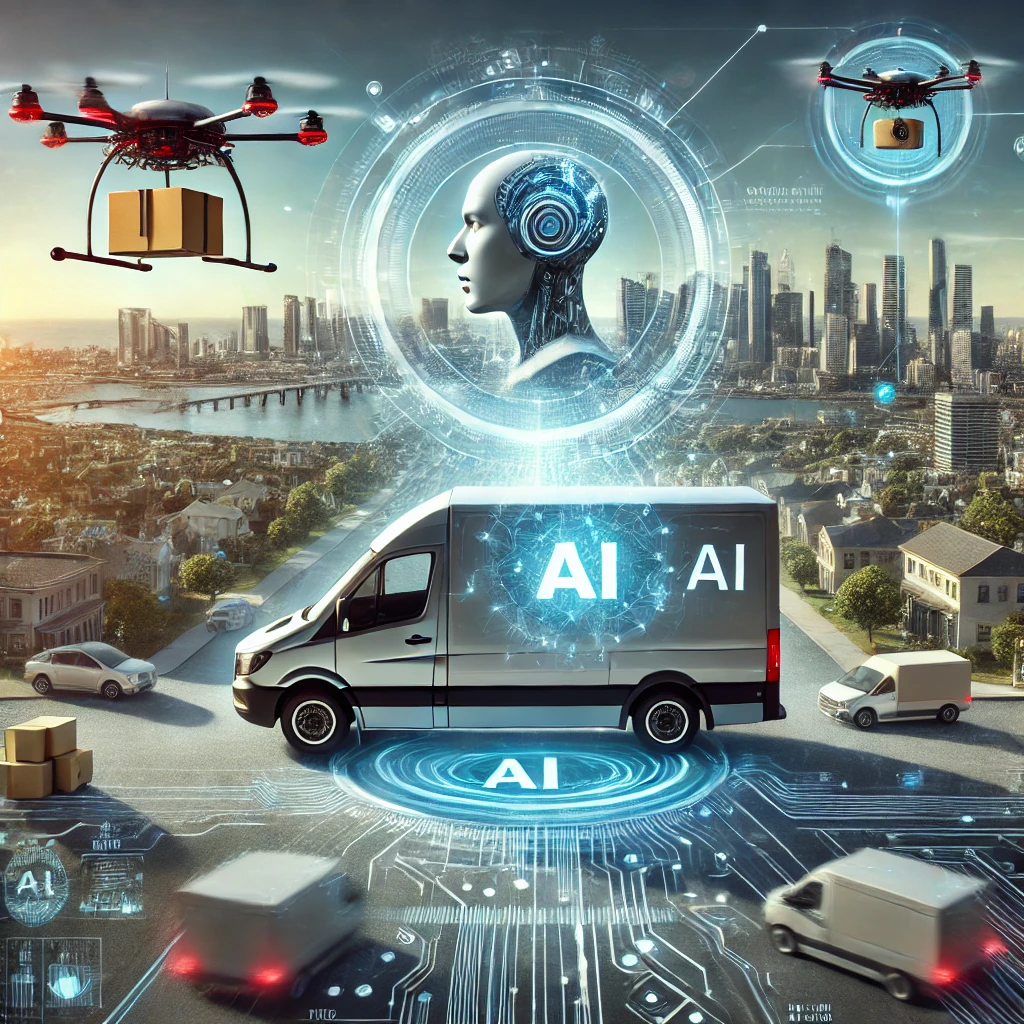

Artificial Intelligence Technology Delivery Management: Optimizing the Software Development Lifecycle
The integration of Artificial Intelligence (AI) into technology delivery management is rapidly transforming how software and complex digital products are conceptualized, developed, deployed, and maintained. This paradigm shift is driven by AI’s capacity to analyze vast datasets, identify patterns, predict outcomes, and automate repetitive tasks, thereby enhancing efficiency, accuracy, and speed across the entire software development lifecycle (SDLC). From initial project planning and resource allocation to continuous integration, deployment, and post-launch monitoring, AI-powered tools and methodologies offer unprecedented opportunities for optimization. Organizations that effectively leverage AI in their delivery management strategies gain a significant competitive advantage by reducing time-to-market, improving product quality, and fostering greater agility in responding to evolving market demands. This article explores the multifaceted applications of AI in technology delivery management, detailing its impact on key SDLC phases and outlining best practices for its successful implementation.
AI’s influence begins at the strategic planning and requirements gathering stages. Traditional methods often involve manual analysis of market trends, customer feedback, and competitive landscapes, which can be time-consuming and prone to human bias. AI-powered analytics tools can process and synthesize massive amounts of data from diverse sources, including social media, customer support tickets, competitor product reviews, and market research reports, to identify emerging trends, unmet customer needs, and potential product features with high market viability. Natural Language Processing (NLP) plays a crucial role here, enabling the extraction of actionable insights from unstructured text data. Machine learning (ML) algorithms can then predict the potential success of proposed features or entire product concepts based on historical data and identified correlations. This data-driven approach to product ideation and prioritization minimizes the risk of investing in features or products that are unlikely to resonate with the target audience, leading to more efficient resource allocation and a higher probability of market success. Furthermore, AI can assist in refining user stories and functional requirements by identifying ambiguities, inconsistencies, or missing information, thereby ensuring a clearer and more robust foundation for the development team.
In the realm of project management and resource allocation, AI offers substantial improvements over manual processes. Project managers often grapple with the complexities of estimating timelines, allocating skilled personnel, and managing budgets. AI-driven project management platforms can analyze historical project data, including task durations, team performance, and common impediments, to generate more accurate project schedules and resource forecasts. Predictive analytics can identify potential bottlenecks or risks early on, allowing for proactive mitigation strategies. For instance, AI can predict the likelihood of a specific task exceeding its estimated completion time based on the current progress and the team’s historical performance on similar tasks. This allows project managers to reallocate resources, provide additional support, or adjust timelines before significant delays occur. AI can also optimize team composition by suggesting individuals with the most relevant skills and experience for specific tasks or projects, considering factors like availability, past performance, and team dynamics. This intelligent resource allocation ensures that the right people are working on the right tasks at the right time, maximizing productivity and minimizing wasted effort.
The development phase itself benefits immensely from AI integration, particularly in areas like code generation, bug detection, and testing. AI-powered code completion tools, such as GitHub Copilot, can suggest code snippets, functions, and even entire algorithms based on the context of the ongoing development, significantly accelerating the coding process and reducing the likelihood of syntax errors. Static code analysis tools, enhanced with AI, can go beyond simple pattern matching to understand the semantic meaning of code and identify more complex bugs, security vulnerabilities, and potential performance issues that might be missed by traditional tools. Machine learning models trained on vast code repositories can learn to predict the likelihood of bugs in certain code sections based on factors like code complexity, developer experience, and commit history. This proactive identification of potential defects shifts the focus from reactive bug fixing to preventative measures, leading to higher quality code from the outset. Furthermore, AI is revolutionizing automated testing. AI can generate intelligent test cases that adapt to changes in the application, identify redundant tests, and prioritize test execution based on the likelihood of exposing critical defects. This reduces the manual effort required for test creation and maintenance, enabling more comprehensive and efficient testing cycles.
Continuous Integration and Continuous Delivery (CI/CD) pipelines, the backbone of modern software delivery, are profoundly enhanced by AI. AI can optimize build times by intelligently analyzing code changes and identifying which parts of the codebase require recompilation or retesting. It can also enhance the reliability of deployments by predicting the potential impact of code changes on production environments. For example, AI can analyze historical deployment data and current system metrics to identify patterns that correlate with successful or failed deployments. This allows for risk assessment before a deployment, enabling go/no-go decisions based on data-driven probabilities. AI can also automate rollback procedures if a deployment exhibits unexpected behavior, minimizing downtime and impact on end-users. Furthermore, AI can continuously monitor the CI/CD pipeline itself, identifying anomalies in build success rates, test execution times, or deployment frequencies, and suggesting potential improvements or alerting relevant personnel to issues. This proactive pipeline management ensures a smooth and efficient flow of code from development to production.
The post-deployment and operational phases are where AI’s impact on delivery management becomes particularly evident in terms of stability, performance, and customer satisfaction. AI-powered AIOps (Artificial Intelligence for IT Operations) platforms are transforming system monitoring and incident management. These platforms can ingest vast amounts of telemetry data from applications, servers, and networks, identify anomalous behavior, and correlate seemingly unrelated events to pinpoint the root cause of issues before they impact users. Predictive maintenance, driven by AI, can forecast potential hardware failures or performance degradations, allowing for proactive interventions and preventing outages. AI can also automate responses to common incidents, such as restarting services or reconfiguring network settings, thereby reducing Mean Time To Resolution (MTTR) and freeing up IT operations teams to focus on more strategic tasks. Furthermore, AI can analyze user behavior and application performance in real-time to identify performance bottlenecks, suggest code optimizations, or even dynamically adjust resource allocation to ensure a seamless user experience. This proactive approach to operational management leads to greater system stability, improved application performance, and ultimately, higher customer satisfaction.
The adoption of AI in technology delivery management is not without its challenges. These include the need for specialized skills to develop, deploy, and maintain AI systems, the integration of AI tools with existing delivery infrastructure, and the ethical considerations surrounding data privacy and algorithmic bias. Organizations must invest in training and upskilling their teams, foster a culture of continuous learning, and establish robust governance frameworks for AI development and deployment. The choice of AI tools and platforms should be strategic, aligning with the organization’s specific needs and existing technological stack. Furthermore, it is crucial to address potential biases in AI algorithms by using diverse and representative datasets and implementing fairness metrics during model development and evaluation. Transparent and explainable AI models are also essential for building trust and enabling effective troubleshooting.
To maximize the benefits of AI in technology delivery management, organizations should adopt a phased and iterative approach. Starting with pilot projects in specific areas where AI can demonstrate clear value, such as automated testing or predictive maintenance, can build confidence and provide valuable learning experiences. As proficiency grows, AI adoption can be expanded across other SDLC phases. Continuous feedback loops are essential to refine AI models and improve their accuracy and effectiveness. Collaboration between development, operations, and business teams is also critical to ensure that AI solutions are aligned with overall business objectives and deliver tangible value. The future of technology delivery management is intrinsically linked to the intelligent application of AI, promising a more efficient, agile, and outcome-driven approach to building and maintaining the digital products that shape our world. This evolution necessitates a fundamental rethinking of traditional delivery processes and a proactive embrace of AI-driven innovation.



:max_bytes(150000):strip_icc():focal(956x676:958x678)/New-Delhi-Rail-Station-Stampede-021624-01-b166a4332d3f4e01ad115c2869d7cfce.jpg)