Ke Huy Quan Recalls Receiving a Life-Changing $100,000 Residual Check for Indiana Jones and the Temple of Doom at Age 12

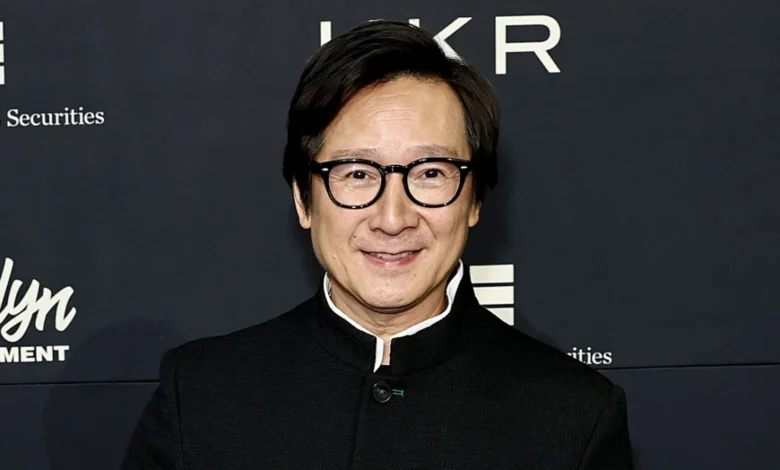
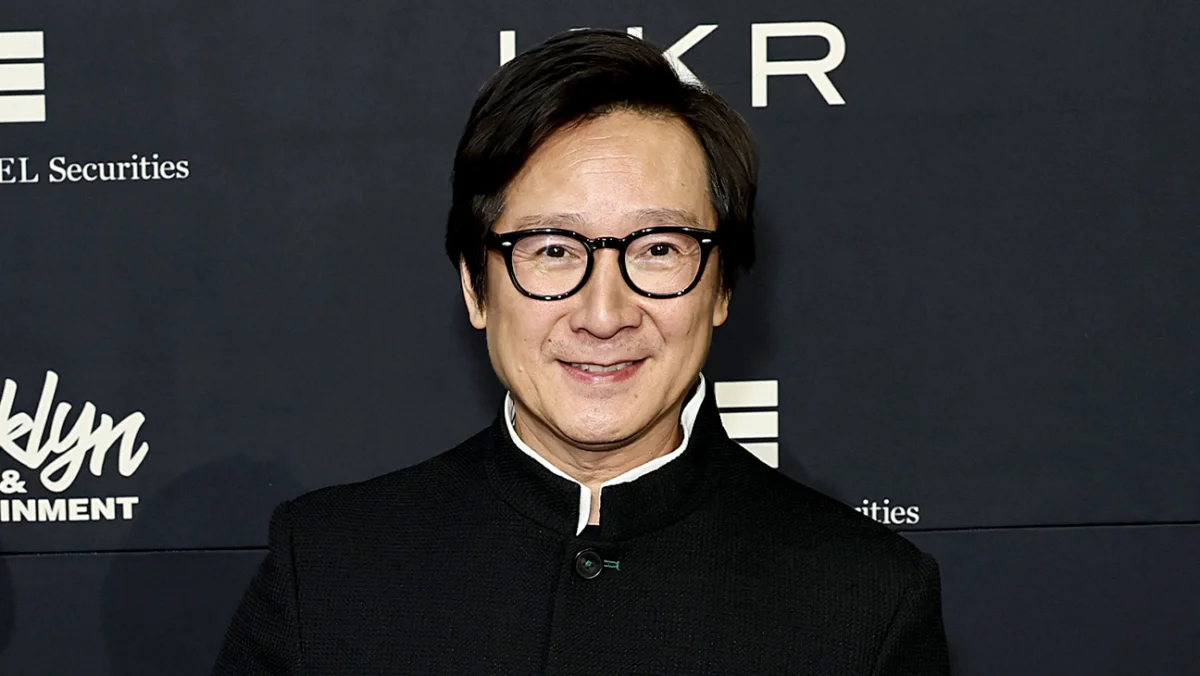
Academy Award winner Ke Huy Quan has shared a heartwarming and revealing glimpse into his early days in Hollywood, detailing the moment he discovered his first residual check for 1984’s Indiana Jones and the Temple of Doom amounted to a staggering $100,000. This remarkable anecdote is one of many featured in his deeply personal new memoir, Never Say Die, which officially hit bookstore shelves on Tuesday. The book chronicles Quan’s extraordinary life trajectory, from a young refugee child thrust into the global spotlight to an unexpected hiatus, and finally, to his triumphant career renaissance culminating in an Oscar win for Everything Everywhere All at Once.
The story highlights an era of filmmaking when profit-participation clauses were strictly reserved for established A-list box office titans. For a 12-year-old making his very feature film debut as the lovable sidekick Short Round, receiving backend compensation was entirely unprecedented. In his memoir, Quan reflects on the disbelief shared by his immigrant family upon opening the envelope from Lucasfilm, illuminating the profound generosity of legendary filmmaker Steven Spielberg and producer George Lucas.
The Kitchen Table Discovery That Changed Everything
In Never Say Die, Quan paints a vivid picture of the afternoon he walked into his family’s kitchen and immediately sensed that something monumental had happened. He recalls finding his parents standing close together by the kitchen table, wearing expressions that combined utter shock with profound disbelief.
His mother was holding an official envelope bearing his name, while his father examined the formal documentation inside. Without a word, they handed the papers and the attached check over to the young actor. It was issued directly by Lucasfilm, and the numeric total printed on the face of the check was nearly $100,000—a sum of money that defied all comprehension for a child who had only recently joined the cast of a major Hollywood production.
At the time of receiving the envelope, Quan had already been compensated for his foundational work on the second installment of the Indiana Jones franchise, which served as a prequel to 1984’s release following the massive success of 1981’s Raiders of the Lost Ark. Consequently, the concept of residuals—ongoing payments issued to performers when a project continues to air or generate revenue across various distribution windows—was entirely foreign to him. He simply could not fathom how additional money could materialize out of thin air for a project he had already completed.
Once the financial reality set in, the young actor came to view the residuals clause not merely as a financial windfall, but as a deliberate and compassionate gesture orchestrated by Steven Spielberg and George Lucas.
A Rare Privilege in the Golden Era of Blockbusters
To fully understand the weight of the $100,000 check, industry historians note the strict financial structures governing Hollywood productions during the mid-1980s. Profit-sharing and backend percentage deals were tightly guarded perks reserved exclusively for top-tier directors, producers, and marquee movie stars who could independently guarantee massive opening-weekend box office numbers.
In his memoir, Quan emphasizes just how rare his situation truly was. Back in that era, virtually no actors—let alone child actors making their professional screen debuts—secured a financial stake in a movie’s ongoing profits. The fact that a first-time performer was deliberately integrated into a profit-participation agreement defied industry standards. Furthermore, Temple of Doom was not an independent art-house project or a speculative gamble; it was the direct, highly anticipated sequel to one of the most successful adventure films in cinematic history. Knowing that the studio and its masterminds intentionally carved out a financial share for a child actor underscored the deep generosity behind the act.
For the Quan family, who had immigrated to the United States as refugees from Vietnam, the unexpected influx of capital arrived at a crucial juncture. The funds provided immediate financial stability and served as a safety net, fundamentally altering the trajectory of their daily lives and easing the rigorous economic pressures faced by many immigrant households during that decade.
A Lifelong Bond Rooted in Spielberg’s Discovery
Ke Huy Quan’s entry into the entertainment industry remains one of Hollywood’s most famous casting fairy tales. In the early 1980s, casting directors searching extensively for a young Asian actor to play Indiana Jones’ plucky sidekick held an open casting call in Los Angeles. Quan accompanied his younger brother to the auditions purely to offer moral support. While waiting in the wings, a casting associate noticed the expressive youngster and invited him to read for the part.
Impressed by his natural charm, the casting team brought him in to read directly for Steven Spielberg and George Lucas. Within weeks, Quan was cast as Short Round, launching a whirlwind journey that quickly expanded to include iconic roles in other beloved 1980s classics, including his portrayal of Data in Richard Donner’s 1985 adventure film The Goonies.
Throughout his life and career, Quan has consistently credited Spielberg with launching his professional path and instilling in him a foundational love for cinema. This enduring gratitude was visibly displayed on one of the biggest nights of his life: the 2023 Golden Globe Awards.
When Quan won the Golden Globe for Best Supporting Actor in a Motion Picture for his tour-de-force performance as Waymond Wang in A24’s Everything Everywhere All at Once, he used his acceptance speech to publicly honor the director who had given him his first break decades earlier. Looking out into the star-studded audience, an emotional Quan expressed his profound thanks to Spielberg, who was sitting in the room. The poignant moment captured the hearts of viewers worldwide, symbolizing a full-circle redemption arc that resonated deeply across the global film community.
Overcoming Years of Self-Doubt and Industry Exile
Despite his stellar early start, Quan’s journey to his eventual Oscar victory was fraught with professional challenges and industry marginalization. Following his childhood success in Indiana Jones and The Goonies, Quan found that opportunities for Asian actors in Hollywood were severely limited. As he transitioned into adolescence and young adulthood, roles became increasingly scarce, often confined to narrow, one-dimensional stereotypes or entirely nonexistent.
Reflecting on those difficult transition years during subsequent interviews and award speeches, Quan has spoken candidly about the creeping self-doubt that plagued him as he grew older. He frequently wondered whether his initial success was merely a lucky fluke—a lightning-in-a-bottle moment that could never be replicated. For decades, he harbored a quiet fear that he had nothing more to offer the creative arts, worrying that no matter how hard he worked later in life, he would never surpass the iconic achievements of his childhood.
Ultimately, these fears led Quan to step away from acting entirely for over two decades. Behind the scenes, he forged a successful career on the other side of the camera, working behind the scenes as a stunt coordinator and assistant director, lending his expertise to major productions like X-Men and The One. Yet, the persistent call of performance never truly faded.
The Catalyst of a Triumphant Comeback
The cinematic landscape shifted significantly by the late 2010s, opening doors for more diverse storytelling and authentic representation on screen. Inspired by the groundbreaking success of films like Crazy Rich Asians, Quan made the courageous decision to return to auditioning. Shortly thereafter, writer-directors Daniel Kwan and Daniel Scheinert cast him in Everything Everywhere All at Once, setting the stage for a cultural phenomenon.
His nuanced, physically dynamic, and emotionally resonant performance as Waymond Wang captivated critics and audiences alike, sweeping the international awards circuit. The subsequent Oscar win for Best Supporting Actor cemented his status not only as a comeback kid, but as a universally respected veteran of the craft.
Broader Implications and Industry Legacy
The revelations in Never Say Die offer more than just a nostalgic look back at Hollywood’s golden blockbuster era; they provide a fascinating window into the business practices and human dynamics that underpin major studio filmmaking. The anecdote regarding the $100,000 residual check illustrates that behind the massive corporate machinery of Lucasfilm and Paramount Pictures, individual mentorship and personal empathy often guided executive decisions.
Furthermore, Quan’s memoir arrives at a time when the entertainment industry is actively re-evaluating how it compensates talent across all levels, particularly regarding streaming residuals and equitable profit distribution. By sharing how a single financial gesture provided crucial security for his refugee family, Quan highlights the real-world, human impact of fair compensation in the arts.
As Never Say Die climbs bestseller lists, readers and film enthusiasts continue to celebrate the resilience, humility, and enduring talent of Ke Huy Quan. From a 12-year-old discovery on the set of an archaeological adventure to an Academy Award-winning icon reflecting on the kindness of giants, Quan’s narrative remains an inspiring testament to the power of perseverance, gratitude, and the enduring magic of cinema.