
The internal ideological fractures within the congressional Republican party widened significantly following the release of a controversial campaign advertisement by Representative María Elvira Salazar of Florida. In the commercial, Salazar takes direct aim at President Donald Trump’s aggressive immigration enforcement strategy, arguing that the administration’s sweeping approach has crossed a line by heavily targeting undocumented immigrants without criminal records.
The ad, filmed outside the White House and broadcast across South Florida media markets, immediately drew sharp rebukes from hardline conservative factions within the House of Representatives, most notably the influential House Freedom Caucus. The clash highlights a deep-seated philosophical debate within the contemporary conservative movement: whether an unyielding, hardline platform of mass deportation is the ultimate expression of the rule of law, or whether a more nuanced, pragmatic approach is necessary to maintain the burgeoning political coalition of Hispanic and Latino voters who helped secure Republican electoral victories in 2024.
The Controversy Over the Campaign Ad
In the 30-second campaign spot, Representative Salazar addresses President Trump directly, looking into the camera to voice her concerns over the human and political costs of current immigration policies.
"Mr. President, some of your immigration enforcement efforts have gone too far," Salazar states in the video. "Be careful what your advisors are telling you about immigration policy. The same Hispanics who helped you get to the White House in 2024 feel betrayed today."
Salazar, a moderate-to-conservative Republican representing a heavily Hispanic South Florida district, framed her perspective through a historical lens, comparing the immigration debate to past defining moments in American politics. "You can be for immigration what Lincoln was for slavery and Reagan was for communism," she continued. "I’m not talking about giving them amnesty. I’m talking about giving them a dignified life in this promised land. And only you can do that."

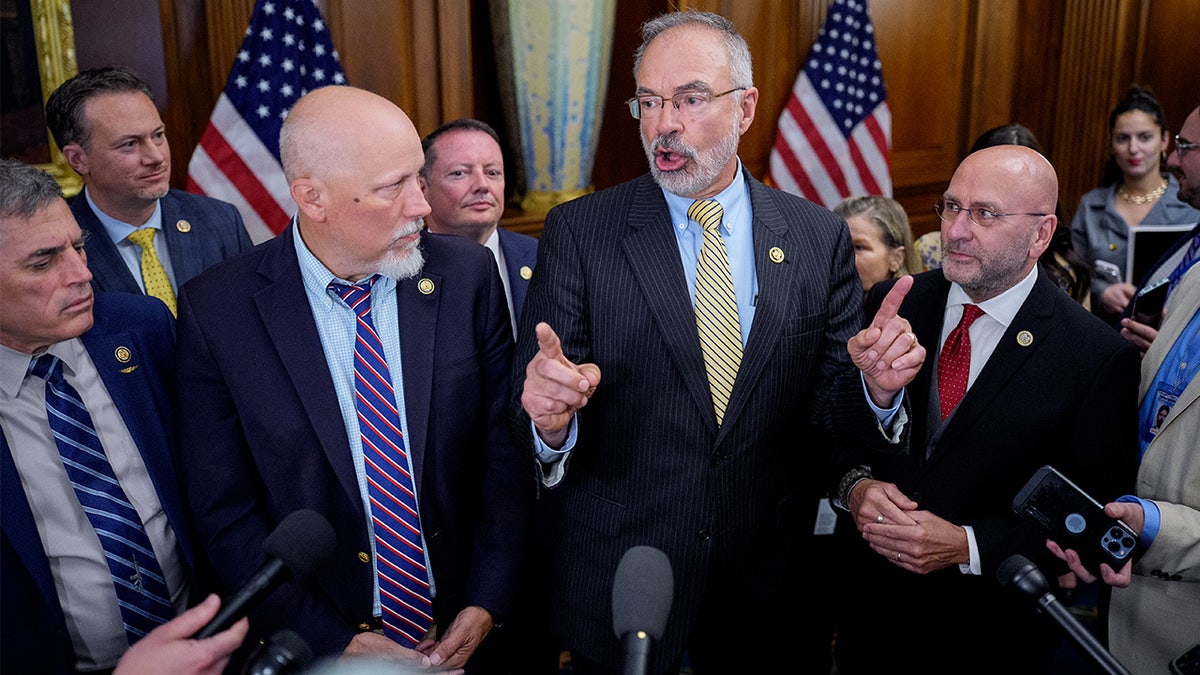
The reaction from within her own party was swift and unsparing. Leaders of the House Freedom Caucus issued a scathing official statement defending the administration’s posture and denouncing any rhetoric that suggested leniency for individuals residing in the United States unlawfully.
"President Trump’s immigration enforcement efforts should be applauded and continue as is," the House Freedom Caucus declared in their statement. "Any alien who enters this country illegally has committed a crime. The United States should deport every illegal alien. This is America, and this government should be ensuring the dignity of American citizens. Illegal aliens can enjoy dignity in their home country or come to this country legally."
The Freedom Caucus doubled down on its hardline stance against any form of legislative relief that could be interpreted as legalization or normalization of status. "Granting illegal aliens any legal status to remain in the United States is amnesty. We reject amnesty," the group stated. "The House Freedom Caucus stands with President Trump: secure the border, enforce the law, and lock these policies into statute, so no future administration can erase them with a pen."
The Department of Homeland Security (DHS) also entered the fray, pushing back forcefully against Salazar’s criticism and outlining the administration’s ongoing operational successes at the border and within the interior of the country.
"DHS is focused on delivering the most historic mass deportation campaign in American history—exactly as President Trump promised," a DHS spokesperson said in a statement to the press. "Whether Congresswoman Salazar likes it or not, the men and women of ICE are enforcing the laws passed by Congress. To be clear: the only thing America should be giving illegal aliens is a one-way ticket home, or a generous $3,000 check for them to self-deport immediately. We will not ignore the rule of law."
Background Context and Legislative History
This public dispute is not an isolated incident, but rather the latest flashpoint in an ongoing debate among House Republicans regarding immigration reform, interior enforcement, and demographic strategy.

Representative Salazar has long positioned herself as a champion of immigration reform that bridges national security concerns with humanitarian considerations. Previously, she faced substantial criticism from conservative colleagues over her efforts to champion bipartisan legislation aimed at overhauling the nation’s asylum system. That proposed framework sought to introduce a structured, legal pathway to temporary or permanent status for long-term undocumented residents who have clean criminal records, pay taxes, and integrate into local communities.
Hardline conservatives viewed that legislative push as an unacceptable departure from traditional Republican orthodoxy, which prioritizes strict deterrence, physical border barriers, and systematic interior deportations over legal adjustments for the existing undocumented population.
At the same time, Salazar and a handful of other Hispanic GOP lawmakers have persistently warned leadership that an overly punitive message risks alienating the vital Hispanic voting bloc. In the 2024 election cycle, working-class Hispanic voters—particularly in states like Florida, Texas, and parts of the Southwest—shifted toward Republican candidates in historic numbers, driven largely by economic concerns, inflation, and dissatisfaction with the previous administration’s handling of the southern border.
Political Vulnerabilities and District Dynamics
The timing and geographic context of Salazar’s ad underscore the complex political tightrope she must walk. Her South Florida constituency, anchored in Miami-Dade County, boasts a massive Hispanic population comprised heavily of Cuban, Venezuelan, and Nicaraguan Americans who historically lean conservative due to strong anti-socialist sentiments and deep appreciation for legal immigration pathways.
While the Cook Political Report rates her district as R+6, indicating a solid Republican lean under normal circumstances, national Democrats have signaled that Salazar’s seat remains a prime target for the upcoming election cycle. Democratic strategists believe that intra-party fractures over immigration, combined with aggressive campaigning on reproductive rights and economic pressures, could put the seat in play as they fight to reclaim a majority in the House of Representatives.
Interestingly, Salazar’s willingness to break with party orthodoxy on certain aspects of immigration enforcement mirrors broader debates playing out in competitive primaries nationwide. While some vulnerable Republicans have faced primary challenges for insufficiently supporting the party’s platform, others have successfully defended their seats despite bucking leadership on specific policy measures, proving that local political dynamics often supersede national litmus tests.
Broader Implications for the GOP Coalition
The public disagreement between a prominent Hispanic Republican lawmaker and the House Freedom Caucus shines a light on a strategic dilemma facing the GOP as it looks toward future electoral cycles.
On one side, the populist wing of the party, energized by President Trump’s decisive electoral mandate on border security, demands absolute adherence to an uncompromising enforcement agenda. Proponents of this view argue that fulfilling promises of mass deportations and strict interior enforcement is essential to maintaining trust with the conservative base and restoring the rule of law.
On the other side, moderate and swing-district Republicans argue that the party’s long-term viability as a multi-ethnic, working-class coalition depends on maintaining a sophisticated tone that addresses the humanitarian realities of communities with mixed-status families. They contend that while robust border security is universally popular, indiscriminate interior enforcement targeting non-criminal, long-term residents threatens to repel the very demographic groups that have helped expand the Republican map.
As the legislative session progresses, the tension between these competing visions is expected to persist, shaping debates over federal funding bills, border security legislation, and the party’s overarching message on immigration. Whether the Republican party can successfully reconcile its commitment to strict enforcement with its aspiration to build a permanent, diverse coalition remains one of the central political questions in Washington.