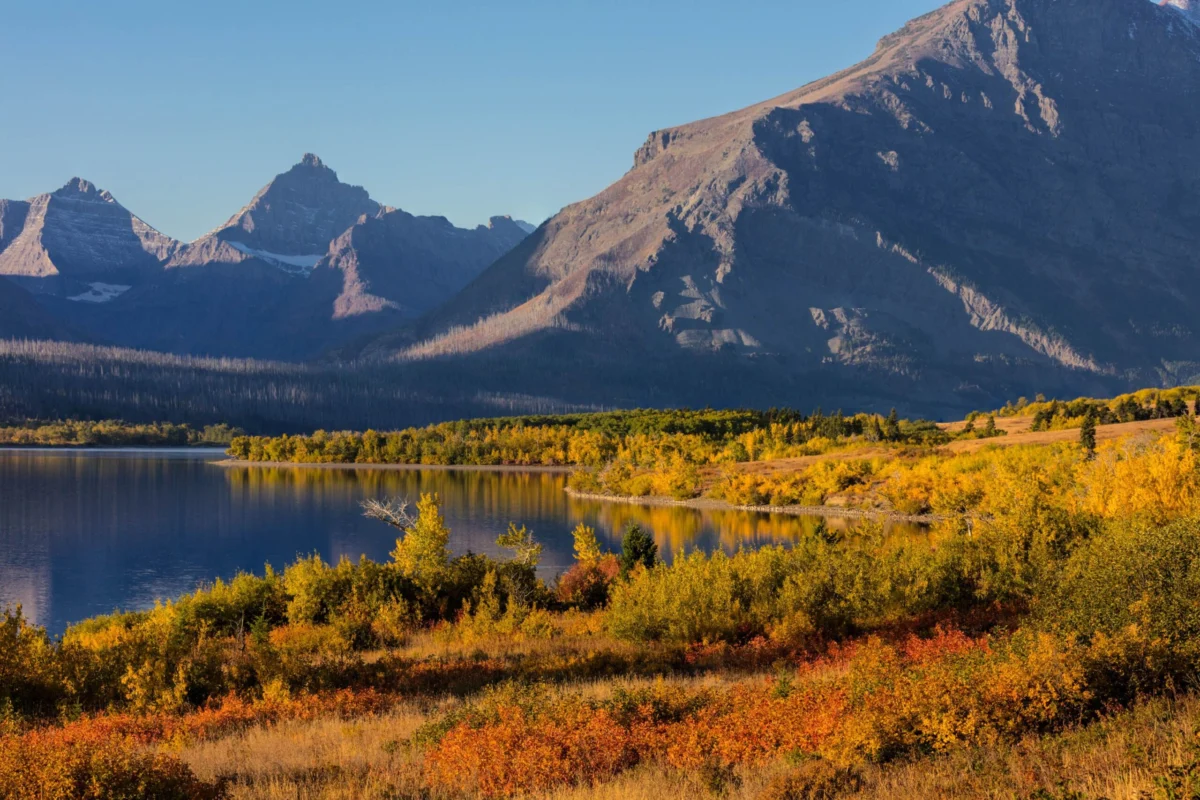
The transformation of America’s federal public lands during the autumn months represents one of the most significant ecological and tourism phenomena in North America. As the calendar turns from August to September, a profound shift occurs across the United States National Park System. Spanning millions of acres from the subalpine zones of the Rocky Mountains to the dramatic granite monoliths of California and the rugged Atlantic coastline of Maine, the nation’s premier protected landscapes undergo a dramatic seasonal metamorphosis. Sweeping valleys transition into brilliant expanses of gold, high-altitude forests erupt in vibrant palettes of crimson and amber, and the persistent summer crowds gradually dissipate, yielding to a quieter, more contemplative visitor experience.

This seasonal transition is more than a mere aesthetic shift; it marks a critical operational turning point for the National Park Service (NPS), local gateway communities, and millions of domestic and international travelers. Understanding the multifaceted nature of autumn in the national parks requires examining the ecological drivers of fall foliage, the historical development of shoulder-season travel, the economic impacts on regional tourism, and the essential logistical frameworks required to navigate these protected areas responsibly.
The Ecological and Climatological Mechanics of Autumnal Landscapes
The visual spectacle of autumn foliage is governed by precise biological and meteorological processes. As daylight hours diminish and temperatures drop in September and October, deciduous trees cease chlorophyll production—the pigment responsible for the vibrant green leaves of spring and summer. This reduction unveils underlying carotenoids and anthocyanins, producing the signature yellows, oranges, and deep reds that draw millions of leaf-peepers to public lands annually.

Simultaneously, the drop in ambient temperatures creates ideal conditions for outdoor recreation. High-country trails that experience intense solar radiation and high visitor congestion during July and August become remarkably temperate. According to historical weather data from the National Oceanic and Atmospheric Administration (NOAA), average daytime temperatures in prominent western parks such as Grand Teton, Rocky Mountain, and Yosemite drop by 15 to 25 degrees Fahrenheit between late July and mid-October. This crisp, invigorating climate significantly enhances hiking endurance, reduces the physiological strain of high-altitude exertion, and allows for extended daytime exploration.
Furthermore, wildlife behavior shifts dramatically during this period. Many species enter pre-hibernation foraging phases or breeding seasons, known as the rut. In parks like Grand Teton and Yellowstone, bull elk become intensely active and vocal, providing wildlife observers with extraordinary viewing opportunities that are largely absent during the dormant heat of midsummer. Bird migrations also peak along major flyways intersecting federal parklands, offering exceptional avian monitoring conditions for conservationists and ornithologists.

A Chronological Evolution of Shoulder-Season Tourism
The concept of visiting national parks outside of the traditional peak summer window—memorialized in American culture as the historic summer road trip—has evolved significantly over the past century. When the National Park Service was established via the Organic Act of 1916, infrastructure was sparse, and park visitation was largely restricted to wealthy railway travelers during narrow summer operating windows.
By the mid-20th century, the expansion of the Interstate Highway System and the post-World War II automotive boom democratized access to public lands, concentrating the vast majority of annual visitation into a compressed three-month period between Memorial Day and Labor Day. This hyper-concentration created severe ecological stress on fragile ecosystems, strained park ranger resources, and led to severe traffic congestion, trail erosion, and wildlife displacement.

In response, federal land management strategies over the past two decades have increasingly emphasized shoulder-season promotion. By highlighting the unique climatic and visual benefits of autumn, the National Park Service, in partnership with tourism boards and conservation organizations, has successfully redistributed a portion of annual visitor volume into September and October. This temporal decentralization has proven vital for balancing economic vitality in gateway communities with ecological preservation mandates.
Regional Diversity: Fall Across the National Park System
The sheer geographic breadth of the United States ensures that autumn manifests differently across distinct biomes. A comprehensive survey of autumnal park conditions reveals distinct regional characteristics:

The Northeast and Mid-Atlantic
Acadia National Park in Maine represents the quintessential eastern leaf-peeping destination. Here, coastal granite shores meet dense northern hardwood forests dominated by sugar maples, birches, and oaks. The peak foliage window typically spans from late September through mid-October, driven by maritime microclimates and sharp nocturnal temperature drops.
The Rocky Mountain Corridor
In Rocky Mountain National Park (Colorado) and Grand Teton National Park (Wyoming), autumn is dominated by the golden radiance of quaking aspens (Populus tremuloides). As hillsides turn monochromatic yellow against jagged, snow-dusted granite peaks, these parks experience a surge in landscape photography and wildlife tourism, specifically targeting migratory herds and rutting ungulates.

The Pacific Watershed
Yosemite National Park in California offers a distinct autumn profile. While classic eastern deciduous foliage is less prevalent, the park’s bigleaf maples and black oaks introduce striking patches of yellow and orange against the iconic grey granite of El Capitan and Half Dome. The alleviation of summer ozone congestion and the return of cooler night temperatures make autumn widely regarded by seasoned hikers as the optimal time to traverse the Sierra Nevada backcountry.
Economic Implications and Gateway Community Dynamics
The shift toward autumn tourism carries profound economic ramifications for regional economies surrounding national parks. Historically, gateway towns—communities situated immediately outside park boundaries that rely heavily on hospitality, dining, and outdoor gear retail—faced severe economic volatility, generating the bulk of their annual revenue during the summer and experiencing sharp downturns during winter.

The deliberate extension of the tourism season into September and October has stabilized local employment markets. Seasonal hospitality workers, wilderness guides, and local business owners benefit from extended operating contracts. According to economic impact reports published by the National Park Service, visitor spending in communities surrounding national parks generates tens of billions of dollars annually, with shoulder-season travel contributing a steadily increasing percentage of that total economic output.
However, this extended demand introduces operational challenges. Local infrastructure, including waste management, emergency medical services, and lodging capacity, must remain fully operational well beyond traditional closing dates. Consequently, local chambers of commerce and park concessionaires coordinate closely to manage resource allocation during the fall months.

Official Guidance, Reservation Frameworks, and Modern Park Management
Despite the common perception that autumn functions as a quiet "off-season," federal land managers emphasize that shoulder-season visitation has reached unprecedented levels. In response to chronic overcrowding observed over the past decade, the National Park Service has institutionalized advanced reservation systems across numerous high-traffic destinations.
Timed-entry permits, vehicle reservation systems, and backcountry permit lotteries frequently remain active through September and well into October. Park officials urge prospective travelers to conduct thorough preliminary research before embarking on autumn excursions.

"While autumn offers some of the most rewarding weather and visual landscapes across our national parks, visitors must discard the assumption that spontaneous travel is always feasible," notes an operational briefing from federal land management coordinators. "Lodging inside park concessions, front-country campgrounds, and specialized recreational permits still book out months in advance. Furthermore, shifting weather patterns in high-altitude environments can precipitate sudden alpine snowstorms, requiring strict adherence to seasonal road closures and safety advisories."
Park superintendents and conservation groups consistently remind travelers to adhere to Leave No Trace principles. Fall wildlife activity—such as bears foraging intensely before denning and elk competing during the rut—necessitates strict compliance with distance regulations, secure food storage protocols, and proper trail etiquette.

Broader Impact and the Future of Public Land Conservation
The growing popularity of autumn in America’s national parks underscores a broader cultural shift in how citizens interact with public lands. By moving away from the frantic pace of peak summer tourism, visitors are increasingly seeking deeper, more immersive engagements with nature. This quiet appreciation fosters stronger constituencies for environmental conservation, public land protection, and adequate federal funding for the National Park Service.
As climate patterns continue to shift and influence seasonal timing—affecting the exact peak of foliage coloration and the onset of winter weather—adaptive management by federal authorities will remain paramount. Ensuring that these landscapes can absorb extended visitor pressure without compromising ecological integrity is the central challenge facing park administrators today.

Ultimately, experiencing the national parks during September and October provides a vital reminder of the dynamic, ever-changing nature of the American wilderness. Whether traversing a crisp Maine coastline, listening to the bugle of an elk beneath the Tetons, or watching the afternoon light strike the golden aspens of the Rockies, the autumn season reveals the national park system at its most transcendent and resilient.