
The Trump administration has initiated unprecedented legal action, moving to deport an unnamed individual suspected of terrorism through the Alien Terrorist Removal Court (ATRC), a specialized judicial body that has remained dormant since its creation nearly three decades ago. This marks the first time in the court’s history that an application for a removal order has been filed, signaling a potentially significant shift in the U.S. government’s strategy for addressing suspected non-citizen terrorists.
The Alien Terrorist Removal Court: A Dormant Power Awakens
Established under the Antiterrorism and Effective Death Penalty Act (AEDPA) of 1996, the ATRC was designed to provide a swift and secure mechanism for expelling non-citizens deemed threats to national security. The court comprises five federal district judges, each appointed to a five-year term, who are tasked with adjudicating cases where the government possesses classified evidence that cannot be publicly disclosed without jeopardizing national security. In such instances, respondents are provided with an unclassified summary of the evidence, rather than the sensitive material itself.
The AEDPA was a landmark piece of legislation enacted in the wake of several high-profile terrorist attacks, including the 1993 World Trade Center bombing and the 1995 Oklahoma City bombing. Congress sought to bolster the nation’s defenses against terrorism, and the ATRC was conceived as a critical tool to prevent individuals involved in terrorist activities from exploiting the regular immigration system. Upon signing the bill into law, then-President Bill Clinton articulated its purpose, stating, "From now on we can quickly expel foreigners who dare to come to America and support terrorist activities."
Despite its clear mandate and the urgent national security concerns that prompted its creation, the ATRC has been widely characterized by legal scholars as a "zombie court" due to its complete inactivity. Records from the 9/11 Commission staff report indicate that while Department of Justice (DOJ) attorneys considered approximately 100 cases for the ATRC between 1998 and 2000, every single one was ultimately rejected. Instead, these terrorism-related deportation cases were pursued through the conventional immigration court system, a process that often entails more public proceedings and allows for broader access to evidence by the defense.
The Current Case: A Test of Unprecedented Authority
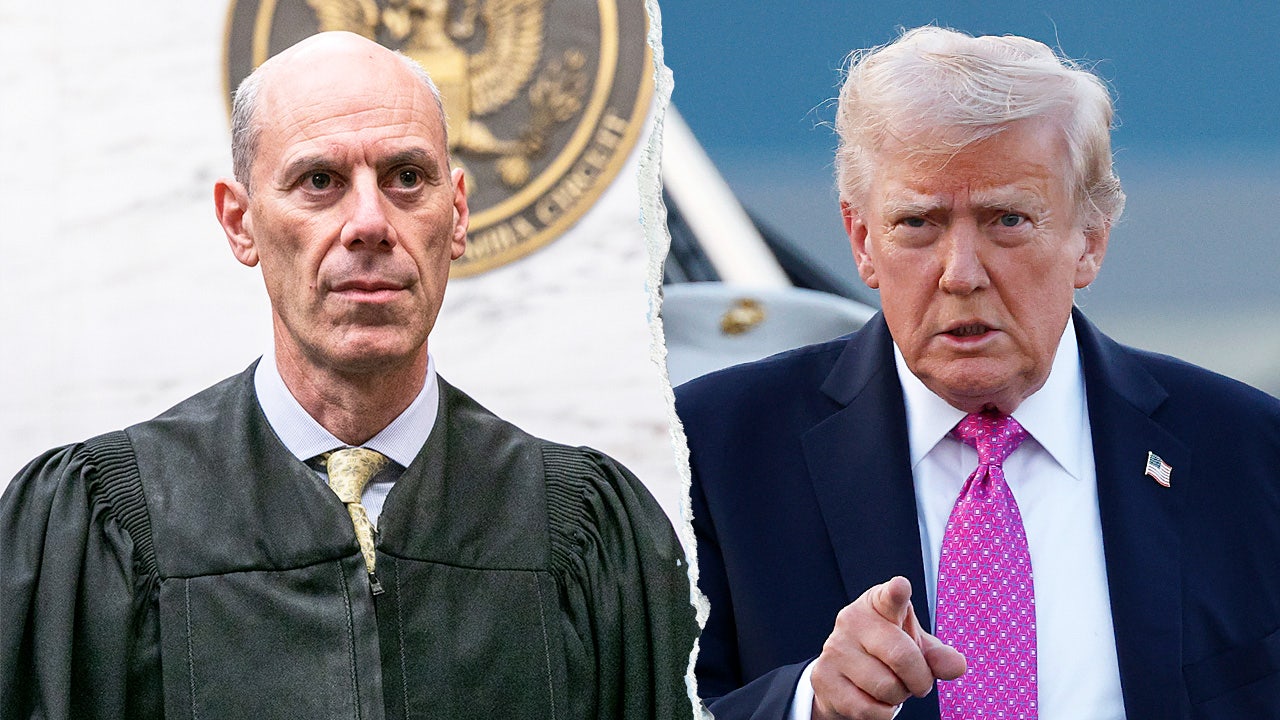
On July 15, the Justice Department filed its inaugural application for a removal order with the ATRC, targeting an unnamed illegal immigrant suspected of involvement in terrorism. This action represents the first concrete attempt to activate the court’s specialized judicial process, which permits the government to rely on sealed classified evidence to make its case for deportation.
A spokesperson for the Justice Department affirmed the administration’s resolve, stating, "This Department of Justice will use every tool available to bring alien terrorists to justice and remove them from the United States, including by use of this court established by Congress in 1996." This declaration underscores the administration’s commitment to leveraging all available legal avenues to address national security threats posed by non-citizens.
The specifics of the case remain largely under wraps due to its sensitive nature. The initial one-page sealed application filed by the DOJ provided minimal information, omitting the identity of the individual, details of the alleged conduct, and the specific sections of anti-terrorism law being invoked. This lack of detail immediately presented a challenge to the court.
Judicial Scrutiny and Executive Authority
The decision to invoke the ATRC comes amidst a broader landscape of judicial challenges to the Trump administration’s immigration enforcement policies. Federal judges have frequently blocked, delayed, or narrowed key parts of the administration’s agenda, leading to ongoing legal battles between the executive and judicial branches. This pattern of judicial resistance has prompted the administration to explore alternative legal pathways for deportation, particularly in cases involving national security.
Notably, the activation of the ATRC follows recent comments by Chief U.S. District Judge James Boasberg in Washington, D.C. In a March hearing, Judge Boasberg questioned the Trump administration’s reliance on the Alien Enemies Act for handling terrorism-related deportation cases, suggesting the long-dormant ATRC as a viable alternative. "In fact, Congress has an answer for us, doesn’t it? Because they created the Alien Terrorist Removal Court," Boasberg remarked. "So if there’s a national security concern with having these hearings, whether via habeas or otherwise, you can always go to the ATRC, which would be a first, but that’s what it’s there for, right?"
Judge Boasberg’s comments were made while he was presiding over litigation challenging the administration’s use of the Alien Enemies Act to deport alleged members of the Venezuelan gang Tren de Aragua. He temporarily blocked the administration from using this wartime law for those removals, pending a determination on its lawfulness. In a dramatic move, Boasberg even ordered deportation flights already en route to return to the U.S., highlighting the judiciary’s willingness to assert its oversight in immigration matters. The administration’s subsequent turn to the ATRC can be seen, in part, as a direct response to such judicial impediments, seeking a legal mechanism explicitly designed for national security deportations.

Perspectives on Activation: From Critique to Endorsement
The re-emergence of the ATRC has elicited a range of reactions from legal experts and political figures, echoing debates that accompanied its initial creation.
Hans von Spakovsky, a senior legal fellow at Advancing American Freedom, expressed strong support for the Justice Department’s decision. He criticized prior administrations for their failure to utilize the court, calling it "a sign of negligence." Von Spakovsky emphasized the court’s potential to expedite the removal of individuals involved in terrorism, stating, "I think it is a sign of negligence, frankly, of prior presidents that they did not use this special court, this special procedure that was specifically set up by Congress, so that they could quickly get aliens — aliens who were either terrorists or supported terrorist activities — out of the U.S." He further suggested that the ATRC could serve as a more robust tool, less susceptible to interference from what he described as "rogue" liberal judges who have challenged other immigration policies.
Conversely, the ATRC’s design, particularly its reliance on classified evidence and the provision of unclassified summaries to respondents, has historically raised significant due process concerns among civil liberties advocates and some legal scholars. Then-Senator Joe Biden, a vocal critic of the AEDPA during its passage in 1996, famously blasted the law’s implications for fairness. "You and me, Judge—me, the prosecutor; you, the judge—let’s deport him in a secret hearing, using secret evidence," Biden stated. "We know you did it, and we can’t tell you how we know. Now I think that is about as un-American as it gets." These concerns center on the principle that an accused individual should have the right to confront the evidence against them, a right potentially curtailed when classified information forms the core of the government’s case.
Legal Process and Initial Hurdles
The first step in activating the ATRC for this case involved a hearing before ATRC Chief Judge Joan N. Erickson, an appointee of President George W. Bush. After hearing arguments from Justice Department officials regarding their application, Judge Erickson requested additional information before the proceedings could continue.
In her written response, Erickson indicated that the initial application lacked sufficient detail to proceed. "The Court had questions about the nexus that the government alleges between the actions of the respondent and the specific sections and subsections it invokes with respect to those actions," Erickson wrote. She further explained, "The answers persuaded the Court that the Government could benefit from the opportunity for more thoughtful consideration." Judge Erickson subsequently gave the Justice Department a deadline to provide the requested additional documentation, signaling that while the court is now active, it will still demand a robust and thoroughly substantiated case from the government.

This initial procedural hurdle highlights the judicial branch’s commitment to ensuring that even in highly sensitive national security cases, proper legal procedures are followed and sufficient evidence is presented to justify such extraordinary measures. It underscores that the activation of the "zombie court" does not automatically guarantee an unchallenged path to deportation but rather opens a new, albeit specialized, judicial arena.
Broader Implications and Future Outlook
The Trump administration’s decision to activate the Alien Terrorist Removal Court marks a pivotal moment in U.S. immigration and national security law. If successful, this case could establish a critical precedent, potentially transforming the ATRC from a theoretical legal instrument into a frequently utilized mechanism for removing non-citizen terrorism suspects.
The implications are far-reaching. For the administration, it could offer a streamlined process for deporting individuals deemed national security threats, circumventing some of the judicial roadblocks encountered in traditional immigration courts or through other statutes like the Alien Enemies Act. This could be particularly appealing in cases where the evidence is highly sensitive and its public disclosure could compromise intelligence operations or sources.
However, the activation of the ATRC will undoubtedly reignite the long-standing debate between national security imperatives and civil liberties protections. Legal and human rights organizations are likely to scrutinize the proceedings closely, challenging the court’s reliance on classified evidence and raising concerns about due process for respondents. The lack of public transparency in such cases, while intended to protect classified information, also makes it difficult for external parties to assess the fairness and legality of the proceedings.
This move also reflects the ongoing evolution of immigration enforcement strategies in the U.S. In an era of heightened global security concerns and complex immigration challenges, administrations are continually seeking effective tools to manage borders and safeguard national interests. The ATRC, dormant for decades, now stands as a testament to these persistent tensions and the government’s willingness to revisit and repurpose existing legal frameworks to address contemporary threats. The outcome of this initial case will likely shape the future trajectory of the Alien Terrorist Removal Court and influence how the U.S. government approaches the deportation of suspected terrorists for years to come.
Related posts: