Middle East on "Edge of Unimaginable" as Escalation Spirals, UN Chief Warns Amid Trump’s Threats and Regional Volatility


The Middle East stands on the precipice of an "unimaginable" crisis, warned UN Secretary-General António Guterres to the Security Council, as a cascade of escalations across the region threatens to engulf it in an ever-widening circle of confrontation. This dire assessment comes amidst a perilous surge in tensions, fueled by US President Donald Trump’s consideration of a "massive attack" on Iran, renewed military strikes, and significant disruptions to global energy markets. The intricate web of geopolitical maneuvering, proxy conflicts, and economic fallout has prompted international alarm, with diplomatic staff withdrawing and cities preparing for potential conflict.
UN Sounds Alarm as Regional Stability Erodes
In a stark address to the United Nations Security Council, Secretary-General António Guterres painted a grim picture of a region teetering on the brink. "The situation is getting out of control. It is teetering on the edge of the unimaginable. The region is being pulled into an ever-widening circle of confrontation. One crisis feeds another. One escalation triggers the next," Guterres stated, emphasizing how the escalating dynamic is increasingly obscuring any initial political objectives. His words underscore a growing consensus among international observers that the conflict, initially centered on US-Iran tensions, is now spiraling into a complex, multi-front conflagration with unpredictable consequences.

Trump’s Escalatory Rhetoric and Military Actions
The UN chief’s warning follows a series of provocative statements and military actions, most notably from US President Donald Trump. Speaking to Axios, Trump revealed he was "close to deciding" whether to launch "a massive attack" against Iran, an operation he suggested would be "bigger than ever before." He underscored his administration’s readiness, stating, "We are all set for it," and further claimed that Israel "would join in two minutes if I ask them to," though he added, "We don’t need anybody." This aggressive posture reflects a perceived failure by the US administration to contain the spiraling crisis, particularly as Trump’s domestic poll ratings are reportedly in freefall ahead of autumn midterm elections, creating pressure to secure a resolution on Washington’s terms.
The US military, under Trump’s direction, has already carried out its 12th consecutive night of strikes against Iranian military targets. US Central Command (Centcom) confirmed these attacks, stating they aimed to "further degrade Iran’s ability to attack civilian mariners and commercial vessels." These strikes reportedly targeted maritime capabilities, missile and drone storage facilities, coastal surveillance sites, and air defense assets. However, these actions have not gone unanswered. Iranian state TV reported that a US missile attack at the Shalamcheh border crossing with Iraq, a route heavily used by religious pilgrims, resulted in two fatalities and eleven injuries. Gregory Brew, a senior analyst at the Eurasia Group, questioned the strategic relevance of striking a crowded border crossing to "degrading Iranian capabilities in the strait," highlighting potential unintended civilian casualties and humanitarian concerns.
Further exacerbating tensions, Trump issued a direct threat via Truth Social, warning that any future Iranian attack on a ship in the Strait of Hormuz would result in the US bombing and destroying "ONE BRIDGE OR POWER PLANT, including those located next to, or in, the Capital City of Tehran." This threat to civilian infrastructure has drawn widespread condemnation and raises serious concerns about the potential for indiscriminate harm and a dramatic escalation of hostilities. Iran’s top negotiator and parliamentary speaker, Mohammad Bagher Ghalibaf, defiantly mocked the US strategy, asserting, "They wanted to punish Iran. Punished themselves with triple-digit oil instead. 10/10 strategy," referencing the surging oil prices.

Red Sea Becomes New Front as Houthis Target Shipping
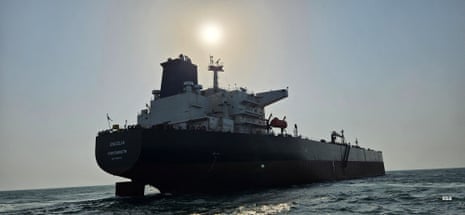
The conflict’s geographical scope has alarmingly expanded to the Red Sea, a vital maritime corridor. Yemen’s Iran-backed Houthi militia claimed responsibility for missile and drone strikes on two Saudi Arabian oil tankers, including the Encelia, in the Red Sea. Saudi state news agency SPA later confirmed a vessel had been hit and was ablaze, though all crew members were safe. These attacks followed the Houthis’ declaration of a maritime blockade against Saudi Arabia, a move that could significantly widen the US-Iran war and stretch American military resources.
Reuters, citing Iranian sources, Yemen’s information minister, and a regional security analyst, reported that Iran had flown Islamic Revolutionary Guard Corps (IRGC) commanders, military advisers, and drone-related equipment, along with gold to fund Houthi activities, into Yemen earlier in the month. This intelligence suggests Tehran is actively bolstering its Houthi allies amidst ongoing US attacks. US Secretary of State Marco Rubio commented on these developments, suggesting the Houthis were "snookered into this thing by the Iranians," having been "smart" to stay out of the conflict previously.
The international community swiftly condemned the Houthi actions. The Gulf Cooperation Council (GCC), led by Secretary-General Jasem Mohamed Albudaiwi, denounced the targeting of the Encelia, labeling it an "extension of the hostile behavior pursued by the militia and a flagrant violation of international law." The GCC warned that continued threats to commercial vessels and international navigation lanes constitute a "dangerous escalation."

The ripple effects of the Red Sea attacks were immediately felt in global shipping. Two very large Chinese crude carriers, the Xin Long Yang and Cosnew Lake, carrying a combined 4 million barrels of Saudi oil, were observed heading towards the Bab el-Mandeb strait to exit the Red Sea. Their transit serves as a crucial test of the Houthis’ resolve and capability to enforce their declared blockade, raising concerns about the safety of global maritime trade through this critical chokepoint.
Diplomatic and Economic Fallout Across the Globe
The intensifying crisis has triggered significant diplomatic and economic repercussions. Amidst growing fears of imminent escalation, the United Kingdom announced the temporary withdrawal of its diplomatic staff from Iran, citing "regional tensions" and an "unpredictable" security situation. Similarly, the German military declared its intention to withdraw two vessels from the Red Sea, underscoring the perceived dangers to international forces operating in the area. Israeli cities, meanwhile, have begun opening bomb shelters, a chilling indicator of heightened alert levels, while the US State Department issued warnings to Americans in the region about potential flight cancellations.
One of the most immediate and tangible impacts of the escalating conflict has been a dramatic surge in global oil prices. Brent crude, the international benchmark, soared past the symbolic $100 per barrel mark for the first time since May, rising by over 7%. Analysts warn of further increases, with the European Central Bank president, Christine Lagarde, cautioning that "the energy shock could intensify further" and fuel inflation, potentially leading to eurozone interest rate hikes. This volatility highlights the Strait of Hormuz’s critical role, through which roughly one-fifth of the world’s oil supply passes daily. Iran’s IRGC provocatively claimed "the Strait of Hormuz is under our control," asserting they had stopped three tankers from passing through a "mine-laden route." US Central Command quickly refuted this, stating, "Iran does not control the Strait of Hormuz. The international waterway remains open for transit regardless of IRGC threats and attacks."

The conflict’s economic ripple effects are also evident in corporate earnings. French oil and gas giant TotalEnergies reported a doubling of its net profit to $5.4 billion in the second quarter, while Norway’s state oil company Equinor saw profits nearly double to $11.5 billion. These companies benefited from increased oil and gas production and soaring prices, filling a market gap created by disruptions to Gulf oil flows. Climate campaign groups have criticized these "oil giants" for "raking in billions in profits while millions of people across the UK are struggling with unaffordable energy bills."
The broader regional economic impact is also hitting tourism-dependent areas. Dubai, a major economic hub, launched the "Dubai Invite" scheme, offering benefits worth over 3,000 UAE dirham (approximately £610) to residents who attract friends and relatives to visit. This initiative aims to revive tourist numbers that have "plummeted" since the city was drawn into the "US-Israel war on Iran," illustrating the widespread economic disruption caused by the conflict.
Shifting Alliances and Internal Political Divisions
Amidst the military and economic turmoil, diplomatic efforts and alliances are also being reshaped. The US signed a landmark nuclear agreement with Saudi Arabia, aimed at establishing a civilian nuclear program using American technology. However, Donald Trump complicated the deal by making it contingent on Saudi Arabia joining the Abraham Accords, which normalize ties with Israel. White House Press Secretary Karoline Leavitt reiterated that "if they don’t join the Abraham accords, the deal is off." Israeli Prime Minister Benjamin Netanyahu hailed such a move as an "historic leap forward for peace," yet Saudi Arabia has long resisted normalization without demonstrable progress on Palestinian rights and statehood, and has yet to comment on Trump’s new condition. Concerns over nuclear proliferation, particularly the potential for Saudi domestic uranium enrichment capabilities, have been raised by critics in Washington and across the Middle East, given the US’s concurrent efforts to prevent Iran from enriching uranium.
Internally, the US administration faces significant political headwinds. For the second time, the US House of Representatives passed a war powers resolution directing Donald Trump to withdraw US military forces from the conflict with Iran. The resolution passed with bipartisan support (214-208), with four Republicans joining all Democrats. This move represents a "significant bipartisan rebuke" of the president’s decision to engage Israel in attacking Iran. However, the Trump administration has deemed such measures unconstitutional, rendering them "largely symbolic" in their immediate effect, yet highlighting deep divisions within American politics regarding military engagement in the Middle East.
Further Flashpoints and Humanitarian Concerns
Beyond the immediate US-Iran confrontation, other regional flashpoints threaten to ignite. Israel’s far-right national security minister, Itamar Ben Gvir, led hundreds of Israelis, including settlers, into the al-Aqsa compound in Jerusalem, a move condemned by the Palestinian Ministry of Religious Endowments and Affairs as a "provocative practice" aimed at "igniting a religious war throughout the entire region." This breach of a decades-old status quo at a site holy to both Muslims and Jews adds another layer of volatility to an already combustible environment.
The human cost of these escalating tensions is profound. Sahar, a 38-year-old teacher from Tehran, expressed the widespread anxiety: "Whenever Trump starts talking about massive military action on Iran, everything changes in Iran overnight. Parents begin to stock up on food, groceries, and medicine; school administration fears opening the school, and children ask questions that no parent should have to answer." Neda, a 31-year-old doctor from Tabriz, echoed these sentiments, noting that "the psychological impact is immediate about such ultimatums. Normal patients and families become more anxious, healthcare workers and medics worry about shortages, and people delay treatment because they fear what may happen next." These testimonies underscore that the shadow of war affects ordinary citizens long before any physical attacks occur.

The international community remains deeply concerned. Foreign ministers from the Association of Southeast Asian Nations (ASEAN), meeting in Manila, called for "freedom of navigation in international straits" and "self-restraint" in the Middle East, acknowledging the "economic ripple effects" of the conflict, particularly regarding energy supplies. Oman, a key mediator in regional conflicts, announced it is actively working to resume talks "to achieve security and stability in the region," following its foreign minister’s meeting with his UK counterpart to discuss the urgent need for cooperation on UNCLOS obligations concerning the Strait of Hormuz.
The current trajectory in the Middle East suggests a perilous path where political objectives are indeed becoming obscured by the confrontation itself. With major powers seemingly locked in a cycle of threats and counter-threats, and regional actors increasingly drawn into the fray, the UN’s warning of a situation "getting out of control" resonates with chilling clarity, leaving the world to wonder what further "unimaginable" events may unfold.