Utah Stratos Project Sparks Environmental Debate as Governor Rejects Natural Gas Monopoly for Massive Data Center

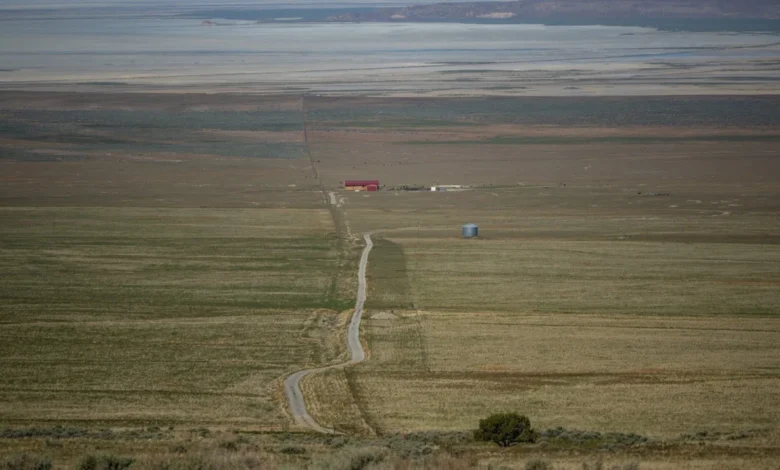
The landscape of northern Utah is currently the center of a high-stakes confrontation between rapid industrial expansion and environmental preservation. At the heart of the conflict is the Stratos Project, a proposed 40,000-acre data center complex that, if completed, would rank among the largest technological infrastructures on Earth. While proponents view the project as a cornerstone of Utah’s economic future and a critical asset for national security, a growing coalition of scientists, residents, and environmental advocates warns that the facility’s immense resource demands could irreversibly damage the state’s air quality and further deplete the precarious Great Salt Lake.
The project, spearheaded by Canadian venture capitalist and "Shark Tank" personality Kevin O’Leary, has recently faced a significant political pivot. After weeks of public outcry regarding the project’s reliance on fossil fuels, Utah Governor Spencer Cox has publicly intervened, asserting that the facility will not be permitted to run indefinitely on natural gas. This declaration marks a potential turning point for a project that was initially presented as a gas-powered behemoth designed to capitalize on existing pipeline infrastructure in the remote Hansel Valley.
The Scale and Scope of the Stratos Project
The Stratos Project is staggering in its dimensions. Spanning 40,000 acres, the campus would occupy a footprint roughly equivalent to the size of Washington, D.C. It is designed to meet the skyrocketing global demand for artificial intelligence (AI) processing and "hyperscale" data storage. Unlike traditional data centers that serve specific corporate needs, hyperscale facilities are massive, modular complexes capable of scaling up to gigawatt-level power consumption.
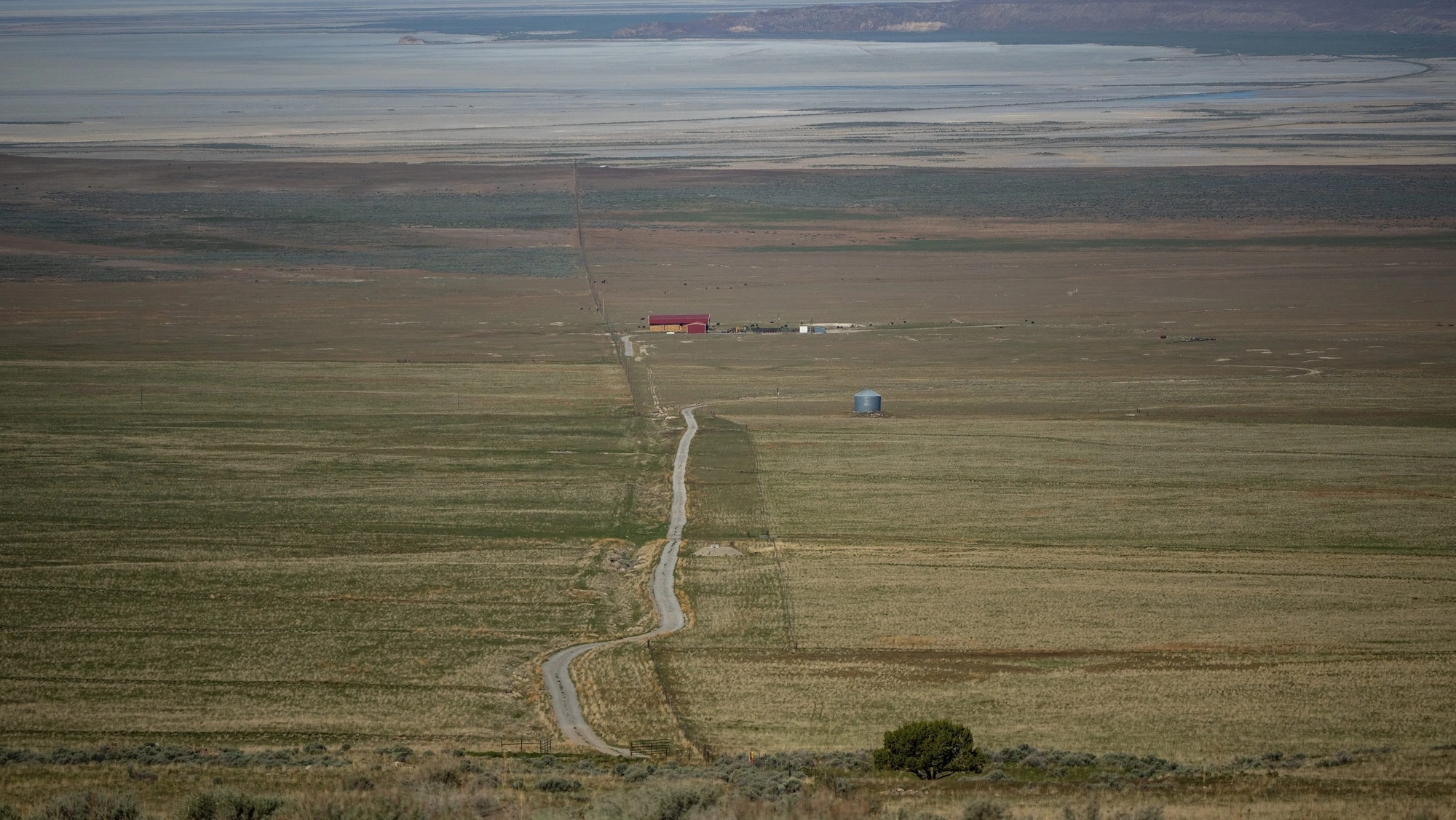
The selection of Hansel Valley, located north of the Great Salt Lake in Box Elder County, was strategic. The region is sparsely populated and sits adjacent to the Ruby Pipeline, a 680-mile natural gas artery that transports fuel from Wyoming to markets in the West. Developers originally indicated that the facility’s massive power requirements—estimated at up to 9 gigawatts—would be met by a dedicated natural gas power plant built on-site.
A Conflict of Energy Visions
The initial plan to power the site "100 percent off the Ruby Pipeline" drew immediate fire from climate scientists and local health advocates. In a state that already battles significant seasonal smog and ozone issues, the prospect of a massive new source of combustion emissions is a major concern.
Governor Spencer Cox, who has championed an "Energy Superabundance" initiative to double Utah’s energy production over the next decade, initially seemed supportive of the project’s economic potential. However, as opposition intensified, the Governor’s rhetoric shifted. In recent statements, Cox clarified that while the first phase of the Stratos Project might utilize natural gas to achieve operational status, the long-term energy profile must be diversified.
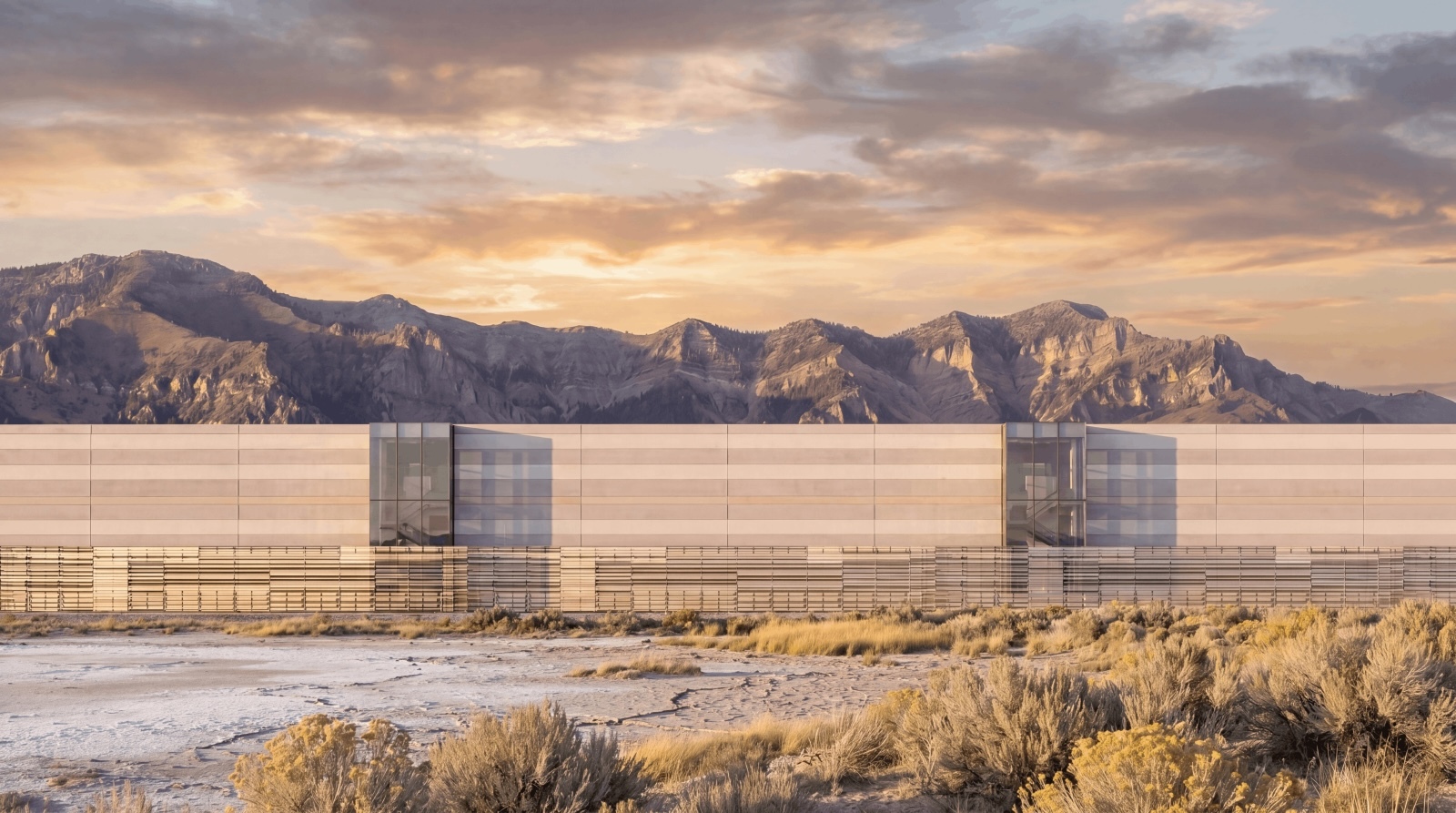
"That’s never going to happen," Cox told reporters, referring to the possibility of a permanent, 100 percent natural gas solution. He emphasized that future phases of the project must integrate a "prime-the-pump" approach with cleaner technologies, including nuclear, geothermal, and solar energy. This stance aligns with the Governor’s "Operation Gigawatt," a policy framework intended to modernize Utah’s grid while balancing traditional baseload power with emerging carbon-neutral sources.
Environmental Implications and Carbon Footprint
The potential environmental impact of a 9-gigawatt natural gas plant is difficult to overstate. According to analysis by Logan Mitchell, a climate scientist with Utah Clean Energy, a plant of this magnitude could emit approximately 35 million metric tons of carbon dioxide annually. To put this in perspective, the entire state of Utah currently produces roughly 55 million metric tons per year across all sectors.
If the Stratos Project were to proceed as a purely gas-powered venture, it would represent a 64 percent increase in the state’s total carbon emissions. This figure does not account for methane leakage, a potent greenhouse gas that often escapes during the extraction and transport of natural gas. Critics argue that such an increase would effectively nullify Utah’s other climate mitigation efforts and place a disproportionate burden on the region’s air quality.
Beyond carbon, the project’s water consumption has emerged as a flashpoint. The developers are reportedly seeking 13,000 acre-feet of water rights in the Hansel Valley area. In a region where the Great Salt Lake is struggling against historic lows—threatening to expose toxic dust from the lakebed—the diversion of such a massive volume of water is viewed by many as an existential threat. The requested 13,000 acre-feet is enough to supply more than 20,000 Utah households, a significant draw for a county that remains largely agricultural.
Regulatory Shadows and the Role of MIDA
Much of the public frustration stems from the "quasi-governmental" nature of the project’s approval process. The Stratos Project was greenlit by the Military Installation Development Authority (MIDA). Originally established by the Utah Legislature to facilitate development on and around military land, MIDA has the authority to bypass certain local zoning regulations and offer unique tax incentives.
In recent years, MIDA has come under scrutiny for its involvement in projects that appear tangentially related to military operations, such as luxury hotels and ski resorts in Deer Valley. MIDA officials have defended the Stratos Project as a matter of national security, arguing that the United States needs massive domestic computing power to maintain an edge in the global AI arms race.
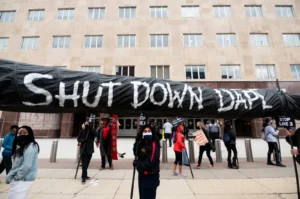
However, Governor Cox recently admitted that the process lacked transparency. "The process was not good," Cox acknowledged, suggesting that such monumental decisions should involve broader legislative oversight and direct input from the Governor’s office. This admission follows a wave of public protests, including a rally at the Utah State Capitol where citizens delivered a petition with over 6,000 signatures demanding "binding action" to protect state resources.
The Global AI Context and Infrastructure Strain
The controversy in Utah is a localized symptom of a global phenomenon. The transition from traditional internet services to generative AI has fundamentally changed the energy math for data centers. AI queries require significantly more computational power than standard searches, leading to a surge in demand for electricity that the aging U.S. power grid is ill-equipped to handle.
Across the United States, from Northern Virginia’s "Data Center Alley" to the tech hubs of Texas and Arizona, utilities are struggling to keep up. In some regions, the rapid growth of data centers has forced utilities to delay the retirement of coal plants or fast-track new natural gas infrastructure, complicating national decarbonization goals.
Kevin O’Leary has attempted to address these concerns by highlighting technological advancements. In recent communications, he suggested that the Stratos Project could utilize air-cooled turbines rather than water-intensive cooling systems and suggested that a "percentage" of the power could eventually come from solar and wind, backed by advanced battery storage. However, industry experts note that the intermittent nature of renewables remains a challenge for data centers, which require 24/7 "five-nines" (99.999%) reliability.
Timeline of the Stratos Controversy
The development of the Stratos Project has moved with a speed that many residents find alarming.
- Early 2024: MIDA begins formalizing plans for the Box Elder County site, citing its proximity to the Ruby Pipeline.
- April 2024: Public officials and developers announce the project, emphasizing the 100 percent natural gas power model. Governor Cox initially defends the need for rapid infrastructure growth.
- May 2024: Environmental groups and local residents launch a coordinated opposition campaign. A water rights filing for the project receives nearly 4,000 formal letters of protest.
- Late May 2024: Scientists release data showing the 64 percent projected spike in state carbon emissions. Public rallies are held at the state capitol.
- Current Status: Governor Cox publicly breaks with the "gas-only" model, mandating a transition to nuclear, geothermal, and solar for future phases. Permitting processes for air quality and water use remain ongoing and are expected to take at least a year.
Analysis: The Path Forward for "Silicon Slopes"
Utah finds itself at a crossroads. The state has long branded itself as the "Silicon Slopes," a business-friendly alternative to California’s Silicon Valley. While the Stratos Project promises billions in investment and a significant boost to the state’s tech credentials, the sheer scale of the proposal has tested the limits of that pro-growth consensus.
The Governor’s recent insistence on a diversified energy mix may be an attempt to find a "middle way" that satisfies both the tech industry and an increasingly environmentally conscious electorate. By pushing for nuclear and geothermal power, Utah could potentially position itself as a leader in "green" data infrastructure. However, these technologies are years, if not decades, away from being deployed at the scale required by a 9-gigawatt facility. Small modular reactors (SMRs), for instance, are still in the pilot and regulatory stages.
For now, the Stratos Project remains a vision of "energy superabundance" that must contend with the stark reality of resource scarcity. As the permitting process moves into its next phase, the eyes of the tech world and environmental advocates alike will remain fixed on Hansel Valley, watching to see if Utah can truly balance the voracious appetite of the AI revolution with the protection of its most vital natural assets.