Website Roi Return Investment Redesign

Website ROI: Maximizing Return on Investment Through Strategic Redesign
A website redesign is not merely an aesthetic overhaul; it’s a strategic investment with the potential for significant returns. Understanding and maximizing the Return on Investment (ROI) of a website redesign is paramount for businesses seeking sustainable growth and competitive advantage. This article delves into the multifaceted aspects of website redesign ROI, providing actionable insights for maximizing your investment. From identifying core objectives to measuring success post-launch, every stage of the redesign process must be viewed through the lens of financial return. Ignoring the ROI potential of a redesign is akin to leaving money on the table, as a strategically executed revamp can lead to increased conversions, improved customer loyalty, and ultimately, a healthier bottom line.
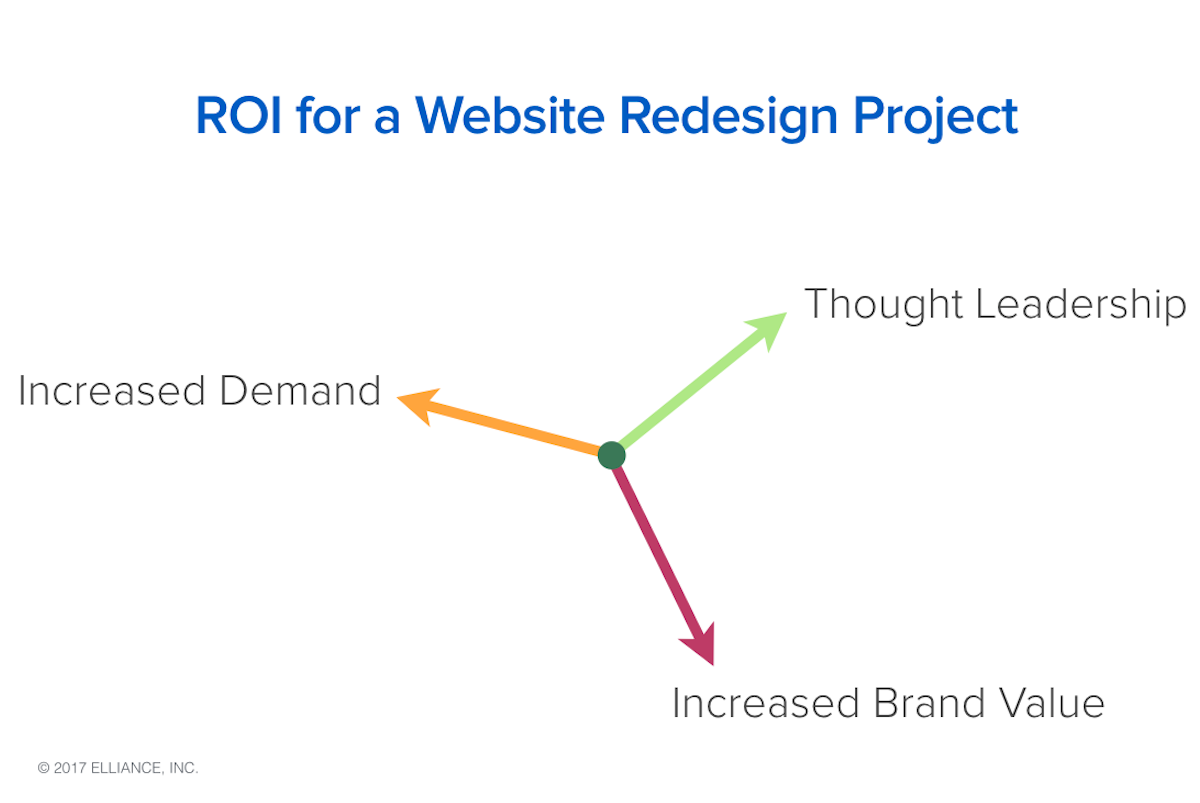
The primary drivers of website ROI from a redesign stem from its ability to address critical business objectives. These objectives typically fall into several key categories: increasing revenue, reducing costs, and enhancing brand equity. Increased revenue can be directly attributed to improved conversion rates, higher average order values, and expanded customer acquisition. Reduced costs manifest in lower customer support inquiries due to clearer information architecture, improved website performance leading to reduced hosting fees, and streamlined internal processes enabled by a more intuitive user experience. Enhanced brand equity, while less directly quantifiable, contributes to long-term ROI through increased trust, stronger brand perception, and greater customer advocacy, which indirectly fuels revenue growth and reduces acquisition costs. Therefore, the initial phase of any redesign project must involve a rigorous definition of these objectives, establishing clear, measurable, achievable, relevant, and time-bound (SMART) goals that will guide the entire process and serve as benchmarks for evaluating success.
The strategic planning phase is the bedrock of a successful website redesign ROI. This involves a comprehensive audit of the existing website, identifying its strengths, weaknesses, opportunities, and threats (SWOT analysis). Key metrics to scrutinize include website traffic, bounce rates, conversion rates across different user segments and channels, time on site, exit pages, and user behavior flow. Furthermore, competitor analysis is crucial to understand industry benchmarks and identify areas where the website can differentiate itself. User research, including surveys, interviews, and usability testing, provides invaluable qualitative data on what users want and need, highlighting pain points and unmet expectations. This data-driven approach ensures that the redesign is not based on assumptions but on concrete evidence, leading to solutions that directly address user needs and business goals, thereby optimizing the potential for ROI.
The scope of a website redesign can vary significantly, from a minor visual refresh to a complete overhaul of functionality and content. Defining the scope clearly is critical for budget management and ROI projection. A complete redesign, while offering greater potential for transformative ROI, will also incur higher upfront costs. Conversely, a more focused redesign targeting specific areas, such as improving the checkout process or optimizing landing pages for lead generation, can offer a quicker and more predictable ROI. The decision on scope should be driven by the identified objectives and the potential impact on key performance indicators (KPIs). Prioritizing features and functionalities based on their anticipated contribution to ROI is essential. This might involve focusing on elements that directly influence conversions, such as call-to-action placement, form design, and content clarity, or investing in performance optimization to improve user experience and search engine rankings.
User experience (UX) and user interface (UI) design are pivotal to maximizing website ROI. A well-designed UX ensures that visitors can easily navigate the site, find the information they need, and complete desired actions with minimal friction. This translates to lower bounce rates, increased time on site, and higher conversion rates. Intuitive navigation, clear calls to action, personalized content delivery, and a mobile-first design approach are all critical components of a strong UX. UI design, on the other hand, focuses on the visual aspects and interactivity of the website. A visually appealing and consistent UI enhances brand perception, builds trust, and creates a more engaging user experience. The seamless integration of UX and UI principles ensures that the website is not only functional but also aesthetically pleasing and easy to use, directly impacting user satisfaction and their likelihood to convert.
Content strategy is an integral part of any website redesign, directly influencing SEO, user engagement, and conversion rates. A well-defined content strategy involves creating high-quality, relevant, and engaging content that addresses the needs of the target audience. This includes optimizing existing content for search engines, creating new content to fill knowledge gaps, and ensuring that content is easily discoverable and digestible. Search Engine Optimization (SEO) is a fundamental pillar of website ROI, and a redesign provides an excellent opportunity to implement best practices. This includes on-page optimization (title tags, meta descriptions, header tags, keyword optimization), off-page optimization (link building, social media integration), and technical SEO (site speed, mobile-friendliness, XML sitemaps). Improved organic search rankings lead to increased qualified traffic, which, when coupled with a user-friendly design and compelling content, drives higher conversion rates.
The technical aspects of a website redesign profoundly impact its performance and, consequently, its ROI. Site speed is a critical factor; slow-loading websites frustrate users, leading to higher bounce rates and lost conversions. Optimizing images, leveraging browser caching, and minimizing HTTP requests are essential for fast loading times. Mobile responsiveness is no longer optional; with the majority of internet traffic originating from mobile devices, a website must be seamlessly accessible and functional across all screen sizes. This not only improves user experience but also positively impacts SEO rankings. A robust and scalable website architecture ensures that the site can handle increased traffic and adapt to future growth, preventing performance issues that could hinder ROI. Security is also paramount, as data breaches can severely damage brand reputation and lead to significant financial losses, underscoring the importance of implementing strong security measures during the redesign.
The implementation and development phase requires meticulous project management to ensure the redesign stays on schedule and within budget. Agile methodologies, with their iterative approach, can be particularly effective in managing complex redesign projects, allowing for flexibility and continuous feedback. Clear communication channels between the development team, designers, and stakeholders are crucial to prevent misinterpretations and ensure that the final product aligns with the initial objectives. Thorough testing, including functional testing, usability testing, and performance testing, is essential before launch. A staged rollout or A/B testing of new features can help mitigate risks and identify any unforeseen issues before a full public release. This attention to detail during implementation directly contributes to the long-term success and ROI of the redesign.
Post-launch analysis and continuous optimization are critical for sustaining and maximizing website ROI. The launch of a redesigned website is not the end of the process but the beginning of ongoing measurement and improvement. Key performance indicators (KPIs) established during the planning phase must be continuously monitored. This includes tracking conversion rates, traffic sources, user behavior, and revenue generated. A/B testing different elements, such as headlines, calls to action, and page layouts, can help identify areas for further improvement and fine-tune the user experience for optimal conversion. Analyzing user feedback, both qualitative and quantitative, provides ongoing insights into how users interact with the new site and what enhancements might be needed. A commitment to continuous optimization ensures that the website remains effective and continues to deliver a strong ROI over time, adapting to evolving user expectations and market trends.
Calculating website redesign ROI requires a structured approach. The basic formula for ROI is: (Net Profit from Investment – Cost of Investment) / Cost of Investment * 100%. To apply this to a website redesign, one must accurately estimate the cost of the investment, which includes design, development, content creation, testing, and any associated software or tools. Quantifying the net profit is more complex. It involves attributing revenue increases directly to the redesign, such as increased sales due to higher conversion rates or customer acquisition from improved SEO. Reductions in costs, such as lower customer support expenses or reduced marketing spend due to better organic performance, should also be factored in. Establishing clear attribution models and tracking mechanisms is crucial for accurately measuring the financial impact of the redesign. For example, if the redesign leads to a 5% increase in conversion rate on a product page that previously generated $100,000 annually, this directly contributes to the revenue generated. Similarly, if customer support tickets related to website navigation decrease by 10%, this represents a cost saving.
When evaluating the financial justification for a website redesign, consider the potential impact on key financial metrics. This includes projected increases in customer lifetime value (CLTV) due to improved customer satisfaction and loyalty, which can be fostered by a superior user experience. Projected reductions in customer acquisition cost (CAC) through more effective lead generation and organic search visibility also contribute to a positive ROI. Furthermore, consider the opportunity cost of not redesigning. An outdated, poorly performing website can lead to lost sales, damaged brand reputation, and a competitive disadvantage, all of which represent significant indirect costs. A well-executed redesign, therefore, is an investment in future profitability and market resilience, not just an expense. Thorough financial modeling, incorporating realistic projections and contingency planning, is essential for securing buy-in and demonstrating the strategic value of the redesign.
In conclusion, a website redesign is a powerful tool for businesses aiming to enhance their online presence and drive measurable financial results. By adopting a strategic, data-driven approach that prioritizes user experience, content optimization, and technical excellence, businesses can significantly amplify their return on investment. From the initial planning and objective setting through to post-launch analysis and continuous improvement, every stage of the redesign process should be infused with a clear understanding of how it contributes to the bottom line. Embracing a holistic view of website ROI, encompassing both direct financial gains and indirect benefits like enhanced brand equity, ensures that redesign projects deliver enduring value and contribute to sustained business growth in the dynamic digital landscape. The investment in a well-executed website redesign is an investment in a more efficient, more profitable, and more customer-centric future.