The 2001 cinematic watershed that redefined Indian filmmaking remains a landmark in the evolution of modern Hindi cinema.

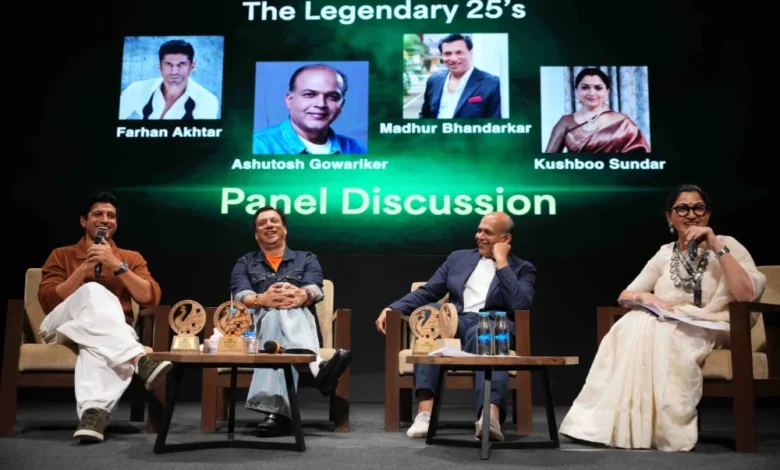
In the landscape of Indian popular culture, few years are as mythologized as 2001. It was a period defined by a quiet, industry-wide rebellion against the "Bollywood potboiler" template—the formulaic, song-and-dance-heavy melodramas that had dominated the box office for decades. At the 57th International Film Festival of India (IFFI) in Goa, three directors whose work defined this transition—Farhan Akhtar, Ashutosh Gowariker, and Madhur Bhandarkar—convened for a commemorative session titled "The Legendary 25s." Moderated by actor and producer Khushboo Sundar, the discussion served as a retrospective on how Dil Chahta Hai, Lagaan, and Chandni Bar fundamentally altered the trajectory of Hindi cinema.
The Catalyst for Change: A Triple Convergence
The year 2001 acted as a pivot point for a new generation of filmmakers who sought to marry commercial viability with narrative authenticity. Farhan Akhtar’s Dil Chahta Hai introduced a lexicon of urban, contemporary friendship that resonated with a younger, metropolitan demographic. Simultaneously, Ashutosh Gowariker’s Lagaan leveraged the national fervor for cricket to craft an epic of historical resistance, while Madhur Bhandarkar’s Chandni Bar provided a gritty, uncompromising look at the marginalized inhabitants of Mumbai’s dance bar subculture.
Before these releases, the Indian film industry operated under rigid constraints. Producers and distributors favored star-driven vehicles that adhered to predictable tropes. The success of these three films proved that audiences were not only ready for unconventional storytelling but were actively craving a departure from the established status quo.
Chronology of a Creative Shift
The journey toward these films was not immediate. For Gowariker and Bhandarkar, the breakthrough came only after significant professional struggle. Gowariker’s first two directorial ventures failed to achieve critical or commercial traction, leading him to a period of intense self-reflection. He determined that his subsequent project would be driven by personal conviction rather than market analysis. This led to the conception of Lagaan.
The pitch for Lagaan was, by industry standards, absurd: a three-hour-plus period drama centered on a cricket match between villagers and British colonial officers. It was a high-stakes gamble that initially failed to convince its lead, Aamir Khan. Gowariker’s persistence—and his ability to narrate the emotional core of the story—eventually secured Khan’s participation. The result was a film that defied the conventions of the "sports movie" genre, ultimately earning an Academy Award nomination for Best Foreign Language Film.
Similarly, Madhur Bhandarkar’s path was one of journalistic observation. Having spent six months conducting field research in the dance bars of Mumbai, Bhandarkar sought to present the lived realities of women in that ecosystem. Chandni Bar served as a stark departure from the gloss and glamour typically associated with Indian film portrayals of women. By centering the narrative on the life of a bar dancer, Bhandarkar established a career-long commitment to exploring the "underdog," a thematic thread that would later define his films Page 3, Corporate, and Fashion.
For Farhan Akhtar, Dil Chahta Hai was a directorial debut that challenged the traditional "filmy" portrayal of male bonding. Akhtar drew from his own observations of how his generation interacted, discarding the artificial dialogue that had plagued previous youth-centric films. The film’s success signaled to the industry that nuanced, character-driven scripts could be just as commercially successful as grand spectacles.
Industry Metrics and the Evolution of Success
The IFFI session highlighted a growing disconnect between contemporary industry metrics and the artistic longevity of a film. Akhtar noted that the industry’s modern obsession with "opening weekend" figures often obscures the true impact of a film. In the past, the success of a production was measured by "silver" or "golden" jubilees—periods where films stayed in theaters for months. Today, the conversation is dominated by short-term financial performance.
Gowariker described each new project as a "reset to zero," emphasizing that the yardsticks of success have become increasingly reductive. By focusing exclusively on weekend box office receipts, the industry risks ignoring the deeper cultural conversations that define a film’s legacy. The panelists agreed that while budgets and marketing scales have changed, the fundamental requirement—a compelling, human story—remains constant.
The Human Element in the Age of Technology
As the discussion turned toward the future of filmmaking, the panelists addressed the rise of Artificial Intelligence (AI) and advanced visual effects (VFX). While these tools offer unprecedented capabilities for world-building, the consensus among the veterans was that they function only as supplements to the human creative process.
Bhandarkar argued that while technology can enhance the visual experience, it cannot replicate the emotional resonance of a well-told story or the nuanced performance of an actor. Gowariker underscored this, noting that "the true performance lies in the pauses where you’re not saying anything." This focus on the "human touch" remains the bedrock of their collective philosophy, serving as a reminder to a new generation of filmmakers that technological tools are secondary to narrative intent.
Broader Implications for Indian Cinema
The ripple effects of the 2001 shift are still being felt today. By proving that distinct, genre-defying narratives could achieve mainstream success, these directors paved the way for the current era of "content-driven" cinema. The industry has seen a marked increase in stories about the lives of ordinary people, complex female protagonists, and unconventional settings that would have been rejected by studios in the late 1990s.
Furthermore, the willingness of these directors to take creative risks has emboldened current creators to experiment with structure and tone. The legacy of Dil Chahta Hai, Lagaan, and Chandni Bar is not merely their individual success, but the institutional change they catalyzed. They shifted the industry’s focus from "the formula" to "the filmmaker’s vision."
Looking Ahead: The Legacy of Risk
When asked if they would change anything about one another’s work, the directors offered a glimpse into their mutual respect. Akhtar expressed a desire to keep Lagaan exactly as it was, noting that it had already achieved a near-perfect balance of sport, history, and emotion. Gowariker suggested he might have added a musical element to Chandni Bar to further highlight its emotional depth, while Bhandarkar remained humble, stating that he would find it daunting to attempt to remake the masterpieces of his peers.
The IFFI session underscored that the "Legendary 25s" were not just a lucky break; they were the result of a calculated refusal to conform. As the industry faces the dual pressures of globalization and rapid technological advancement, the lessons from 2001 remain more relevant than ever. Success, the directors concluded, is ultimately found in the pursuit of the authentic—a sentiment that continues to guide the most respected voices in Indian cinema today.
As the 57th IFFI concluded its retrospective, the takeaway was clear: the most enduring films are those that function as a mirror to society. Whether it is through the lens of a village cricket match, the claustrophobia of a dance bar, or the quiet intimacy of a friendship, the films that matter most are those that dare to ask the audience to look closer. For Akhtar, Gowariker, and Bhandarkar, the journey that began in 2001 is far from over; it is a continuing dialogue between the creator, the culture, and the audience, defined by the courage to do things differently.
Related posts: