The Modern Workspace Evolution: How Remote Work Has Redefined the Personal Office Environment

The shift toward permanent remote and hybrid work models over the past five years has fundamentally altered the domestic landscape, transforming spare bedrooms and living room corners into high-stakes, multi-functional command centers. For many professionals, the home office is no longer merely a place for computing; it has evolved into a dynamic ecosystem that must balance ergonomic requirements, high-performance hardware, and personal leisure activities. Recent insights from industry professionals, including Aaron Zimmerman and Samuel Axon of Ars Technica, highlight a growing trend where the traditional, static desk setup is being replaced by flexible, nomadic, and highly personalized configurations.
The Shift Toward Nomadic Workflows
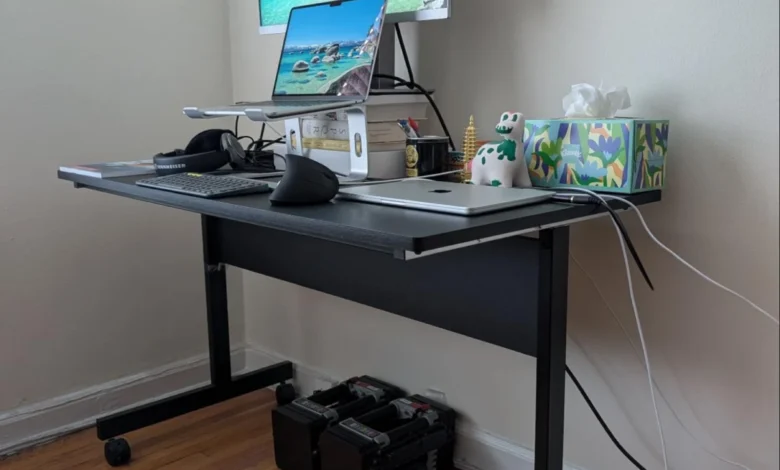
The traditional image of a dedicated office—a chair anchored to a desk in front of a powerful PC—is increasingly becoming an aesthetic ideal rather than a functional reality. Aaron Zimmerman, an editor whose professional setup includes a robust RTX 4070-equipped desktop, notes that his physical workspace is often secondary to his mobility. Despite the presence of a powerful workstation, Zimmerman reports a preference for his M4 MacBook Air, allowing him to traverse his living space throughout the day.
This behavior reflects a broader trend observed by workplace ergonomists: the "un-tethering" of the professional. As mobile computing power has caught up to desktop performance, the need to remain seated for eight hours a day has diminished. This shift has implications for office furniture design, where the popularity of adjustable standing desks—like the Uplift model utilized by Zimmerman—often serves purposes beyond the original design intent. While these desks are marketed for their health benefits regarding posture, users frequently report repurposing them for logistical utility, such as easier retrieval of dropped items or modifying the workspace for non-professional hobbies.
The Convergence of Hobby and Utility
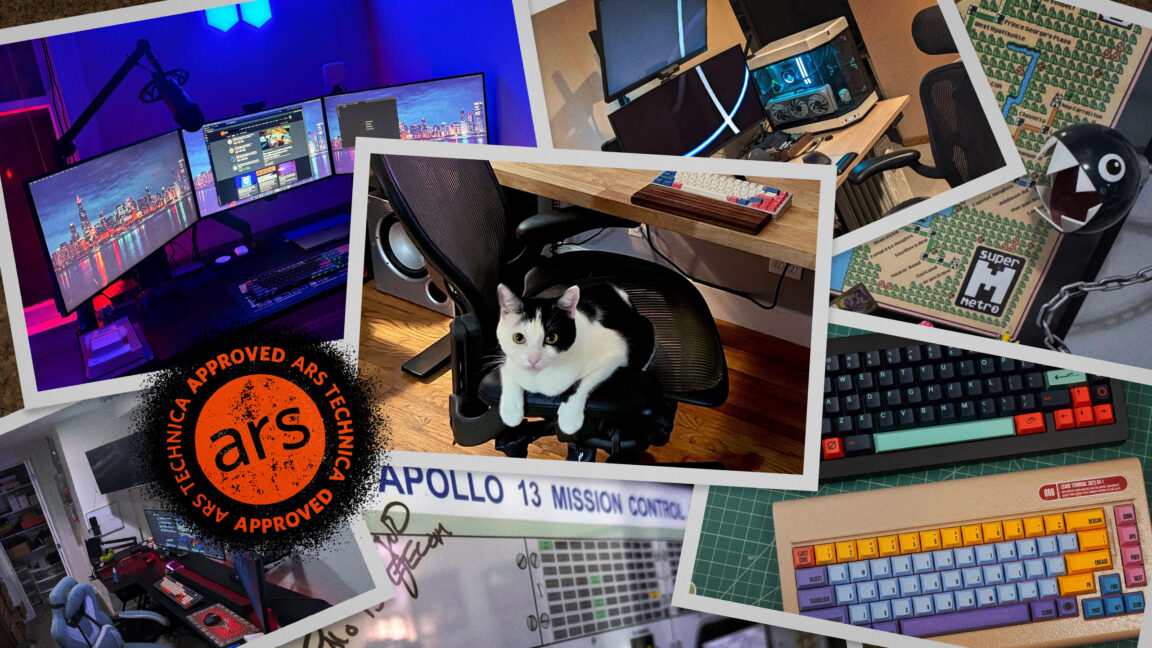
Perhaps the most significant change in the home office environment is the integration of leisure activities into the primary workspace. For many, the desk is a "third space" that transitions from a professional environment during the day to a creative or gaming hub at night. Zimmerman’s desk serves as a primary example of this convergence, where high-end mechanical keyboards are swapped for cutting mats to accommodate tasks like building complex plastic model kits, such as Gundam figures, or engaging in needlework like amigurumi.
This dual-use functionality necessitates a level of modularity that was not required in corporate office settings. The transition from a professional keyboard, such as the Wobkey Rainy75, to a hobbyist station requires storage solutions that can be rapidly deployed and stowed. This creates a psychological boundary between "work mode" and "personal time," a critical component for maintaining mental health in a remote work environment where the physical separation between office and home has vanished.
The Constraints of Urban Infrastructure
For professionals living in high-density urban environments, space is the primary constraint that dictates hardware and furniture choices. Samuel Axon, reporting from a 10-by-10-foot office in Chicago, exemplifies the challenges of the "compact power user." In these settings, the office often serves as a multi-purpose room, doubling as a gaming hub that must coexist with shared living spaces.
The hardware choices in these environments are often heavily influenced by availability and timing. Many current setups are "pandemic-era relics," assembled during the 2020–2021 period when supply chain disruptions, GPU shortages, and work-from-home mandates created a unique market climate. For instance, the prevalence of pre-built systems like the Alienware Aurora R10, which features a Ryzen 9 5900X and an RTX 3080, serves as a testament to a period where building a custom PC was often economically impossible due to extreme component scarcity.
The Ergonomic Paradox
As professionals spend more time in their home offices, the focus on ergonomics has reached an all-time high. However, the market for ergonomic office equipment remains fraught with subjective experiences. The Steelcase Gesture, a chair widely praised by industry analysts and health professionals, illustrates a common frustration among remote workers: the disconnect between data-driven ergonomic design and personal comfort.
Users often struggle with the "recommended" high-end gear, finding that expensive, industry-standard equipment does not always align with individual physiology. This has led to a "life is short" philosophy where some professionals are opting for comfort over clinical alignment, challenging the assumption that standard ergonomic mandates are universally applicable.
Technological Implications and Infrastructure
The technological backbone of the modern home office has shifted from local hardware to streaming and cloud-based solutions. The reliance on technologies like Moonlight and Sunshine to stream high-fidelity gaming from a primary workstation to a mobile device like a Steam Deck demonstrates a move toward hardware-agnostic workflows. By decoupling the processing power (the PC) from the display (the handheld), users can enjoy high-end performance without being confined to a single chair or room.
Furthermore, the integration of ambient lighting, such as Govee panels and galaxy projectors, serves as an essential tool for "psychological zoning." For night-shift workers or those who perform intensive tasks during off-hours, these lighting systems act as environmental cues that shift the user’s state of mind from relaxation to high-focus productivity.
Data and Market Trends: A Look Ahead
Data from the Bureau of Labor Statistics and independent workplace studies indicate that remote work is not merely a passing phase but a structural change in the labor market. Approximately 25% to 30% of the U.S. workforce now operates in a remote or hybrid capacity, a massive increase from the pre-2020 baseline of roughly 5%.
This shift has created a secondary economy for home office upgrades. Retailers have seen a steady demand for:
- Adaptive Furniture: Sales for motorized standing desks have grown by an estimated 15% year-over-year as workers look to optimize smaller footprints.
- High-Performance Portables: The demand for ARM-based laptops (like the M4 MacBook Air) has surged, as these machines offer the thermal efficiency required for all-day use away from a power-hungry desktop.
- Ambient Hardware: Smart lighting and sound-dampening equipment are now considered "essential" rather than "accessory" items, as remote workers prioritize the sensory experience of their work environment.
Implications for the Future
The evolution of the home office is moving toward a model of "invisible infrastructure." As technology advances, the physical footprint of the office is likely to shrink even further. We are entering an era where the hardware—the heavy GPUs and large displays—may be relegated to a closet or a central server room, with thin-client devices providing the interface.
However, the human element remains constant. Whether it is the need to build a Gundam model to decompress after a day of drafting articles or the desire for ambient lighting to foster creative writing at midnight, the office of the future must be as much about the human experience as it is about the output of work.
As professional environments continue to decentralize, the responsibility of creating a functional, healthy, and inspiring workspace shifts from the employer to the individual. This shift brings both freedom and a significant learning curve, as workers must navigate the complex trade-offs between space, budget, health, and technological utility. The modern home office is no longer a static room; it is a fluid, evolving expression of how we live and work in the digital age.
Related posts: