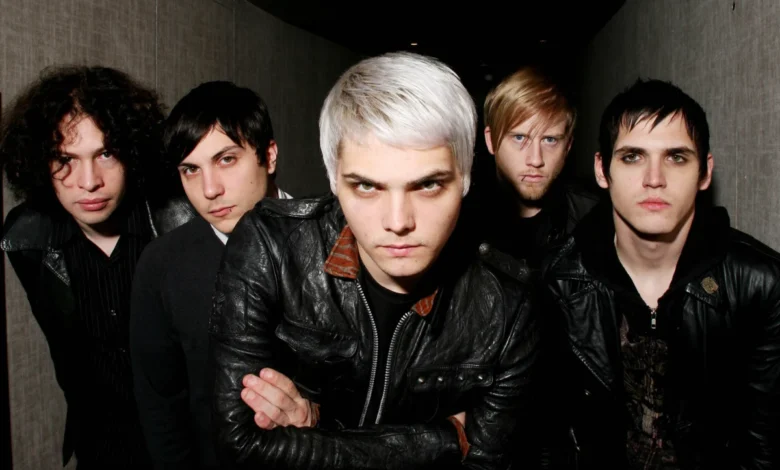
My Chemical Romance did not waste a single moment of their abbreviated recording career, crafting one of the final definitive concept albums of the modern rock era with their third studio effort, 2006’s The Black Parade. Often described as The Who’s Tommy reimagined through a lens of white belts, eyeliner, and mid-2000s angst, the record served as a massive departure from the raw, punk-thrash origins of the band’s debut, I Brought You My Bullets, You Brought Me Your Love, and the breakthrough success of Three Cheers for Sweet Revenge. While the project appeared to be the dawn of a new, highly ambitious chapter for the New Jersey quartet, the band followed it with the stylistically disparate Danger Days: The True Lives of the Fabulous Killjoys in 2010 before announcing their dissolution three years later.
Two decades after its initial release, the cultural footprint of The Black Parade has only deepened. Following a successful reunion tour, the band has recently signaled that new music is on the horizon, reigniting interest in their discography. The album recently celebrated its 20th anniversary with a surprise Number One debut on the vinyl charts, a testament to the enduring loyalty of their fanbase. To mark this milestone, legendary producer Rob Cavallo, who helmed the sessions for the album and worked extensively with Green Day, joined the industry conversation to provide an in-depth retrospective on the creative process that birthed this modern classic.
The Genesis of a Vision: Finding the Sound
The production process began with a search for a sound that moved beyond the constraints of the emo-punk scene. Cavallo recalls the first time he heard the demo for the track "Mama." He noted that the band was interviewing several potential producers, but the material—specifically the theatrical, jarring shifts of "Mama"—convinced him of their potential. "When I heard that, I remember just jumping off the couch," Cavallo explained. "It felt important to me right away that this band was existing on a higher conceptual level."
The track itself, which features an unexpected vocal performance from Liza Minnelli, served as a catalyst for the band’s shift toward experimental composition. Drawing comparisons to The Doors’ "Alabama Song" and the rhythmic sensibilities of the Rolling Stones, the track helped define the "anti-establishment" ethos that would anchor the album. The band’s decision to move into the Paramour Mansion in Los Angeles—a space frequently described by members as having an unsettling, potentially haunted atmosphere—further solidified the creative direction.
Chronology of the Recording Sessions
The production of The Black Parade followed a rigorous schedule that prioritized immersion. The band spent roughly two months in the Paramour Mansion, where they set up a makeshift studio in a 1,500-square-foot great room. According to Cavallo, approximately 90 to 95 percent of the album was written during this period of isolation. The process was almost entirely live; frontman Gerard Way would often improvise vocals over riffs as they were being generated by lead guitarist Ray Toro, rhythm guitarist Frank Iero, and bassist Mikey Way.
Following the writing phase, the band relocated to Eldorado Studio in Burbank, California, to track the album. This move marked the transition from demo to final production. A pivotal moment in the studio occurred when the band struggled with the intro and chorus of what was then known as "The Five of Us Are Dying." Cavallo, improvising on the piano during a morning session, began playing a descending melody inspired by "Pomp and Circumstance." Gerard Way immediately latched onto the melody, leading to the creation of the iconic opening notes of "Welcome to the Black Parade."
The Economic Reality of 2006
While the album is now viewed as a grand, high-budget rock spectacle, Cavallo emphasized that the project was remarkably lean in terms of production costs. The recording budget for the album was estimated to be between $200,000 and $250,000—a figure that, while substantial for an independent artist, was modest for a major label release of that magnitude.
"We were responsible and on a budget," Cavallo noted. The use of the Paramour Mansion as a combined residence and workspace proved to be a cost-effective solution compared to standard studio and hotel lodging expenses. The studio time at Eldorado, which was not considered a high-end, A-list facility at the time, allowed for an efficient 10-week recording window. This fiscal discipline allowed the band to focus their resources on the creative arrangements, such as the orchestral percussion and marching band elements that elevated the album’s sound.
Creative Controversies and Artistic Choices
Not every track on the album was a guaranteed success. The song "Teenagers," for instance, was initially viewed with skepticism by some members of the production team. There was a debate regarding whether the track, which utilizes a classic I-IV-V chord progression reminiscent of Chuck Berry, was too derivative or "old-school" for an album pushing the boundaries of the genre.
Cavallo championed the track, arguing that the true challenge was to write a contemporary song within a traditional framework that felt authentic and lyrically urgent. Given the song’s thematic focus on the rise of school violence, Cavallo insisted that the weight of the subject matter justified the musical structure. The decision proved correct, as "Teenagers" became one of the album’s most enduring commercial successes.
The Legacy of the Performers
The album also highlights the exceptional technical proficiency of the band members, particularly in the creation of the solo for the track "Dead!" The solo was, by all accounts, an accidental masterpiece. It was originally intended to be a simple chordal passage, but after Ray Toro ripped through an off-the-cuff, warm-up take, the production team realized they had captured something inimitable. Despite initial reluctance from the band to use such an unplanned element, the team eventually printed it, and it remains a defining moment of guitar work in the 2000s.
Furthermore, the collaboration with Liza Minnelli on "Mama" showcased the band’s commitment to high-level artistic performance. Minnelli’s professional rigor during the recording sessions served as a benchmark for the band members, who were pushed to match her intensity and attention to detail.
Broader Impact and Industry Implications
The surprise success of the 20th-anniversary vinyl release—selling roughly 70,000 units in the United States alone—underscores the shifting landscape of the music industry. In an era where physical media has been largely supplanted by digital streaming, the enduring value of a "concept album" like The Black Parade demonstrates that there remains a significant, untapped market for high-quality, long-form artistic statements.
From a historical perspective, the album sits at the nexus of the emo subculture’s mainstream explosion and the decline of the traditional major-label rock era. The fact that the band could produce such a dense, theatrical, and commercially successful record on a mid-tier budget remains a case study for contemporary labels and artists.
While the band has yet to release new music following their reunion, the dialogue between the band members and their production team continues. As fans await further announcements, the resurgence of The Black Parade serves as a reminder of a period in music history where high-concept ambition was not only rewarded but deemed essential to the longevity of a band’s legacy. The album remains a cornerstone of 21st-century rock, proving that when artistic vision is aligned with uncompromising execution, the result can transcend its era and maintain relevance for generations to come.