Meta is rethinking its net-zero emissions goal for 2030 as the AI infrastructure race drives a record surge in corporate carbon output.

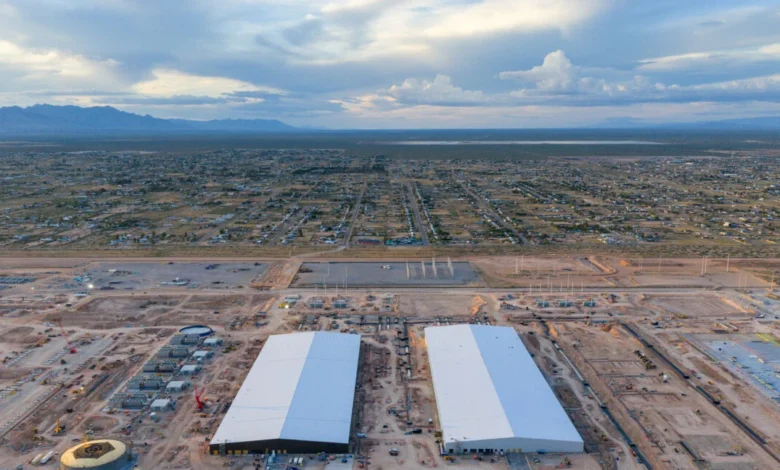
The ambitious environmental pledges that defined the tech industry’s corporate social responsibility strategies for the better part of a decade are undergoing a painful recalibration. Meta Platforms, the parent company of Facebook, Instagram, and WhatsApp, has officially signaled that its commitment to achieving net-zero emissions by 2030 is currently under review. This pivot, disclosed in the company’s 2026 sustainability report, serves as a stark admission that the explosive, high-velocity development of generative artificial intelligence is directly colliding with global decarbonization targets.
As Meta grapples with the energy-intensive demands of building out its hyperscale data centers, the company reported a year-over-year emissions increase that eclipses the growth rates of its primary Big Tech competitors. This development highlights a growing tension within Silicon Valley: how to reconcile the massive electricity and hardware requirements of the "AI revolution" with the environmental, social, and governance (ESG) mandates that have been central to shareholder and regulatory discourse since the late 2010s.
A Departure from the 2030 Roadmap
For years, the "2030 net-zero" target served as a North Star for the technology sector, signaling a transition toward renewable energy procurement and carbon neutrality. However, the internal landscape at Meta has shifted drastically. In the introduction to the 2026 sustainability report, Rachel Peterson, vice president of data centers, and Blair Swedeen, global head of net zero and sustainability, noted that while the company’s long-term environmental ambitions remain intact, the "operating environment" has fundamentally changed.
"Demand for AI infrastructure has grown faster than almost anyone projected," the executives wrote. "We are re-evaluating our timelines, sequencing, and interim milestones—including the 2030 timeframe for our net-zero emissions goal and our near-term intensity targets—so our approach reflects current operating realities while keeping progress transparent."
This public acknowledgment places Meta in a precarious position. While Amazon, Google, and Microsoft have also faced scrutiny over their rising emissions, they have largely maintained their original 2030 targets. Meta’s move to preemptively adjust its goals suggests a pragmatic, albeit controversial, shift toward transparency regarding the physical limits of the current energy transition.
The Chronology of an Environmental Pivot
The rise in emissions is not an overnight phenomenon, but rather the culmination of a strategic shift toward AI-centric computing.
- 2020–2022: Meta, like much of the tech industry, successfully decouples business growth from emissions growth. Through massive investments in wind and solar power purchase agreements (PPAs), the company achieves significant milestones in operational sustainability.
- 2023: The global release of generative AI tools triggers an "arms race." Meta pivots its infrastructure strategy, prioritizing the construction of massive, high-density data centers equipped with thousands of specialized GPUs (graphics processing units) to train and run Large Language Models (LLMs).
- 2024: Emissions begin to climb. The company reports a carbon footprint of 15.6 million metric tonnes of CO2 equivalent. Analysts begin to warn that hardware procurement—specifically the manufacturing of servers and networking equipment—is becoming a dominant source of Scope 3 emissions.
- 2025: The "Year of Surge." Meta’s emissions spike to 21.7 million metric tonnes. The rapid buildout of data centers necessitates a reliance on local power grids that are not yet fully decarbonized, leading to the current re-evaluation of 2030 goals.
- Late 2026: Meta officially publishes its sustainability report, signaling to investors and the public that the 2030 target is no longer aligned with the current trajectory of its data center expansion.
Quantifying the Carbon Surge
The scale of Meta’s carbon footprint growth is significant when placed in a comparative context. A jump from 15.6 million metric tonnes in 2024 to 21.7 million in 2025 represents an increase of nearly 40% in a single year. To provide a sense of scale, the annual carbon output of the company is now roughly equivalent to the total annual greenhouse gas emissions of the state of Idaho. Furthermore, Meta’s footprint now surpasses the total annual emissions of states like Hawaii, Maine, New Hampshire, and South Dakota.
A primary driver of this increase is categorized as "capital goods"—a subset of Scope 3 emissions that accounts for the carbon-intensive process of manufacturing the servers, silicon, and specialized cooling infrastructure required for AI data centers. Because AI models require continuous, high-intensity computing, the lifecycle of these servers is shortened, necessitating constant hardware turnover and manufacturing cycles that are heavily reliant on carbon-intensive supply chains.
The Hyperscale Data Center Dilemma
At the heart of the crisis is the physical nature of the modern data center. Hyperscale facilities are no longer just storage units for data; they are power-hungry engines designed for massive parallel processing. These facilities require consistent, reliable power—a characteristic often referred to as "baseload power."
While tech giants have been the largest corporate purchasers of renewable energy for a decade, wind and solar are inherently intermittent. When these sources cannot meet the massive demand of an AI data center, companies are often forced to draw from the local electrical grid, which, in many parts of the United States and abroad, still relies heavily on natural gas or coal.
Despite Meta’s significant investment in renewable energy projects, the sheer speed of its expansion has outpaced its ability to bring new, clean energy capacity onto the grid. Critics argue that the industry has created a "renewable energy paradox": while they are funding new wind and solar farms, the new demand they are creating for AI is growing so quickly that it necessitates the continued use of fossil-fuel-based electricity to prevent outages.
Industry Implications and Market Reaction
Meta’s decision to soften its public-facing targets carries significant implications for the rest of the tech industry. For years, the sector has been pressured by institutional investors to adhere to strict ESG criteria. By publicly admitting that these goals are becoming unattainable due to AI demand, Meta may have opened the door for other companies to follow suit.
Industry analysts suggest that this creates a "transparency tax." Companies that admit to missing their targets face immediate scrutiny from environmental NGOs and ESG-focused investment funds. However, companies that attempt to "greenwash" or obscure their rising emissions risk long-term reputational damage and potential regulatory action if they are found to be misleading shareholders.
"The tech industry is at a crossroads," said one analyst familiar with corporate sustainability strategy. "They are being forced to choose between leading the AI transition or leading the climate transition. They are realizing that doing both simultaneously, at the current speed of innovation, is proving mathematically impossible."
Looking Ahead: The Future of Sustainability
The challenge for Meta and its peers in the coming years will be the decoupling of AI scaling from carbon intensity. This will likely involve three distinct strategies:
- Energy Efficiency Innovation: Developing more efficient cooling systems and liquid-cooling technologies that allow data centers to operate with a lower power usage effectiveness (PUE) rating.
- Next-Generation Energy Procurement: Moving beyond traditional wind and solar to invest in emerging technologies like advanced geothermal, small modular nuclear reactors (SMRs), and long-duration energy storage.
- Hardware Circularity: Extending the lifecycle of AI servers to reduce the carbon impact associated with the manufacturing and disposal of capital goods.
The acknowledgment by Meta that it must "re-evaluate its timelines" is not necessarily a signal of abandonment of environmental responsibility, but rather a recalibration of the reality of the current energy transition. As the world moves deeper into the era of artificial intelligence, the environmental cost of that intelligence is becoming the defining challenge for the companies building it. For Meta, the path forward will require not just a change in goals, but a fundamental shift in how the company balances its technological ambitions with its impact on the planet. Whether this leads to a new model of sustainable computing or a permanent distancing from climate pledges remains the critical question of the decade.