The maritime industry has long evolved to accommodate the diverse and luxurious demands of modern travelers, ranging from multi-story onboard waterparks and Michelin-starred dining venues to ultra-exclusive VIP suites. Yet, amidst these sweeping innovations in passenger comfort, one singular vessel maintains a transatlantic tradition entirely unique to the global cruise sector. Aboard Cunard’s flagship ocean liner, the RMS Queen Mary 2, a specialized onboard kennel operates continuously to bridge the gap between luxury travel and pet ownership. Serving as the heartbeat of this exclusive floating sanctuary is Oliver Cruz, a seasoned animal handler whose distinct career trajectory has made him one of the most specialized maritime workers in the world.
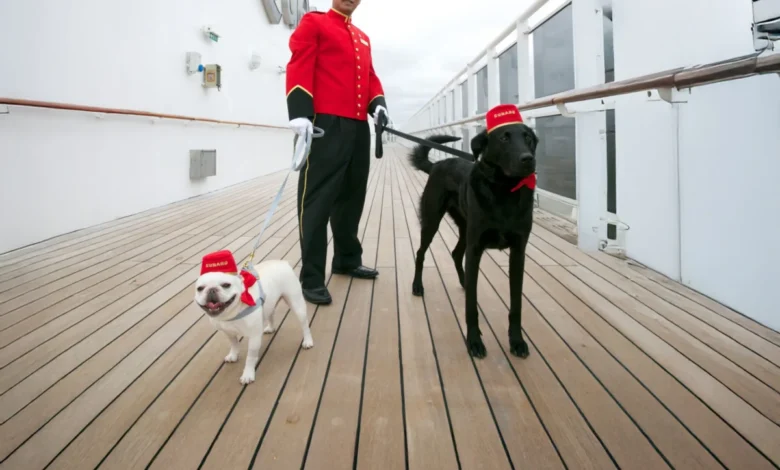
For nearly two decades, the Queen Mary 2 has remained the sole cruise ship globally to offer dedicated, fully serviced accommodations for dogs and cats accompanying their owners across the Atlantic Ocean. Operating primarily on the historic route between Southampton, England, and New York City, the ship features 24 dedicated spaces designed specifically to house pets during the seven-day voyage. While the vast majority of cruise lines maintain strict no-pet policies—with the notable exception of certified service animals—Cunard has preserved and modernised a storied maritime tradition that dates back to the golden age of ocean liners.
The Genesis of a Unique Maritime Career
Oliver Cruz’s journey to becoming the resident kennel master of the Queen Mary 2 is as unconventional as the position itself. Cruz initially boarded the prestigious ocean liner in 2011, taking on a role within the ship’s housekeeping department as a spa attendant. However, his professional background prior to joining Cunard revealed an extensive expertise in zoology and wildlife management. Back home in the Philippines, Cruz had spent eight years working professionally as a zoo guide and animal handler, tasked with the daily care of diverse and potentially dangerous species, ranging from pythons and venomous snakes to fully grown crocodiles.
When the shipboard management discovered Cruz’s extensive qualifications and his lifelong affinity for animals, a natural departmental transfer was swiftly arranged. Transitioning from spa maintenance to the vessel’s dedicated animal facilities, Cruz quickly established himself as an indispensable asset to the luxury liner. His profound dedication to animal welfare extends well beyond his professional duties at sea; Cruz maintains a personal menagerie of 15 dogs at his home in the Philippines and actively participates in the work of the Philippine Animal Welfare Society.
"Dogs are angels," Cruz often remarks, summarizing a philosophy that guides his daily interactions with his high-profile charges. "Not all angels have wings. Some of them have fur."
A Demanding Clientele: From Teacup Yorkies to Giant Breeds
Operating a high-end kennel facility in the middle of the Atlantic Ocean requires meticulous logistical planning and a deep understanding of animal psychology. The clientele housed within the Queen Mary 2’s kennels represents a vast spectrum of breeds, temperaments, and behavioral needs. Over the years, Cruz has cared for animals as small as delicate teacup Yorkshire Terriers and as massive as a Bernese Mountain Dog whose specialized nutritional regimen required three daily meals consisting of approximately three pounds of freshly minced meat alongside more than ten distinct dietary supplements.
The transatlantic voyages frequently attract repeat travelers. Certain pets have completed dozens of crossings under Cruz’s watchful eye; one particular canine passenger has logged an impressive 32 transatlantic journeys aboard the vessel. By maintaining detailed mental and physical logs, Cruz can readily recall the names, specific personalities, dietary restrictions, and preferred sleeping arrangements of his recurring guests, frequently noting the exact kennel enclosure—affectionately referred to by the crew as "houses"—that each animal occupied during previous voyages.
Navigating the Strict Regulations of Transatlantic Animal Travel
The operational logistics of managing international animal transport are governed by rigorous regulatory frameworks, particularly regarding maritime entry into the United Kingdom. Because the UK enforces stringent biosecurity laws to prevent the introduction of rabies and other zoonotic diseases, the embarkation process requires extensive administrative oversight.
On embarkation day, Cruz’s duties commence well before the ship departs port. Working directly at the cruise terminal, he conducts comprehensive cross-checks of all traveling documentation. This includes verifying microchip registration, confirming exact vaccination timetables, and inspecting official government stamps to ensure complete compliance with international pet travel protocols.
Once onboard, the animals are settled into their quarters, where owners are briefed on strict visiting hours and facility guidelines. To alleviate the inherent stress of travel in an unfamiliar marine environment, owners are permitted to supply familiar items such as toys, blankets, and unwashed clothing bearing their scent. Furthermore, for bonded pairs of animals traveling together, partition walls between adjoining enclosures are routinely removed to allow the pets to remain in close physical contact throughout the night.
The Culinary Operations of the Floating Kennel
Nutritional management aboard the Queen Mary 2 matches the high standards of the ship’s renowned culinary staff. Meals for the animal guests are prepared utilizing ingredients sourced directly from the primary galley kitchens that serve human passengers. However, Cruz enforces strict dietary parameters to protect the health of his charges, maintaining a strict zero-tolerance policy for salt and pepper.
The menu is tailored to individual veterinary requirements, featuring items ranging from boiled chicken breast and grilled steak to steamed salmon, traditional Cumberland sausages, scrambled eggs, and fresh selections of fruits and vegetables.
Despite the open-door policy for legitimate pet owners during designated visiting hours, managing public curiosity remains a daily administrative challenge. Cruz notes that dozens of passengers without pets frequently attempt to visit the kennel area purely out of curiosity. "I have to explain that the dogs are already trying to adjust to an unfamiliar environment as well as the other dogs," Cruz notes. "They don’t need more strangers coming in to see them."
Operational Challenges and Maritime Hazards
Working intimately with dozens of stressed, confined animals in a dynamic marine environment naturally presents distinct occupational hazards. Over more than a decade at sea, Cruz estimates he has sustained over 50 minor dog bites, nearly all of which occurred while intervening to break up territorial disputes between unfamiliar animals. Rather than viewing the animals with frustration, Cruz approaches behavioral management through deep species-specific understanding. "Nobody bites me intentionally," he states, emphasizing that the behavioral approach required for a high-energy Husky differs fundamentally from that of a sensitive Shih Tzu.
Beyond animal behavioral management, Cruz faces unique challenges stemming from the human pet owners. Despite explicit instructions regarding dietary restrictions, owners occasionally attempt to bypass kennel protocols by surreptitiously feeding their animals rich, oily table scraps such as bacon sourced from the ship’s restaurants.
Furthermore, managing human anxieties can occasionally lead to high-stress situations for the crew. Cruz recalls a particularly turbulent evening during a severe storm when an anxious owner removed her dog from the kennel facilities and returned with it to a private passenger cabin without notifying staff. Conducting his routine evening headcount prior to securing the facility, Cruz discovered an empty enclosure, prompting an exhaustive shipwide search during inclement weather before the missing animal was successfully located.
Life Beyond the Kennels: Music, Literature, and Community at Sea
For crew members working extended contracts aboard luxury ocean liners, cultivating a vibrant community life is essential for mental well-being. When he is not tending to the needs of transatlantic pets, Cruz is an active participant in the shipboard social and artistic community.
An accomplished musician, Cruz plays both the drums and guitar within the vessel’s resident Filipino crew band, performing regularly at the dedicated crew lounge. His musical pursuits even intersected with mainstream celebrity culture when the rock band Blink-182 filmed a segment aboard the Queen Mary 2, offering Cruz the rare opportunity to perform classic alternative rock tracks alongside drummer Travis Barker.
On land, Cruz’s personal interests center heavily on music history. As a devoted fan of The Beatles, he regularly utilizes time off in port to visit cultural landmarks in Liverpool, England, including John Lennon’s childhood home, Strawberry Field, and the historic Cavern Club, where he frequently stays well into the early morning hours.
Behavioral Success Stories and Expert Guidance for Future Cruisers
Despite the logistical hurdles and physical demands of the role, Cruz views transformative rehabilitation cases as the most rewarding aspect of his career. He points to the case of Paisley, a rescue dog with a history of severe mistreatment prior to her time on the ship. Initially exhibiting defensive aggression and biting behavior, Paisley struggled profoundly within the kennel environment.
By dedicating his personal time outside of normal operating hours to work with the animal individually, establishing firm boundaries, and gradually building trust, Cruz successfully rehabilitated the dog. When Paisley’s owner returned to visit and witnessed the once-aggressive animal resting calmly on Cruz’s lap, the emotional reaction underscored the profound human-animal bonds forged in the middle of the Atlantic.
For prospective travelers considering a transatlantic voyage with their pets, Cruz offers foundational advice rooted in years of professional observation. "Always remember that you and your dog are reflections of each other," Cruz advises. "You need to be calm and happy. If you are really nervous, the dog will feel that nervousness too."
Regarding feline passengers, whose temperaments require a different tactical approach, Cruz stresses patience over intervention. "Cats are the boss. They don’t trust places and people easily, so do not force them. One day, the cat will come to you. Once they become talkative and start asking me for attention, I know: That’s it. We are friends."