Tragedy in Kraków: Six Dead and Dozens Wounded After Far-Right Gunman Opens Fire in Historic Market Square

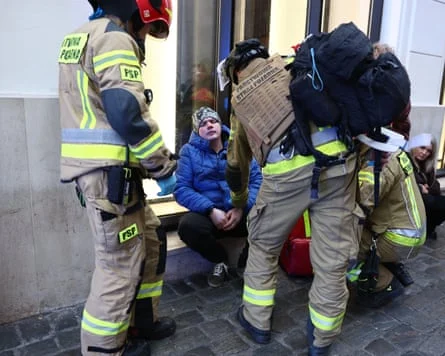
Poland is in a state of profound shock and mourning following one of the deadliest mass shootings in the nation’s recent history. On Saturday afternoon, a heavily armed 25-year-old Polish citizen unleashed a hail of automatic gunfire into the bustling heart of Kraków’s main market square, leaving six people dead and 16 others wounded. High-ranking government officials, including the prime minister and defense minister, have condemned the massacre as a targeted act of terror driven by ultra-nationalist ideology.
The bloodshed unfolded in broad daylight in one of Europe’s most frequented cultural and tourist hubs, transforming a routine weekend afternoon into a scene of carnage and panic. As the nation prepares for a period of national mourning, investigators are untangling the motives of a suspect whose radicalization appears to have extended far beyond a public rampage, culminating in a horrific domestic discovery late into the evening.
The Chronology of Terror: How Saturday Unfolded
The sequence of events began at approximately 3:00 PM on Saturday, November 7, 2026. The historic main market square of Kraków—Poland’s second-largest city, which welcomes upwards of 15 million visitors annually—was crowded with locals, families, and international tourists enjoying the mild autumn weekend.
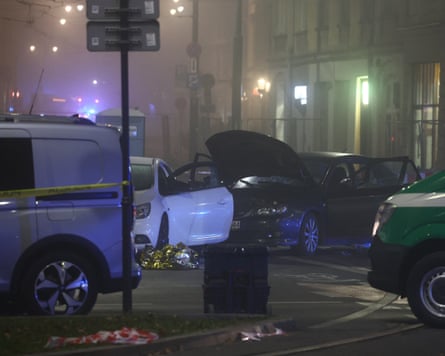
According to municipal transit authorities and eyewitness reports, the violence began when a gunman inside a moving vehicle opened fire indiscriminately. A tram driver navigating the perimeter of the square reported that his cabin window was shattered by incoming rounds as the suspect’s car sped past.
Moments later, the assailant abandoned or stopped the vehicle near the square and continued the assault on foot, wielding an automatic weapon and targeting pedestrians at random. Panic erupted as hundreds of people scrambled for cover inside restaurants, shops, and historic alleyways.
Law enforcement and emergency responders arrived at the scene within minutes. An intense exchange of gunfire ensued between the suspect and responding police officers. During the shootout, two police officers were struck, with one sustaining severe injuries after being hit three times. The rapid intervention of security forces ultimately prevented further loss of life, neutralizing the immediate threat in the public square and bringing the active shooting phase to a close.

Casualties and International Impact
The human toll of the Saturday afternoon massacre is devastatingly international, reflecting Kraków’s status as a global crossroads for tourism and commerce. Polish police confirmed that four women and two men were killed at the scene. Among the dead was a British citizen, three Polish women, and two victims whose identities remained initially unverified pending formal family notifications.
The wounded—totaling 16 individuals—represent a cross-section of Europe. Government spokespersons verified that foreign nationals injured in the attack hail from the United Kingdom, Austria, Germany, Portugal, and Russia. Medical personnel across Kraków hospitals have worked around the clock to treat the survivors, with several individuals remaining in critical condition. The two wounded police officers are receiving specialized care, with the officer shot three times listed in serious condition.
The tragedy took an even darker turn late Saturday night. During subsequent searches tied to the investigation, Prime Minister Donald Tusk announced that authorities had discovered three additional bodies—two women and one man—inside the suspect’s private residence. Preliminary findings indicate these victims were family members of the shooter, murdered prior to his rampage in the city center.
Ideological Motives and the Suspect’s Profile
At a hastily convened emergency news conference, Poland’s Interior Minister, Marcin Kierwiński, shed light on the background of the 25-year-old Polish citizen identified as the gunman. Investigators confirmed that the suspect held "very radical" and "ultra-nationalistic" views, driven by a deep fascination with far-right extremist ideologies.
While counterterrorism units and intelligence agencies are examining whether the suspect acted as a "lone wolf" or maintained connections to organized extremist networks, the ideological underpinnings of the attack are already clear to state officials. Defense Minister Władysław Kosiniak-Kamysz explicitly categorized the shooting as an "act of terror" directed against the civilian population of Kraków.
The manifestation of violent extremism within a historic civic space has alarmed security analysts. Far-right radicalization has been a persistent concern for European security agencies, but large-scale firearm attacks of this nature are exceptionally rare in Poland compared to other Western nations. The integration of domestic familial violence with a public ideological attack suggests a catastrophic failure point in pre-emptive threat detection.
Official Government Responses and National Mourning
The reaction from Poland’s highest offices was swift and uncompromising. Prime Minister Donald Tusk immediately interrupted his schedule, boarding transport to Kraków to oversee the emergency response and coordinate security briefings with regional authorities.
Writing on the social media platform X, Government Spokesperson Adam Szłapka stated, "Today’s event in Kraków has shaken all of Poland."
Justice Minister Waldemar Żurek echoed the administration’s hardline stance on accountability, vowing that the state apparatus would ensure the perpetrator—and any potential co-conspirators or enablers—are "held fully accountable and severely punished."
President Karol Nawrocki issued a solemn statement expressing deep concern over the tragedy. "My thoughts are with the victims, those injured, and their grieving families during this dark hour for our country," Nawrocki said.
In recognition of the immense national trauma caused by the attack, the Polish government has declared Sunday and Monday as official days of national mourning. Flags across public buildings will fly at half-mast, and memorial events are planned nationwide to honor the victims and demonstrate civic solidarity.
Broader Context: Gun Ownership and Security in Poland
The massacre has inevitably reignited a fierce national debate regarding firearm regulations, public safety, and the cultural shift toward civilian armament in Poland.
Earlier this year, comprehensive data published by Euronews revealed a historic milestone: the number of legally owned firearms in Poland surpassed one million for the first time. Statistical tracking provided by Polish police indicated that the state issued a record 50,700 gun permits in 2025 alone. Furthermore, the total volume of active registered permits nearly doubled over the preceding decade, climbing from figures recorded in 2015.
This surge in legal gun ownership has been largely attributed to shifting geopolitical anxieties following regional conflicts, as well as legislative adjustments aimed at streamlining access for sport shooters, hunters, and citizens seeking self-defense capabilities.

However, Saturday’s attack forces a painful reassessment of how firearm accessibility intersects with radicalization and mental health screening. While Polish law maintains rigorous background checks, psychological evaluations, and training mandates for gun ownership, critics and legal experts are expected to scrutinize whether current vetting procedures adequately capture extremist ideologies and escalating domestic volatility.
Implications for Tourism, Civil Liberties, and Future Security
Kraków stands as the cultural jewel of Poland, celebrated for its Renaissance architecture, vibrant academic community, and peaceful integration of millions of international travelers. The targeting of its primary pedestrian square strikes at the core of the city’s identity as a safe, open European metropolis.
Tourism officials and local business leaders expressed grave concern over the potential long-term psychological and economic fallout of the attack. As foreign governments issue travel advisories for parts of southern Poland, local authorities are rushing to reassure the public that Kraków remains secure.
Security experts anticipate a significant recalibration of urban counter-terrorism measures across major Polish cities. Unlike Western European capitals that have long grappled with vehicle-ramming and active-shooter threats in pedestrian zones, Polish municipalities have historically enjoyed lower threat profiles regarding mass public shootings.
The integration of automated surveillance, increased police patrols in high-density cultural districts, and enhanced intelligence-sharing regarding far-right chat rooms and extremist forums will likely form the cornerstone of the government’s immediate policy response. As the investigation deepens into Sunday and Monday, the nation of Poland pauses to mourn its dead, comfort the injured, and confront the uncomfortable reality of domestic extremism striking at the heart of civil society.