Digger: Alejandro Inarritu’s polarizing climate epic and the limits of cinematic activism


The recent release of Alejandro G. Iñárritu’s latest directorial effort, Digger, has ignited a fierce debate among critics and audiences alike regarding the intersection of high-concept art and the urgent, often suffocating reality of the global climate crisis. While initial reviews—including a notably scathing critique from industry commentators—labeled the film an "ugly, loud, and unpleasant" exercise in sensory overload, the production has nonetheless emerged as a significant, if divisive, contribution to the current cultural zeitgeist. By blending a traditional narrative about corporate greed with a meta-fictional structure that examines the efficacy of art itself, Iñárritu has produced a work that challenges the viewer’s expectations of what a climate-themed film should be.
A Chronology of the Climate Cinematic Movement
The emergence of Digger follows a decade-long trend of filmmakers attempting to visualize the intangible threat of anthropogenic climate change. Historically, cinema has struggled to translate the slow, systemic violence of environmental collapse into compelling drama. The early 2000s saw a surge in disaster epics, such as The Day After Tomorrow (2004), which utilized hyper-speed climate change to generate box-office thrills.
In recent years, the genre has pivoted toward "cynical realism." Films like Sorry to Bother You (2018) and Uncut Gems (2019) established a visual language of cacophony and chaos, mirroring the anxiety of the digital age. Iñárritu’s Digger represents the next phase in this evolution: the self-reflective critique. By positioning his narrative as a "play-within-a-movie," Iñárritu acknowledges that audiences are increasingly fatigued by traditional climate messaging, opting instead to interrogate the motives of those who create these stories.
Plot Dynamics and Narrative Structure
At the center of the film is Digger Rockwell, an oil tycoon played by Tom Cruise, whose refusal to heed scientific warnings regarding Arctic methane leaks triggers a catastrophic ice shelf collapse. The narrative follows the predictable path of a political thriller, featuring John Goodman as a compromised U.S. President and Riz Ahmed as a marginalized climate scientist, Ganesh. However, roughly midway through the runtime, Iñárritu pulls the metaphorical curtain back.
It is revealed that the characters are actually actors in a stage production, with Cruise’s character, Curtis Markson, struggling to find the "humanity" in a villain who represents the destruction of the planet. This structural twist transforms the film from a standard eco-thriller into a meditation on the role of the artist. As Markson clashes with his director, Hannah (Sophie Wilde), the film posits a difficult question: Does art exist to comfort the displaced victims of climate change, or does it exist to hold a mirror up to the hubris of the powerful?
Data-Driven Reality: The Methane Crisis
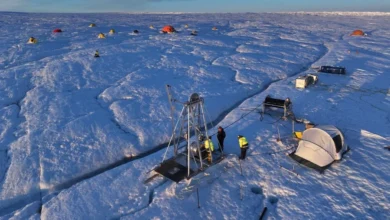
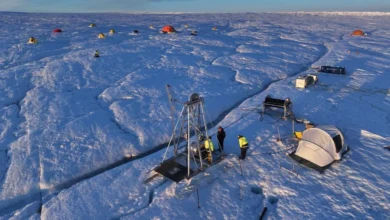
While Digger functions as a work of fiction, its premise is rooted in verifiable environmental data. The film highlights the threat of methane leaks from melting Arctic ice, a phenomenon that has long been a primary concern for climatologists. According to the Intergovernmental Panel on Climate Change (IPCC), methane is significantly more potent at trapping heat than carbon dioxide over a 20-year period.
The "horrible warming feedback loop" depicted in the film—where melting ice releases methane, which then increases temperatures, leading to further melting—is not merely a cinematic device; it is a central pillar of climate science. By integrating these facts, Iñárritu forces the audience to reconcile the fictionalized antics of his characters with the grim projections of the scientific community. The film’s focus on the Arctic reflects the current reality that the region is warming nearly four times faster than the rest of the globe, a metric often cited by the Arctic Monitoring and Assessment Programme (AMAP).
Industry Reactions and Artistic Intent
The response to Digger has been notably bifurcated. Supporters argue that the film’s "noxious" atmosphere is a necessary aesthetic choice, designed to replicate the overwhelming stress of living through a period of environmental instability. Detractors, conversely, point to the film’s chaotic pacing and heavy-handed symbolism as evidence of an auteur losing his grip on narrative cohesion.
In a recent interview with the New York Times, Iñárritu addressed the criticisms surrounding the film’s challenging tone. "The movie is not perfect," he conceded, emphasizing that the risks taken were intentional. As the first Mexican filmmaker to win the Academy Award for Best Picture twice, Iñárritu has historically operated in a space of high-risk, high-reward filmmaking. Digger is his most explicit attempt yet to secure his legacy as an auteur willing to challenge the very medium he works in.
Implications for Modern Climate Art
The broader implications of Digger center on the concept of "doomerism" in popular culture. If, as the film suggests, the current climate narrative is trapped in a loop of profit-seeking and empty political gestures, what role is left for the storyteller?
The film’s climax, which remains subject to significant debate, suggests that the "story" of climate change may be an inadequate tool for mitigation. By casting an actor as a tycoon who is in turn being judged by an audience, Iñárritu suggests that we are all, in some capacity, performers in the unfolding climate drama. We are observers of a crisis that we simultaneously help to perpetuate.
This meta-commentary is perhaps the most uncomfortable aspect of the film. It denies the audience the "heroic" resolution typically found in disaster films. Instead, it offers a sobering reflection on the limits of empathy and the futility of discourse when the physical consequences—the "tsunami" approaching the shore—are already set in motion.
Looking Forward: A Legacy of Risk
Whether or not Digger achieves long-term critical reappraisal remains to be seen. Historically, films that aggressively challenge audience comfort—such as those by Lars von Trier or Gaspar Noé—often undergo a period of critical re-evaluation years after their release.
For the industry, Digger serves as a case study in the risks of melding topical urgency with experimental form. While it may have underperformed at the box office, its ability to generate discourse is undeniable. The film forces a confrontation not just with the climate crisis, but with the role of cinema in an age of irreversible change. As Iñárritu himself has noted, the value of the work may lie not in its ability to solve the problem, but in its refusal to look away from the discomfort of the question.
In the final analysis, Digger is a film that demands to be scrutinized. It is a messy, discordant, and ambitious project that reflects the very chaos it seeks to portray. While it may not provide a roadmap for survival, it provides an unvarnished look at the anxiety of the present moment—a sentiment that, regardless of the film’s flaws, resonates deeply with a global audience grappling with the same uncertain future.