The modern digital marketing landscape is undergoing a fundamental shift away from traditional, high-cost celebrity endorsements and toward decentralized, peer-to-peer advocacy. At the forefront of this evolution is Noise, an innovative marketing platform designed to bridge the gap between emerging brands and everyday content creators. On Wednesday, the startup announced that it has successfully closed a $5.5 million seed funding round led by Capital Midwest, M25, and Grishin Robotics. This latest infusion of capital brings Noise’s total cumulative fundraising to $7.2 million, following participation from additional investors including Capitalize VC and industry operators from prominent tech firms such as DoorDash.
The freshly secured capital is earmarked for accelerated product development and strategic team expansion. Furthermore, the funding arrives in tandem with the rollout of Noise’s new "Organic-to-Ads" program. This feature enables participating brands to repurpose user-generated content produced by Noise creators, amplifying organic posts by deploying dedicated ad spend across major digital ecosystems like Meta and TikTok.
The Rise of the Everyday Creator Economy
Unlike traditional influencer marketing agencies that negotiate flat-fee contracts with established social media personalities commanding massive followings, Noise operates on a democratization model. Any individual with a smartphone can download the Noise application, regardless of their current follower count. Once onboarded, users gain access to a curated marketplace of brand campaigns tailored for platforms such as TikTok, Instagram, Facebook, and YouTube.
Instead of traditional flat-rate compensation models, Noise compensates creators based on performance, specifically paying them per view generated by their content. For brands, the platform provides a centralized dashboard to input content briefs and allocate budgets. Noise then automates the labor-intensive operational bottlenecks associated with influencer marketing—including creator discovery, individual contract negotiation, and fragmented payment processing. This infrastructure empowers companies to run simultaneous campaigns deploying thousands of micro-creators on autopilot.
According to Noise CEO and co-founder Diego Kafie, top-tier creators on the platform are already generating upwards of six figures annually. The company monetizes this ecosystem by taking a percentage fee from the capital brands allocate to creators once verified performance metrics, such as view counts, are successfully delivered.
From Playbite to Noise: The Origin Story
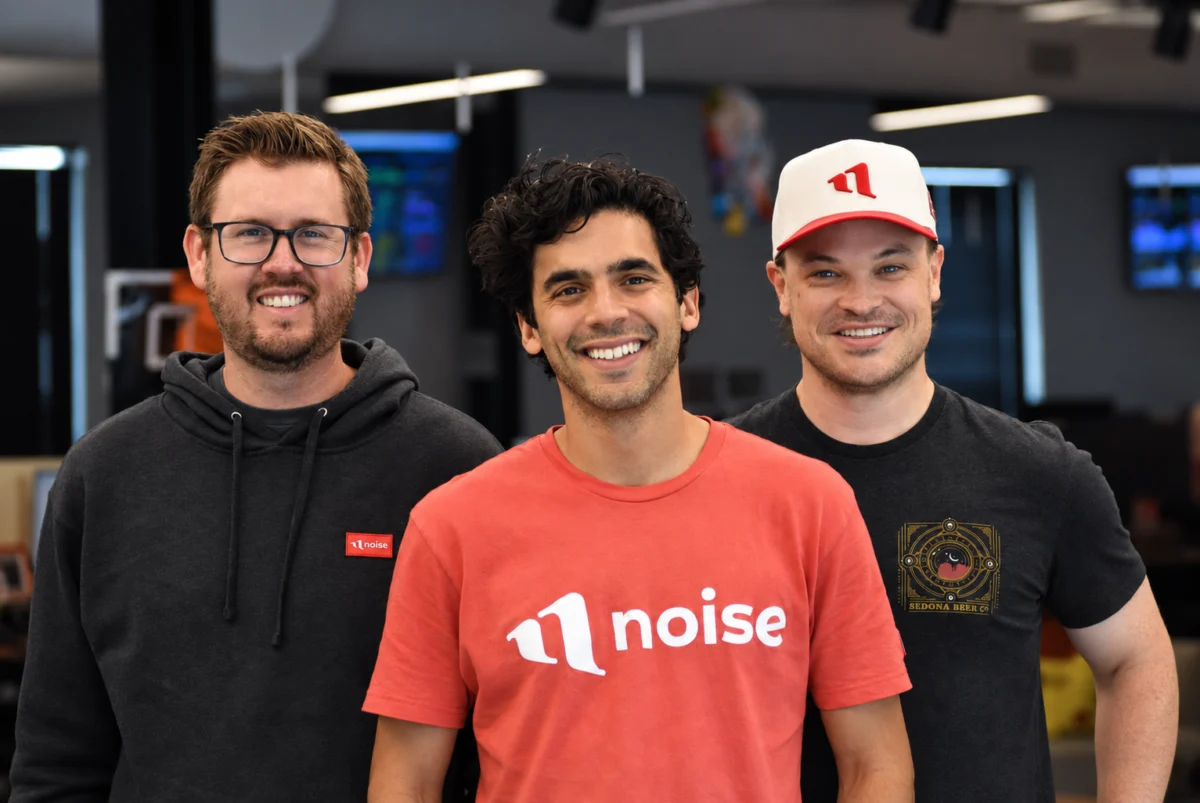
The genesis of Noise traces back to the professional experiences of its founders—Diego Kafie, Stu Feldt, and Nic Weber. Prior to launching Noise, the trio spent two years developing and scaling Playbite, a mobile gaming application. During their tenure building Playbite, the founders experimented with various unconventional and cost-effective user acquisition strategies.
Seeking to scale the mobile game without the prohibitive expenses associated with traditional user acquisition playbooks or top-tier influencer endorsements, the founders began experimenting with grassroots community marketing. They initially recruited five everyday gamers, teaching them the fundamentals of producing engaging short-form social media content that highlighted the mobile application.
What began as a small pilot group of 25 users soon snowballed into a network of 100 individuals. Within a relatively short timeframe, Playbite’s application installations surged as this grassroots community deployed daily content across platforms like TikTok. Kafie noted that attempting to hire established influencers with large followings would have been entirely cost-prohibitive for a scrappy startup operating on a limited budget. By training regular consumers to become effective content creators from scratch, the founders achieved unprecedented reach and content diversity at a fraction of standard marketing expenditures.
This empirical success laid the conceptual groundwork for Noise. Officially launched in 2025, the platform has rapidly scaled to boast a network of 1.5 million registered creators.
Democratizing Content Creation Amid Market Saturation
The timing of Noise’s market entry aligns with significant structural shifts in the global creator economy. Recent data underscores a massive cultural desire among younger demographics to pursue content creation as a viable career path. Studies indicate that more than 57% of Generation Z and slightly over 40% of all U.S. adults aspire to become influencers. However, the path to sustained monetization has grown increasingly congested, stressful, and financially demanding for independent creators navigating algorithm changes and high production overhead.
Noise attempts to alleviate these market friction points through a structured onboarding and educational framework. When a new user downloads the application, they complete specialized creator training modules designed to teach the fundamentals of effective commercial storytelling. Initially, new participants are granted access to entry-level campaigns. As they build a proven track record of successful deliverables and complete advanced training modules, creators unlock eligibility for higher-paying brand opportunities.
This operational structure directly challenges traditional critiques regarding platform-mediated labor. When queried about whether the platform depresses creator earnings relative to direct brand partnerships, Kafie defended the model by emphasizing autonomy and transparent market dynamics. Brands establish their own compensation rates within the platform, and creators retain the absolute right to accept or decline campaigns based on their personal preferences. Furthermore, Kafie emphasized that the startup’s core value proposition lies in cultivating brand-new creators who might otherwise lack the resources or systemic access to enter the paid influencer market.
Implications for the Digital Marketing Ecosystem
Currently, Noise’s client base predominantly consists of mobile application developers and early-stage companies operating under tight marketing budgets who require scalable influencer marketing solutions. However, the company’s long-term strategic vision involves scaling its infrastructure to accommodate enterprises of all sizes.
By enabling brands to recruit thousands of micro-advocates simultaneously, companies gain access to a diverse array of authentic content styles that resonate strongly with modern digital consumers, who frequently exhibit skepticism toward polished, corporate advertisements. Industry analysts suggest that platforms streamlining user-generated content creation will likely pressure traditional talent agencies and high-end influencer networks to reevaluate their pricing models.
As brands increasingly prioritize authenticity, performance-based ROI, and rapid content iteration, startups operating at the intersection of infrastructure software and creator economies are capturing significant investor interest. With $7.2 million in total capital secured and a rapidly expanding user base approaching nearly two million participants, Noise is positioning itself as a central player in the ongoing transformation of digital commerce and online monetization.
Related posts: