Justice Department Targets UC Berkeley School of Law Over Alleged Race-Conscious Admissions and Discriminatory Practices


The federal government has escalated its nationwide crackdown on race-conscious higher education policies, issuing a formal determination that the University of California, Berkeley, School of Law violated federal civil rights law by allegedly favoring Black applicants while discriminating against Asian and White students. In a joint finding announced by the Department of Justice (DOJ) and the Department of Education, federal investigators concluded that Berkeley Law breached Title VI of the Civil Rights Act of 1964. This foundational statute explicitly prohibits discrimination based on race, color, or national origin in any program or activity receiving federal financial assistance.
The determination represents a major milestone in the Trump administration’s aggressive enforcement agenda targeting institutional diversity, equity, and inclusion (DEI) mandates. It arrives on the heels of a broader federal campaign scrutinizing elite universities across the country for systemic admissions practices that allegedly bypass constitutional mandates and statutory prohibitions against racial preference. While university administrators have vehemently denied the accusations, pointing to strict adherence to both state and federal anti-discrimination frameworks, the federal findings open a tense new chapter in the ongoing legal and political battle over merit, equity, and the definition of equal protection under the law.
Chronology of the Federal Probe and Legal Framework
The seeds of the current confrontation were planted well before federal investigators formally stepped onto the campus. California has a long, unique history regarding race-conscious policies in public education. In 1996, California voters overwhelmingly passed Proposition 209, a landmark state constitutional amendment that prohibited state governmental entities—including public universities—from discriminating against or granting preferential treatment to any individual or group on the basis of race, sex, color, ethnicity, or national origin in public employment, public education, or public contracting. For nearly three decades, public institutions in the Golden State operated under the legal constraint of this ban.
On a national level, the landscape shifted dramatically in June 2023, when the United States Supreme Court issued a sweeping ruling in landmark litigation involving Harvard University and the University of North Carolina. The high court struck down race-conscious admissions programs nationwide, ruling that traditional affirmative action models violated the Equal Protection Clause of the Fourteenth Amendment. This historic decision effectively dismantled the legal architecture that elite institutions had relied upon for decades to curate diverse student bodies.
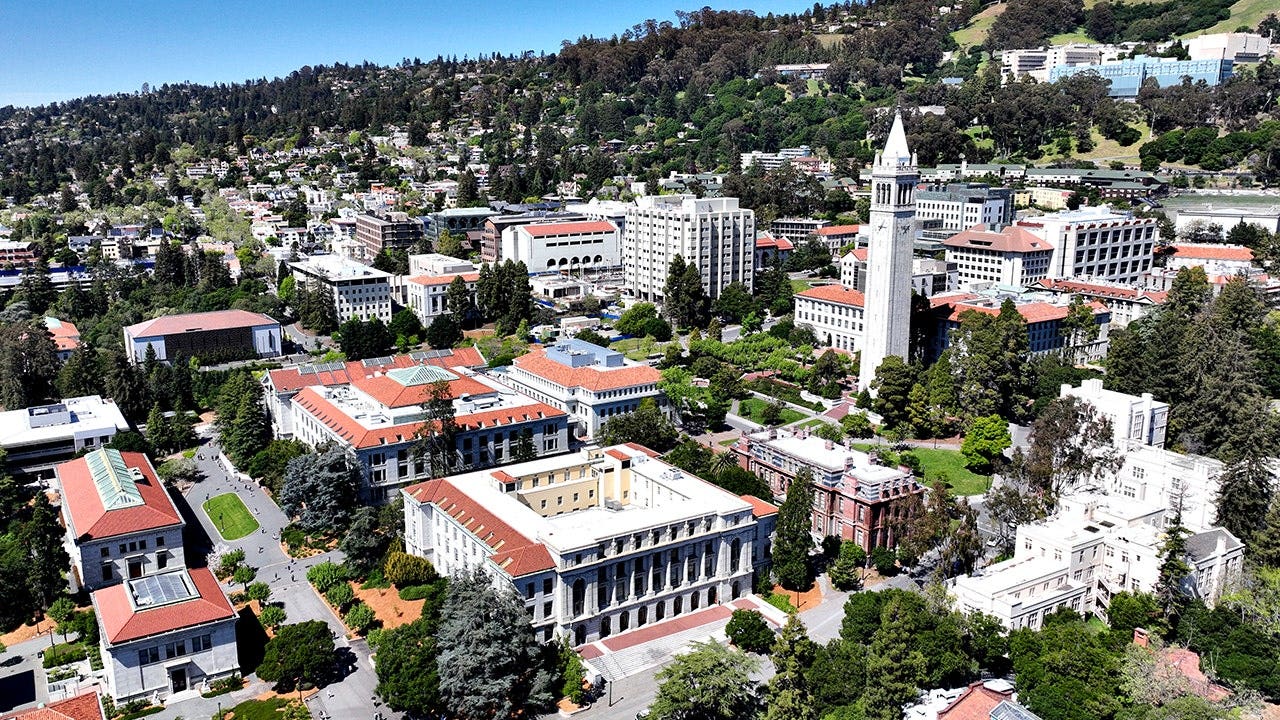
Seizing upon the post-Supreme Court legal environment, the federal administration accelerated its regulatory oversight. In March 2025, officials from the DOJ and the Department of Education launched an exhaustive compliance review of Berkeley Law to determine whether the institution’s admissions procedures complied with federal civil rights standards in the wake of the high court’s ruling. Approximately a year and a half after the review commenced, investigators published their findings, asserting that the law school had maintained an unlawful institutional bias.
Statistical Disparities and Investigative Findings
At the core of the federal government’s case against Berkeley Law is a comprehensive statistical analysis of admissions data spanning multiple academic cycles. According to the DOJ, empirical data extracted from the law school’s applicant pools revealed stark discrepancies in admission outcomes and standardized testing metrics among different racial demographics.
Investigators highlighted data from the 2025 admissions cycle, which purportedly showed that Black applicants enjoyed substantially higher probabilities of acceptance compared to similarly situated peers. Specifically, the DOJ’s analysis concluded that Black applicants had 5.8 times higher odds of gaining admission than comparable White applicants.
Further scrutiny was applied to candidates’ Law School Admission Test (LSAT) scores, a traditional metric utilized by legal educators to gauge academic readiness. According to federal findings evaluating admissions cohorts in 2024 and 2025, 37% of Black admitted applicants scored lower on the LSAT than 99% of admitted White applicants. Moreover, the data revealed that half of all Black students admitted to the law school during those cycles posted LSAT scores that fell below 95% of admitted White applicants.
Longitudinal data cited by the DOJ from 2021 through 2025 underscored a consistent performance gap. The median LSAT score for admitted Black students hovered around 165 over this period. In contrast, median scores for admitted Asian and White students consistently sat around 172, while Hispanic admits recorded a median score of approximately 169. In a formal notification letter sent to attorney Tania Faransso, who represents the university, the DOJ summarized that the median Black admit consistently registered an LSAT score roughly five points lower than the median White or Asian admit.

To put these figures into institutional context, enrollment data from October 2025 indicated that Berkeley Law housed a total student population of 1,128 individuals. Of that total enrollment, 516 students were White, 293 were Asian, 130 were Hispanic, and 51 identified as Black. Federal officials argued that the demographic distribution and qualitative metrics point toward institutional engineering rather than race-neutral evaluations.
Institutional Response and Defense of Admissions Policies
University leadership has pushed back aggressively against the federal findings, denying any wrongdoing and maintaining that its admissions processes operate with strict fidelity to the law. In an official statement provided to media outlets, Berkeley Law insisted that its procedures comply fully with Title VI, federal statutes, and California’s Proposition 209.
School representatives emphasized that while the law forbids racial preferences, it does not strip institutions of the ability to cultivate diverse student bodies through lawful, race-neutral metrics. These permitted factors can include an applicant’s socioeconomic background, life experiences, geographic distribution, and personal hardships overcome.
"Our admissions policy is clear that race is not considered in any way in admissions decisions," the law school’s statement read. "Proposition 209, federal statutes and the Supreme Court’s decisions do not preclude schools from pursuing diversity so long as they give no preferences based on race. Berkeley Law does not do so."
The central administration of the broader University of California, Berkeley campus echoed these sentiments, releasing a separate declaration affirming its dedication to academic merit. "UC Berkeley is committed to ensuring that every student is admitted based on their merit, and not on their race, sex, color, ethnicity or national origin," university officials stated. They added that the institution intends to cooperate fully with federal authorities while mounting a robust defense of its practices: "UC Berkeley will spare no effort to provide ample evidence showing that the university complies with all relevant laws, policies and rules governing admissions."
Broader Implications for Higher Education and Legal Standards
The federal inquiry into Berkeley Law is not an isolated incident; rather, it forms part of an expansive, coordinated campaign by federal enforcement agencies to scrutinize elite higher education institutions across the United States. In tandem with the Berkeley investigation, the DOJ has trained its sights on other prestigious institutions, such as the University of California, Los Angeles (UCLA), over alleged illegal diversity, equity, and inclusion admissions practices. Concurrently, federal lawmakers have increasingly placed accrediting bodies, such as the American Bar Association (ABA), under congressional review regarding whether institutional accreditation standards indirectly pressure law schools to adopt race-conscious criteria.
Legal scholars note that the clash between the federal government and UC Berkeley highlights a fundamental tension in modern American jurisprudence. On one side, federal enforcement agencies are interpreting post-Supreme Court mandates through a strict colorblind lens, arguing that any statistical disparity favoring specific minority groups serves as presumptive evidence of illegal racial balancing or preferential treatment. On the other side, elite universities contend that holistic review processes—which examine an individual’s background without factoring in their racial identity—naturally yield diverse cohorts without violating constitutional or statutory prohibitions.
As the standoff between the DOJ and Berkeley Law progresses, the potential consequences extend far beyond the borders of California. If federal authorities formally move to strip institutions of federal funding or impose stringent corrective mandates, universities nationwide may be forced to radically overhaul their holistic admissions screening procedures. This could lead to an era where standardized testing metrics and quantitative achievements carry even heavier weight in professional school admissions, fundamentally reshaping the demographic makeup and institutional ethos of American higher education for generations to come.
Related posts: