Homeland Security Secretary Markwayne Mullin Signals Openness to Bipartisan Immigration Talks While Reaffirming Hardline Opposition to Amnesty

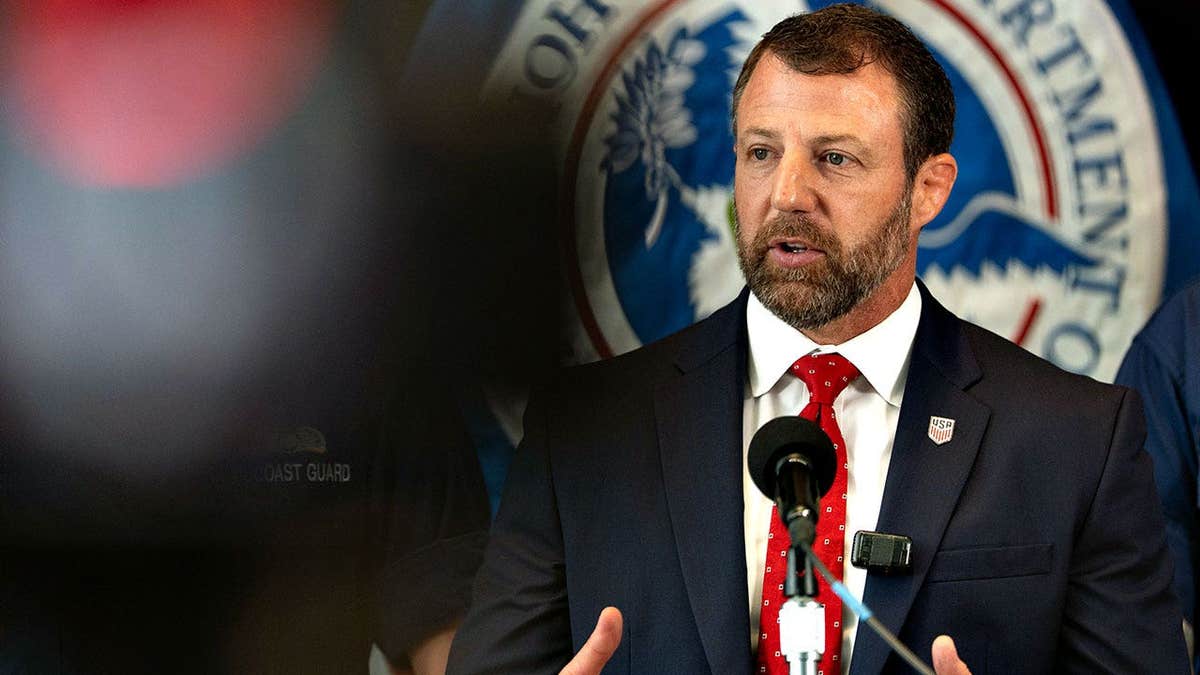
Homeland Security Secretary Markwayne Mullin has revealed that President Donald Trump has encouraged him to engage with Democratic lawmakers seeking a collaborative approach to immigration reform in the new Congress. Speaking on the sidelines of a counter-drone conference in Maryland, Mullin indicated that numerous Democrats have reached out to open channels of communication regarding potential legislative solutions.
While the administration remains strictly opposed to amnesty and has not discussed altering its core enforcement policies, the openness to bipartisan dialogue marks a notable strategic pivot following the 2026 midterm elections. The shift comes at a critical political juncture as the White House balances legislative outreach with a renewed emphasis on enforcement, underscored by the elevation of hardline architect Stephen Miller as White House chief of staff.
Navigating Bipartisan Outreach Amid Hardline Policies
According to Mullin, the outreach from Democratic lawmakers has been substantial, prompting him to brief the president directly.
"I’ve let the president know that those calls are coming in, and the president has said, ‘Let’s start working with them and then let’s meet at some point,’" Mullin told reporters.
Despite this willingness to engage in legislative discussions, Mullin was careful to draw a firm line regarding existing administrative actions. He emphasized that he and President Trump have not discussed modifying the administration’s current enforcement mechanisms or priorities. When pressed on whether operational changes were on the table, Mullin was unequivocal.
"We haven’t had that conversation," Mullin said, explicitly adding, "We’re never going to allow amnesty to happen."
This dual message—openness to congressional negotiation paired with an uncompromising stance on enforcement and amnesty—highlights the complex balancing act facing the administration as it attempts to navigate a divided Congress following the midterms.
A Shift in Tone on DACA and Legislative Pathways
In a potentially significant evolution of the administration’s rhetoric, Mullin suggested that Congress might consider creating a pathway to permanent legal status for recipients of the Deferred Action for Childhood Arrivals (DACA) program. DACA, which was originally established by executive action, provides temporary protection from deportation and work authorization to eligible individuals who were brought to the United States illegally as children.
"If we want to have an immigration reform to where we can look at DACA and figure out a way that these individuals can become maybe legal permanent citizens or something like this, that’ll be up to Congress," Mullin stated.
This perspective represents a distinct rhetorical shift from previous Department of Homeland Security (DHS) messaging. Earlier in the year, the agency maintained a rigorously punitive posture toward the program. In a March social media post on X, DHS explicitly reminded the public that DACA "does not confer any form of legal status in this country" and warned that recipients remained subject to arrest and deportation, particularly if they engaged in criminal conduct.
The agency’s aggressive posture earlier in the year was reinforced by statistical data released by DHS, which noted that U.S. Immigration and Customs Enforcement (ICE) arrested 264 DACA recipients nationwide between January 20 and September 28, 2025. According to those figures, more than 92% of those arrested individuals had been formally charged with or convicted of criminal offenses within the United States. Mullin’s recent remarks mark the first time a high-ranking administration official has publicly entertained the prospect of a legislative remedy for DACA recipients under the current term.
Political Context and the Aftermath of the 2026 Midterms
The renewed dialogue surrounding immigration reform follows the 2026 midterm elections, a political cycle that prompted soul-searching across both major parties regarding legislative gridlock and border security strategies. In post-election interviews, President Trump openly acknowledged that some aspects of the administration’s aggressive immigration enforcement might have been perceived as excessively severe by parts of the electorate, signaling a potential appetite for targeted legislative compromises.
However, the administration’s legislative exploratory efforts run parallel to internal structural changes that signal a continued commitment to strict enforcement. President Trump recently elevated Stephen Miller—widely recognized as the intellectual architect of the administration’s most restrictive immigration policies—to the role of White House chief of staff, replacing Susie Wiles.
The elevation of Miller has already sparked intense reactions on Capitol Hill. House Republicans have experienced internal friction over the appointment, with critics and allies alike clashing over the direction of the party’s policy agenda. Meanwhile, congressional Democrats, including incoming House Oversight Committee leaders such as Representative Robert Garcia, have signaled plans to aggressively scrutinize administration policies, executive pardons, and key allies, setting the stage for high-stakes legislative battles.
Chronology of Recent Immigration Policy Shifts
To understand the current state of immigration discussions, it is necessary to examine the sequence of key events leading up to Mullin’s recent announcements:
- January 20, 2025: The current administration initiates a ramp-up in interior enforcement operations, resulting in increased ICE apprehensions across multiple demographics, including individuals with deferred action statuses.
- March 2025: DHS publishes explicit warnings on digital platforms clarifying that DACA provides no formal legal status and highlighting criminal arrests among program participants during congressional testimony by administration officials.
- September 28, 2025: Cutoff date for a reported DHS enforcement period indicating that ICE arrested 264 DACA recipients, with the vast majority facing concurrent criminal charges or convictions.
- November 2026: Following the midterm elections, President Trump admits in media interviews that immigration enforcement tactics may have crossed into overly aggressive territory, opening the door for potential legislative discussions.
- Late 2026: President Trump appoints Stephen Miller as White House chief of staff, reinforcing the administration’s hardline operational foundation even as outreach to congressional Democrats begins.
- December 2026: DHS Secretary Markwayne Mullin publicly confirms that President Trump has endorsed opening talks with Democrats on immigration reform while maintaining strict opposition to amnesty and keeping enforcement protocols intact.
Broader Impact and Policy Implications
The willingness of the executive branch to entertain discussions with congressional Democrats regarding comprehensive immigration reform—specifically touching third-rail issues like DACA—could fundamentally alter the legislative landscape in Washington. For years, comprehensive immigration reform has languished in political stalemates, caught between progressive demands for broad pathways to citizenship and conservative insistence on complete border security and interior enforcement first.
Analysts note that while Mullin’s comments suggest a tactical flexibility aimed at securing legislative victories, the inclusion of Stephen Miller as chief of staff ensures that the administration’s hardline border security baseline will remain uncompromised. Any bipartisan bill that emerges from these nascent discussions will have to thread a remarkably narrow needle: satisfying Democratic demands for humanitarian protections and legal certainty for childhood arrivals, while meeting Republican thresholds for strict law enforcement and border integrity without triggering accusations of granting "amnesty."
As congressional committees prepare for the new legislative session, the success of these bipartisan overtures will largely depend on whether lawmakers can translate preliminary exploratory talks into concrete statutory language. DHS officials have not yet provided further detailed comments regarding the timeline or scope of potential legislative proposals, leaving the future of DACA and broader immigration reform squarely in the hands of a closely divided Congress.
Related posts: