A Revolutionary Membrane Technology Could Decarbonize Global Crude Oil Refining by Enabling Room-Temperature Separation

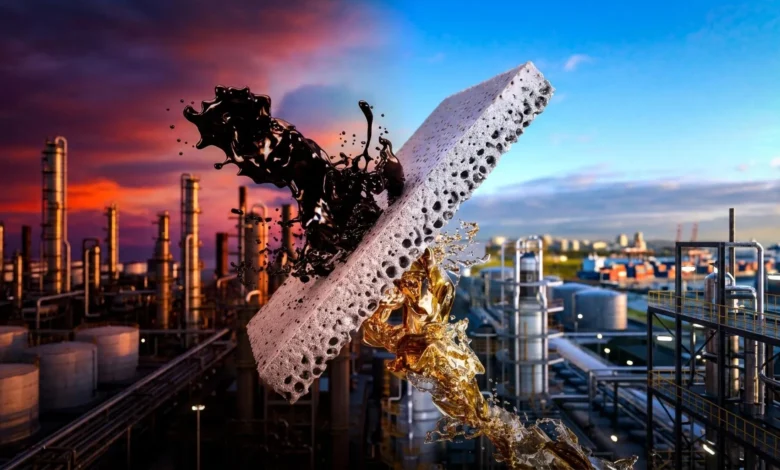
In a development that promises to reshape the energy landscape, an international team of researchers has pioneered a breakthrough method for separating crude oil that eliminates the need for high-heat distillation. By leveraging a naturally occurring phenomenon within a simple, inexpensive membrane, the researchers have demonstrated a pathway to significantly reduce the energy intensity of one of the world’s most carbon-heavy industrial processes. The study, published in the prestigious journal Nature, marks a departure from century-old refining practices and suggests a viable route toward substantial industrial decarbonization.
The research was spearheaded by Professor Dong-Yeun Koh of the Korea Advanced Institute of Science and Technology (KAIST) and Professor Ryan Lively of the Georgia Institute of Technology. Their collaborative effort, which also involved critical validation using real-world feedstock provided by HD Hyundai Oilbank, has successfully demonstrated that crude oil can be effectively fractionated at room temperature. This paradigm shift could potentially mitigate the staggering energy requirements currently associated with the global petrochemical supply chain.
The Energy Crisis of Traditional Distillation
For over a century, the global refining industry has been tethered to thermal distillation as the primary mechanism for breaking down crude oil into its constituent parts, such as naphtha, gasoline, kerosene, and diesel. This process requires heating raw crude to temperatures exceeding 350°C to vaporize various fractions, which are then condensed and collected.
The environmental and economic costs of this process are immense. Global crude oil distillation currently consumes an estimated 1,100 terawatt-hours (TWh) of energy annually. To put this figure into perspective, the energy consumed by the distillation sector alone is equivalent to the combined annual electricity output of approximately 130 one-gigawatt nuclear power plants. This heavy reliance on thermal energy makes the refining sector a significant contributor to global greenhouse gas emissions, complicating corporate and national efforts to reach net-zero carbon targets.
Furthermore, the price volatility of refined products is inextricably linked to these high operating costs. As global economic pressures mount, the petrochemical industry has been under increasing scrutiny to modernize. While membranes have long been proposed as an energy-efficient alternative to thermal distillation, previous attempts have been stymied by technical hurdles, specifically the requirement for expensive, precision-engineered surface coatings that often fail under industrial conditions.
A Counterintuitive Scientific Breakthrough
The core innovation of the KAIST-Georgia Tech project lies in a radical departure from traditional membrane engineering. Rather than attempting to coat a membrane with a highly specialized, delicate material to achieve separation, the researchers utilized a bare, porous membrane composed of polyacrylonitrile (PAN). PAN is a chemically stable, cost-effective, and widely available polymer, frequently used as a secondary structural material in filtration systems.
The research team discovered that when crude oil is forced through the pores of this bare membrane, the process of "fouling"—historically considered a nuisance that clogs filters and reduces efficiency—actually becomes the mechanism for success. As the crude oil flows through the PAN membrane, heavier hydrocarbon molecules accumulate along the interior walls of the pores. This specific accumulation gradually constricts the pore openings, creating microscopic channels that are less than 2 nanometers in diameter.
Essentially, the crude oil acts as a self-assembling template. These naturally formed, nanoporous channels act as a selective sieve. They allow lighter fractions—including the high-value components required for fuel and chemical feedstocks—to pass through with high permeability while effectively blocking the larger, heavier molecules. The experimental results were striking: the uncoated PAN membranes achieved permeation rates 23 times higher than those reported in previous studies for state-of-the-art crude oil separation membranes, maintaining stable performance for a continuous 28-day trial period.
Implications for Industrial Infrastructure
Perhaps the most commercially attractive aspect of this technology is its compatibility with existing infrastructure. Rather than requiring a total overhaul of refinery architecture, the membrane technology can be implemented as a modular, pre-distillation filtration unit. By processing crude oil through these membranes before it enters conventional thermal columns, the overall thermal load of the plant can be significantly reduced.
Computer simulations conducted by the research team suggest that this hybrid approach could result in a 31.6% reduction in total energy consumption. Furthermore, the projected environmental benefits include a 37.6% reduction in carbon dioxide emissions, a 20.7% decrease in cooling water consumption, and an overall 36% reduction in operating costs.
In the context of the South Korean petrochemical industry alone, the researchers estimate that widespread adoption could avert the emission of approximately 10 million tonnes of greenhouse gases annually—a figure comparable to the yearly output of four million internal combustion engine vehicles. While these figures are currently based on process modeling, the successful validation with industrial-grade crude oil provides a strong empirical foundation for scaling the technology.
Official Perspectives and Future Trajectories
The research has drawn significant attention from both the academic and industrial sectors. Professor Ryan Lively of Georgia Tech highlighted the practical significance of the findings, noting, "One of the key challenges facing membrane systems for crude oil separation was the low productivities of the membrane units. The PAN membranes, with their surprising separation mechanism, dramatically increase the productivity of the membrane unit to the point where industry should seriously consider adopting the technology."
Professor Dong-Yeun Koh, the project lead at KAIST, emphasized the scientific novelty of the discovery: "This study reveals a new scientific principle in which a membrane interacts with a complex mixture and spontaneously forms its own separation channels." The involvement of HD Hyundai Oilbank provided a necessary "real-world" testing environment, ensuring that the membrane could withstand the complex, messy reality of industrial hydrocarbon feedstocks rather than just controlled, laboratory-grade substitutes.
The team, including co-corresponding author Professor Jae W. Lee and co-first authors Dr. Jihoon Choi and Dr. Hyeokjun Seo, is now focused on the next phase of development: scaling up the manufacturing of these membranes and ensuring long-term operational durability.
Expanding the Horizon: Beyond Refining
While the primary focus of this research is the disruption of the crude oil refining sector, the technology’s potential applications extend far into the circular economy. The ability to create selective, self-forming membranes using complex liquid mixtures could prove transformative for plastic recycling. Specifically, the technology could be applied to the treatment of pyrolysis oil—the liquid output of chemical plastic recycling—making the process of recovering monomers for new plastic production more efficient and cost-effective.
Additionally, the technology holds promise for the purification of solvents used in high-capacity battery manufacturing, the refinement of pharmaceutical compounds, and the optimization of biofuel production processes. By moving away from the "one-size-fits-all" approach of expensive, pre-coated membranes toward a dynamic, self-assembling system, the researchers have opened a new chapter in material science.
Supported by the Korean Ministry of Science and ICT, this project serves as a clear indicator of how fundamental research can provide tangible, high-impact solutions to the climate crisis. As the team moves toward modularization and long-term pilot testing, the focus will remain on refining the control over the pore-constriction phenomenon. If successful, the transition from thermal-intensive separation to membrane-based filtration could represent one of the most significant energy efficiency improvements in the history of the modern petrochemical industry, providing a scalable model for a more sustainable, carbon-neutral future.