Rock Legend Slash Honored With Discovery of New Snake Species Lielaphis slashi in New Guinea

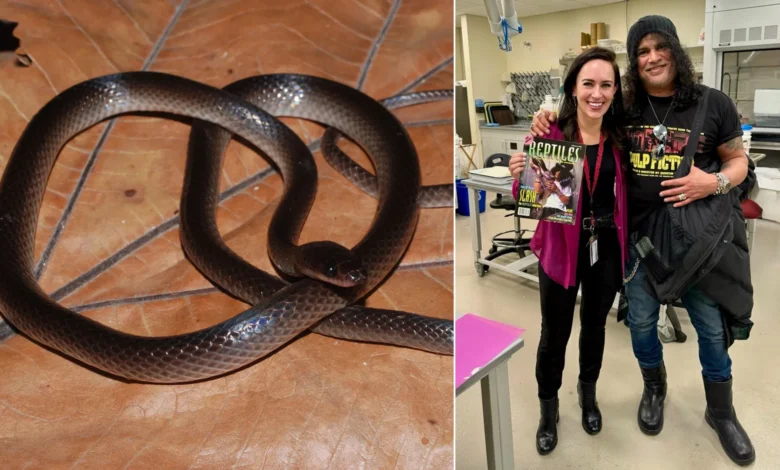
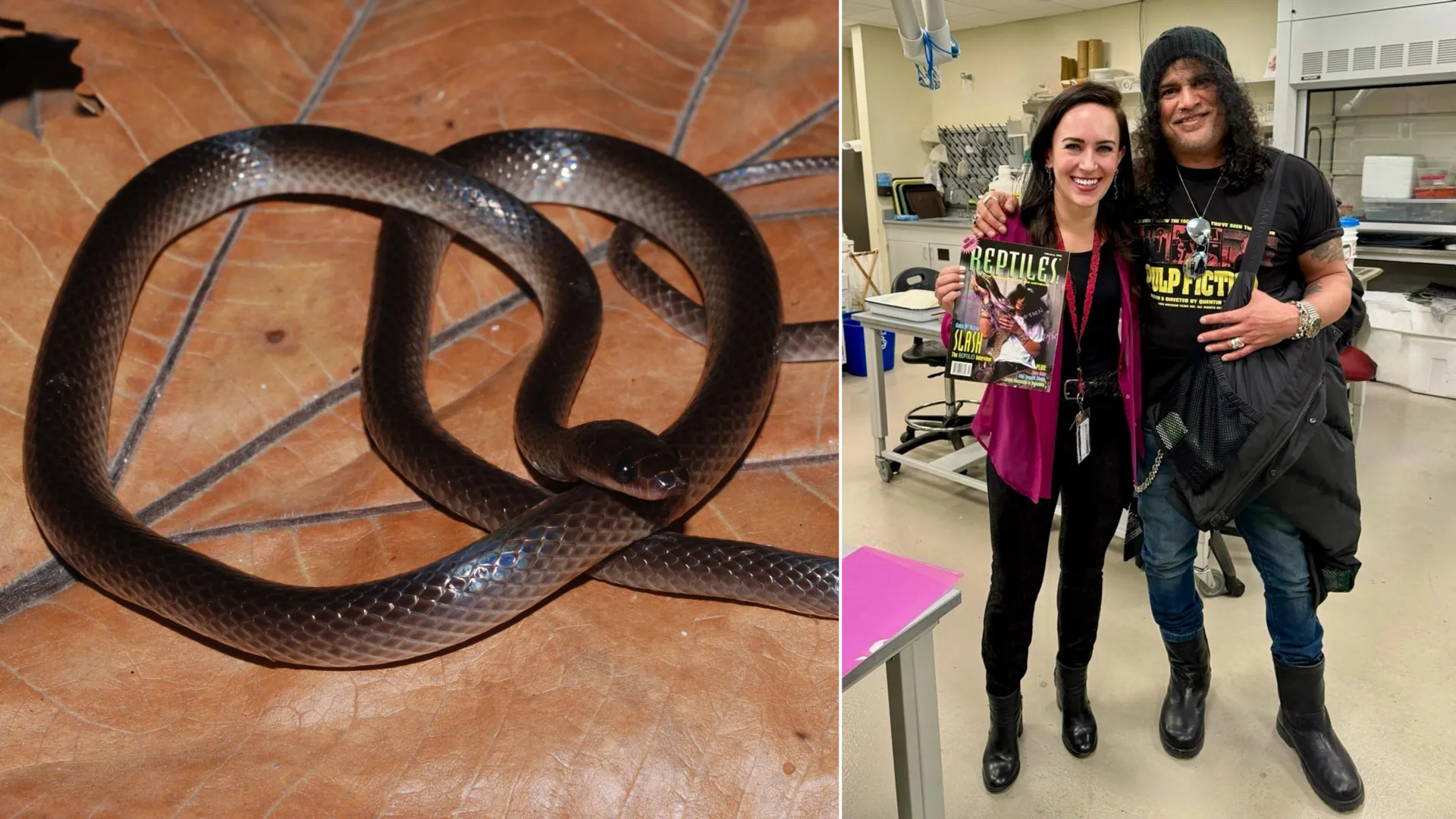
The world of rock music and the realm of herpetology have collided in an unexpected tribute, as researchers have officially named a newly identified species of snake after the legendary Guns N’ Roses guitarist, Slash. Known to the world as Saul Hudson, the iconic musician has long balanced his career as a guitar virtuoso with a profound, lifelong fascination for reptiles. This intersection of his public persona and private passion has culminated in the scientific classification of Lielaphis slashi, commonly referred to as Slash’s groundsnake.
The discovery, which was formally documented in the journal Zootaxa, represents a significant addition to the catalog of New Guinea’s biodiversity. For the scientific team involved, the naming serves as both a nod to a cultural icon and a strategic effort to bring attention to the fragile, under-documented ecosystems of the world’s second-largest island.
A Chronology of Discovery and Classification
The path to identifying Lielaphis slashi began long before the formal publication in Zootaxa. The original specimen was collected during a nocturnal field expedition in 2006 by Dr. Chris Austin, a professor and curator of herpetology at the Louisiana State University Museum of Natural Science. At the time of the encounter, the reddish-brown, 28-inch-long snake was discovered near the base of a large tree—a typical hunting ground for the nocturnal species.
For years, the specimen remained part of a broader collection of New Guinea groundsnakes, a group notorious for being difficult to classify due to their cryptic nature and physical similarities to other venomous, unrelated species in the region. It was not until 2016, when Dr. Sara Ruane, then at LSU and now the Associate Curator of Herpetology at the Field Museum, began collaborating with Dr. Austin, that a concerted effort was made to untangle the taxonomy of these elusive reptiles.
The process of distinguishing the species involved a rigorous combination of morphological analysis and high-resolution genetic sequencing. Tianqi Huang, the study’s lead author and a post-doctoral researcher at the Field Museum, spearheaded the laboratory work. By comparing the genetic markers and scale counts of the specimen against other known members of the Lielaphis genus, the team confirmed that they were looking at a distinct biological entity. Ecological modeling further solidified the case, revealing that the snake occupies a specific niche habitat different from its closest relatives.
The Personal Connection: A Curator’s Perspective
For Dr. Sara Ruane, the decision to name the species after the guitarist was rooted in both professional respect and personal history. Her dual interests—herpetology and classic rock—converged when she was a child.
"Guns N’ Roses has been one of my favorite bands since I was in first grade, and by fifth grade, I had already told my teacher that I wanted to be a herpetologist," Ruane explained. Her admiration for Slash deepened when she saw him featured on the cover of Reptiles Magazine in the 1990s, clutching a reticulated python. That image served as a formative inspiration for a young scientist. Years later, while reviewing literature and interviewing subjects for her research, she found that Slash’s public advocacy for zoos and natural history aligned perfectly with her own values, prompting her to choose his name as a tribute to his contribution to reptilian awareness.
Slash himself has responded to the honor with humility. "As a long-time herpetophile, I am extremely honored and humbled to have Lielaphis slashi from New Guinea named after me," the guitarist stated. "It is really exciting; I never would have imagined this moment would arrive."
Biological Context and Environmental Significance
The island of New Guinea, divided between the nations of Indonesia and Papua New Guinea, is a biodiversity hotspot. It contains some of the most complex and poorly documented tropical ecosystems on the planet. The discovery of Lielaphis slashi underscores the reality that much of the island’s fauna remains unknown to science.
The biology of this particular snake provides an interesting look at evolutionary adaptation. Unlike the constricting boas often associated with hobbyist reptile keepers, Lielaphis slashi is a specialized feeder. Its anatomy, characterized by large teeth at the back of its mouth, suggests an adaptation for gripping slippery, smooth-scaled lizards and the eggs of other reptiles. Despite its lineage and the "dangerous" reputation of its namesake, the snake is non-venomous and poses no threat to humans.
However, the environment in which it resides is far from secure. The regions of New Guinea where these snakes are found are currently facing significant ecological pressures. Industrial activities, most notably large-scale coffee farming and mining, are encroaching upon the pristine forests that sustain this species.
The Broader Implications of Taxonomy
The formal description of Lielaphis slashi is more than a taxonomic curiosity; it is a vital tool for conservation biology. Scientific naming provides the framework for legal protection and environmental policy. By establishing a species as a distinct entity, researchers can better advocate for the protection of its habitat.
"We can’t conserve animals or other living things that we don’t know about," Dr. Ruane noted. This sentiment is shared by the broader scientific community, which views the cataloging of biodiversity as a race against the accelerating pace of habitat destruction. Without formal identification, species like Lielaphis slashi risk being lost before they are even understood, potentially leading to cascading failures in local ecosystems.
The study, which included contributions from a wide array of institutions such as the Papua New Guinea National Museum and Art Gallery, the American Museum of Natural History, and the Virginia Museum of Natural History, highlights the importance of international collaboration in field research. This collective effort not only advances our understanding of New Guinea’s evolutionary history but also underscores the necessity of protecting the "living laboratory" that the island represents.
Conclusion: A Legacy of Curiosity
The naming of Lielaphis slashi serves as a bridge between popular culture and the rigorous, often quiet work of natural science. By leveraging the notoriety of a global rock star, the researchers have successfully drawn public attention to a subject that might otherwise remain confined to specialized academic circles.
As Slash continues his career in music, his namesake will continue to slither through the leaf litter of New Guinea, a permanent reminder of the deep, often overlooked connections between human curiosity and the natural world. The case of this groundsnake is a poignant reminder that every species, regardless of how small or elusive, holds a specific place in the intricate web of life. As environmental challenges in the Asia-Pacific region continue to mount, the documentation of such species becomes an essential pillar of global conservation efforts, ensuring that the legacy of this discovery extends far beyond the name on a research paper.
In the final analysis, the story of Lielaphis slashi is a testament to the power of passion—whether that passion is expressed through the strings of a guitar or the precise, methodical study of the natural world. Both Slash and the scientists at the Field Museum share a fundamental trait: an enduring sense of wonder for the creatures that inhabit our planet. In naming this snake, science has not only honored a musician but has also brought a much-needed spotlight to the urgent work of preserving the hidden wonders of New Guinea.
Related posts: