‘Knife: The Attempted Murder of Salman Rushdie’ Review: Alex Gibney Profiles the Controversial Author During His Harrowing Hospitalization

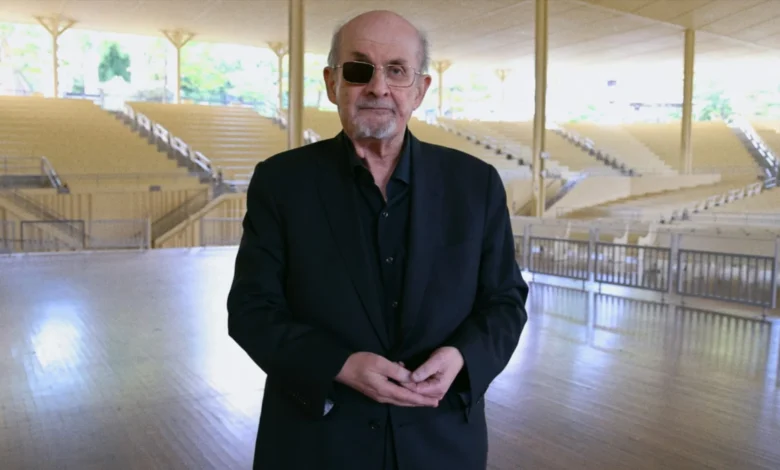
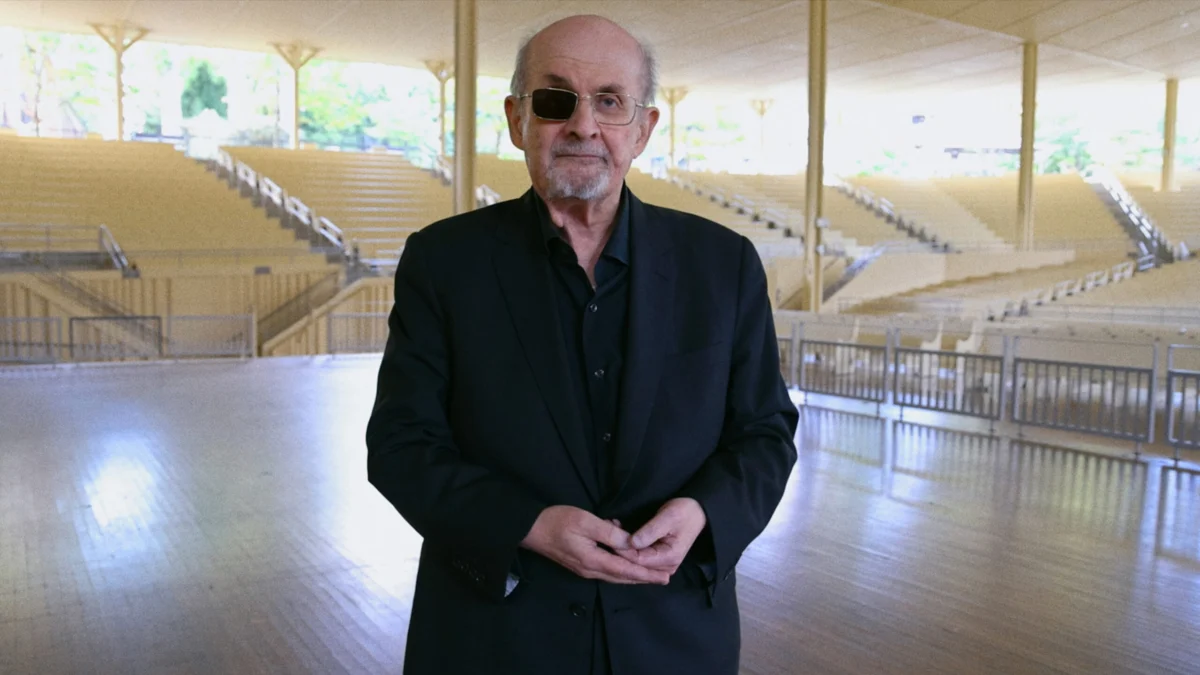
The documentary’s power is derived largely from the agency Rushdie maintains over his own narrative. Eschewing the detached, often clinical tone of standard investigative filmmaking, Gibney incorporates intimate footage captured by the author’s wife, poet and novelist Rachel Eliza Griffiths. These images offer a stark, unflinching look at Rushdie’s recovery: the mangled hand, the surgical scars running across his abdomen, and the trauma inflicted upon his right eye. By choosing to share this footage, Rushdie forces the audience to confront the physical reality of the violence he endured, transforming a public tragedy into a private, humanizing testament to survival.
A Chronology of Conflict: From Fatwa to Frontline
To understand the 2022 attack, one must look back to the publication of The Satanic Verses in 1988. The novel, a work of magical realism that explored the complexities of the immigrant experience and faith, was met with immediate, explosive hostility in several corners of the globe. On February 14, 1989, Ayatollah Ruhollah Khomeini, the Supreme Leader of Iran, issued a fatwa calling for the death of Rushdie and anyone involved in the publication of the book.
The ensuing years were defined by a systematic campaign of intimidation and violence. The impact was international: bookshops across the United Kingdom were firebombed, the book’s Japanese translator Hitoshi Igarashi was stabbed to death in 1991, and Italian translator Ettore Capriolo was seriously wounded. These events established a terrifying precedent for the censorship of literature through state-sponsored terror. For over three decades, Rushdie lived under the constant shadow of this threat, often moving between safe houses and living under police protection, a life of displacement that defined his middle years.
The 2022 incident in Chautauqua occurred during a lecture series at the Chautauqua Institution, a venue known for its dedication to open discourse. The assailant, Hadi Matar, a 24-year-old resident of New Jersey, stormed the stage and stabbed Rushdie multiple times before he could be restrained by audience members and security personnel. The attack resulted in the loss of sight in one eye and severe nerve damage to his hand, yet Rushdie’s presence in the documentary suggests a refusal to be silenced by the very force that sought to erase him.
The Anatomy of the Documentary
Alex Gibney is well-regarded for his methodical, reporter-style investigations into complex political and power dynamics. While his upcoming work on Elon Musk utilizes digital simulations and AI-generated personas, Knife opts for a grounded, human-centric approach. The film utilizes a first-person narrative structure, with Rushdie providing voiceover commentary that invites the viewer into his headspace at the time of the attack.
The film effectively uses visual techniques—such as scratchy, abstract animations—to represent the themes of his novel. These sequences serve to highlight the absurdity of the extreme reaction to his work. By deconstructing the narrative of the novel through these animations, the documentary invites viewers to judge the work on its own merits rather than through the lens of the violent backlash it triggered.
Supporting the film’s narrative is a wealth of archival footage. Gibney juxtaposes the author’s early years, marked by his migration between India and London and a strained relationship with an alcoholic father, against the backdrop of his global notoriety. The inclusion of personal moments, such as a phone call from family friend and director Wes Anderson, provides a necessary sense of warmth and normalcy, underscoring the support system that has kept Rushdie resilient throughout his ordeal.
Fact-Based Analysis of the Implications for Free Speech
The persistence of the threat against Rushdie serves as a grim reminder that the battle for intellectual and artistic freedom is far from won. In the years following the initial fatwa, the debate over "The Satanic Verses" became a touchstone for the limits of tolerance in a pluralistic society. The assault on Rushdie in 2022 occurred in an era defined by heightened political polarization and the rapid spread of misinformation, suggesting that the dangers posed by religious and ideological extremism remain as potent as ever.
From a sociological perspective, the attempt on Rushdie’s life represents a fundamental challenge to the democratic principle of free expression. When individuals are targeted for their creative output, the chilling effect extends far beyond the individual artist. It impacts the entire cultural landscape, discouraging writers, journalists, and filmmakers from tackling sensitive or controversial subjects.
Data from groups like PEN America and the Committee to Protect Journalists consistently show that physical attacks on writers and intellectuals are increasing globally. The attempt on Rushdie’s life is perhaps the most high-profile instance, but it is part of a larger trend of authoritarian-led censorship and violent extremism that seeks to dismantle the intellectual foundations of civil society. The documentary implicitly argues that Rushdie’s survival—and his decision to document it—is an act of defiance against this global tide.
A Resilience Built on Narrative
The documentary’s focus on the "resilient Rushdie" is not merely a sentimental choice; it is a critical observation of the author’s character. His decision to recount the events of the attack, to describe the shadowy figure of his assailant not as a person but as a symbol of an ongoing, decades-long campaign, is a way of reclaiming his autonomy. By naming his assailant only once, Rushdie strips the perpetrator of his power, shifting the focus back to his own life, his work, and the ideas he has spent his career defending.
The contribution of Rachel Eliza Griffiths cannot be overstated. Her presence behind the lens provides the documentary with its most tender and devastating moments. She serves as the bridge between the public figure of the author and the private man dealing with the reality of profound physical trauma. Her work as a documentarian of his recovery provides the film with a sense of temporal grounding, moving the viewer through the stages of healing that would otherwise remain hidden from the public eye.
Looking Ahead
As the world continues to grapple with the tension between religious orthodoxy and the secular values of free speech, the legacy of the attack on Salman Rushdie will remain a critical point of analysis. The documentary does not provide easy answers; instead, it presents the raw evidence of what happens when a society fails to protect the individual’s right to think, speak, and write.
The film’s conclusion, while somber, is ultimately one of endurance. It underscores the fact that while a knife can mangle a body, it cannot dismantle the ideas or the identity of the person it targets. By showcasing his scars, Rushdie is not merely asking for sympathy; he is inviting the world to witness the cost of freedom. In doing so, he ensures that the conversation he began in 1988 remains active, relevant, and impossible to ignore. Whether one considers the documentary a masterpiece of journalism or a deeply personal memoir, its primary achievement is its refusal to let the narrative of his life be defined by his attacker. It is a work that demands the viewer contemplate the fragility of our most fundamental freedoms and the strength required to uphold them in an increasingly volatile world.