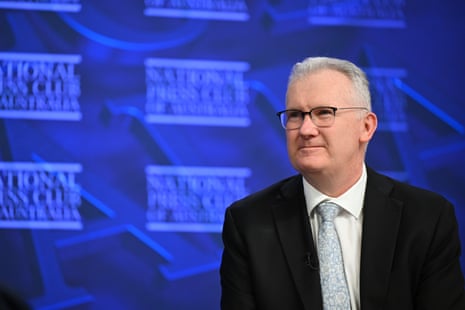
Home Affairs Minister Tony Burke has fiercely defended the federal government’s deliberate timeline in releasing its long-awaited national immigration plan, pushing back against stinging opposition criticism and insisting that meticulous policy formulation was essential to avoid inflicting sudden shocks on the broader Australian economy. The strategy, finally unveiled on Thursday after weeks of internal review and administrative delays, has ignited a fierce political debate over population management, housing affordability, and infrastructural capacity. Appearing on the ABC’s 7.30 program, Mr. Burke confronted pointed questions regarding why the policy package missed its anticipated debut—including an aborted address at the National Press Club roughly six weeks prior. He attributed the staggered rollout to the intrinsic complexity of navigating Australia’s multifaceted visa architecture, emphasizing that any misstep could disrupt vital sectors reliant on overseas labor.
The unveiling of the immigration framework comes amid a dynamic backdrop of domestic reform and international diplomacy. Beyond the immediate political crossfire surrounding visa caps and population growth, the federal government is juggling major parallel agendas. Prime Minister Anthony Albanese is preparing to depart for the United States to visit Apple’s California headquarters following landmark digital safety reforms, before heading to New York to lead Australia’s high-level delegation at the United Nations General Assembly. Concurrently, Australian and international officials in Washington have been debating the strategic ramifications of the AUKUS security pact, with allied defense leaders asserting that fierce opposition from regional adversaries serves as a barometer of the treaty’s deterrent success. However, domestic friction over population levels remains the immediate political lightning rod in Canberra, exposing deep ideological fault lines between the Labor administration and the Coalition opposition.
Navigating Economic Complexities and Housing Pressures
Defending the protracted drafting process, Mr. Burke underscored that contemporary immigration policy is inextricably linked to virtually every facet of Australia’s economic health. He stressed that managing the intersection between incoming migration and acute domestic challenges—most notably the ongoing housing supply crisis—demanded a calibrated approach. While explicitly rejecting the notion that immigration is the root cause of the housing shortage, the Home Affairs Minister acknowledged that population management must form a foundational component of any comprehensive solution.

"Every part of the economy is affected by immigration these days for Australia," Mr. Burke told the national broadcaster, noting that the overarching objective was to achieve the "softest landing for the economy." He argued that rushing sweeping legislative changes without fully stress-testing their downstream consequences could destabilize labor markets, educational institutions, and healthcare systems. The revised strategy attempts to balance the demands of business and industry for skilled overseas workers against community anxiety regarding urban congestion and infrastructure bottlenecks.
Despite these assurances, the Coalition leadership wasted little time launching a scathing counter-offensive. Opposition Leader Angus Taylor slammed the government’s framework on the same program, asserting that the Coalition had established clear policy preconditions for bipartisan cooperation—preconditions he claimed the government fundamentally failed to satisfy. According to Mr. Taylor, the core grievance of the opposition centers on what it perceives as an abdication of responsibility regarding raw population numbers, which the Coalition argues remain unsustainably high.
"The numbers are too high and what we’ve seen from the government today is no cut to the numbers," Mr. Taylor stated. While affirming that Australia remains fundamentally a nation built on immigration, he insisted that intake volumes must be legally capped and directly tethered to verifiable metrics including available housing stock, transport infrastructure, and public service capacity. The opposition maintains that the government’s current trajectory exacerbates cost-of-living pressures and places an intolerable strain on suburban communities.
Balancing Agricultural Needs and Workforce Security
Adding to the government’s defense, Federal Employment Minister Amanda Rishworth stepped into the fray to dismiss claims that tightened migration parameters could jeopardize national food security or drive up grocery prices. Addressing critics who warn of acute labor shortages in the agricultural sector, Ms. Rishworth stated that she firmly rejected the premise of the argument, pointing to ongoing access to international backpacker programs and regional visa streams.

Under the proposed regulatory adjustments, working holiday makers seeking visa extensions will still be required to complete specified regional employment during their second and third years. Furthermore, the Pacific Australia Labour Mobility (PALM) scheme will continue to operate as a vital pipeline for primary producers. "I’d encourage farmers to have a look at that scheme, because there is opportunity," Ms. Rishworth said during a morning media appearance, emphasizing that the overarching goal of the migration overhaul is to restore institutional integrity and compliance across the entire visa framework.
The debate over workforce stability highlights the delicate tightrope the federal administration must walk. While urban voters increasingly voice frustration over infrastructure strain and housing affordability, regional industries—spanning agriculture, tourism, and hospitality—remain heavily dependent on transient overseas labor to maintain operational viability.
Broader Geopolitical and Diplomatic Engagements
While domestic policymakers lock horns over immigration metrics, the Albanese government is simultaneously projecting its agenda onto the international stage. Prime Minister Albanese’s impending itinerary includes a high-profile visit to Apple’s California headquarters. The trip follows the introduction of Australia’s pioneering digital duty of care legislation, which forces major technology platforms to shield minors from online harms such as cyberbullying, self-harm content, and extremist material. The engagement underscores Canberra’s ambition to position itself as a global regulatory standard-bearer in the digital safety sphere, building upon the nation’s world-first statutory bans on social media access for children under the age of 16.
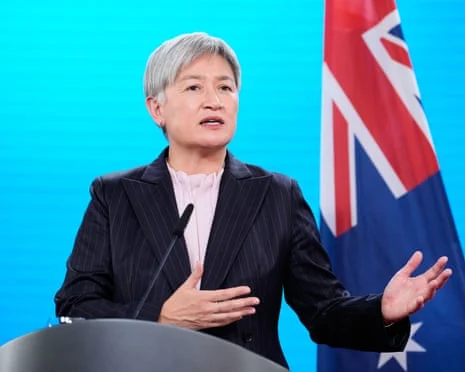
Following his American tech sector engagements, Mr. Albanese will travel to New York for the United Nations General Assembly’s high-level leaders’ week. There, Australia intends to champion multilateral cooperation, digital governance, and climate action. Foreign Minister Penny Wong emphasized the gravity of the diplomatic mission in a statement released ahead of the summit, noting that "sovereignty, prosperity and peace are not a gift or a given."
Australia’s diplomatic corps will also use the UN gathering to aggressively lobby international partners in support of its bid for a non-permanent seat on the United Nations Security Council for the 2029–2030 term. Having last held a position on the 15-member council in 2013 and 2014, Australian officials view the upcoming general assembly as a crucial staging ground to build coalitions and secure commitments well ahead of the formal 2028 election vote.
Strategic Defense Realities Under AUKUS
Meanwhile, international security dialogues in Washington, D.C., have cast a sharp spotlight on Australia’s long-term defense posture. Marking the five-year anniversary of the AUKUS security agreement, senior allied officials addressed the Center for Strategic and International Studies (CSIS) to evaluate the trilateral pact’s strategic efficacy. Sir Stephen Lovegrove, the UK prime minister’s special representative on AUKUS, offered a blunt assessment of the pact’s reception among geopolitical rivals. "Our adversaries hate AUKUS," Sir Stephen remarked, arguing that intense external opposition serves as the most reliable metric of the security arrangement’s success in altering regional strategic balances.
Australia’s Ambassador to the United States, Greg Moriarty—who served as the Department of Defence secretary when the landmark pact was forged in 2021—echoed those sentiments. He dismissed Beijing’s assertions that the acquisition of nuclear-powered submarines is inherently destabilizing. Pointing to the rapid expansion of China’s own naval and nuclear missile capabilities, Mr. Moriarty argued that the AUKUS framework represents a necessary mechanism to restore strategic equilibrium in the Indo-Pacific.
The AUKUS roadmap remains a monumental fiscal and logistical undertaking for Australia, slated to cost up to $368 billion through the mid-2050s. Under Pillar One of the agreement, Australia is scheduled to acquire three Virginia-class nuclear-powered, conventionally armed submarines from the United States starting in the early 2030s, prior to fielding a jointly developed AUKUS-class vessel built domestically in South Australia from the 2040s onward. Despite ongoing domestic scrutiny regarding shipbuilding timelines and national sovereignty, the government continues to treat the pact as the cornerstone of its future national security architecture.

Implications and Outlook
The simultaneous unfolding of high-stakes immigration reform, international diplomatic outreach, and defense diplomacy illustrates the compounding pressures facing the federal government. Domestically, the political cost of failing to address public anxiety over housing and infrastructure could prove decisive as the electoral cycle progresses. By insisting that its immigration plan represents a measured, evidence-based compromise, Labor hopes to neutralize the Coalition’s attacks while satisfying business demands for skilled talent.
However, as opposition parties continue to demand aggressive population caps, the debate over how Australia manages its growth remains far from settled. Whether the government’s newly minted policy architecture can successfully thread the needle between economic pragmatism and social sustainability will likely remain a central battleground in Australian politics for the foreseeable future.