Trump Administration Weighs Future of Major Cosmetology Accreditor in High-Stakes Higher Education Test


The U.S. Department of Education is currently deliberating the future of a major national accrediting body responsible for overseeing roughly 1,300 beauty and cosmetology schools and more than 120,000 students nationwide. This high-stakes administrative decision will test how the Trump administration’s broad campaign to overhaul higher education accreditation is applied to technical and vocational institutions, moving beyond the high-profile ideological battles over diversity, equity, and inclusion (DEI) that have frequently dominated the national discourse.
President Donald Trump pledged during his 2024 campaign to fundamentally restructure the higher education accreditation ecosystem, famously labeling accreditors his "secret weapon" against colleges and universities that he argued had fallen under the influence of the political left. While much of the administration’s early focus has centered on rooting out ideological mandates, the administrative case currently pending before the Department of Education deals with different mechanics: federal regulatory compliance, student debt metrics, and institutional oversight standards.
The institutional body at the center of the debate is the National Accrediting Commission of Career Arts and Sciences, commonly known as NACCAS. As the primary gatekeeper for federal student aid programs across thousands of beauty, cosmetology, and related career training facilities, NACCAS holds immense sway over the vocational education sector. The unfolding review highlights deep tensions between federal regulators, advisory boards, and working-class students who rely on government funding to enter the workforce.

Understanding the Mechanics of Federal Accreditation
To fully comprehend the significance of the Department of Education’s impending decision, it is necessary to examine the vital role that accrediting agencies play within the American higher education framework. Under the Higher Education Act, the federal government does not directly accredit academic or vocational institutions. Instead, it relies on a network of independent, peer-reviewed accrediting agencies to ensure that schools meet baseline standards of educational quality and financial responsibility.
Crucially, recognition by a Department of Education-approved accrediting agency is the primary prerequisite for an institution to participate in Title IV federal student financial aid programs. Without this federal recognition, schools lose access to Pell Grants and federal student loans. For vocational programs catering to low- and middle-income students, the loss of Title IV eligibility is typically catastrophic, forcing institutions to either close their doors or find alternative, highly restrictive private financing models for their student bodies.
The federal review process for accrediting agencies occurs on a cyclical basis, typically every five years. It follows a rigorous three-step administrative procedure: first, career staff within the Department of Education conduct a thorough investigation and issue a preliminary recommendation; second, the National Advisory Committee on Institutional Quality and Integrity (NACIQI)—an independent, bipartisan advisory panel—evaluates the findings and issues its own recommendation; and third, a senior Department of Education official makes the final, binding determination.

Chronology of the NACCAS Review and Divergent Recommendations
The current regulatory showdown involving NACCAS has progressed through several distinct stages, marked by sharply conflicting conclusions from federal career staff and advisory panel members.
During the preliminary review phase, career staff at the Department of Education identified various compliance deficiencies within NACCAS’s oversight operations. However, rather than calling for the complete termination of the agency, department staff recommended a moderated approach. They proposed continuing NACCAS’s federal recognition under strict probationary conditions. These conditions included barring the agency from accrediting any new institutions until compliance was demonstrated, mandating a strict 12-month window to execute corrective actions, and requiring heightened reporting and monitoring by federal oversight officials.
The situation escalated significantly during a pivotal July meeting of the National Advisory Committee on Institutional Quality and Integrity (NACIQI). Eschewing the compromise path suggested by department staff, the independent advisory committee adopted a much harder line. Following debates over institutional accountability, student debt loads, and graduate earnings metrics, NACIQI voted 9-3 to recommend that the Department of Education deny NACCAS its renewed federal recognition entirely.

The motion to deny recognition was introduced by Zakiya Smith Ellis, a committee member and former senior official in the Obama administration Department of Education, and was seconded by Michael Poliakoff. Proponents of the denial argued that NACCAS had been given ample opportunity to rectify persistent compliance issues and questioned whether additional monitoring periods would yield substantive improvements. Conversely, dissenting members—including Robert Eitel, who served in the Department of Education during Trump’s first term—argued that a full denial was disproportionate and warned of the severe, disruptive consequences such a move would inflict on thousands of students and vocational schools.
The Department of Education has not yet announced its final decision, leaving the affected institutions and student populations in a state of regulatory limbo.
Student Perspectives and the Reality of Vocational Financing
While policy experts and federal officials debate regulatory compliance and administrative oversight, the human impact of the pending decision is felt most acutely by the students whose livelihoods depend on access to federal aid. For many individuals pursuing careers in cosmetology and esthetics, federal financial aid represents the sole bridge between economic precarity and professional stability.
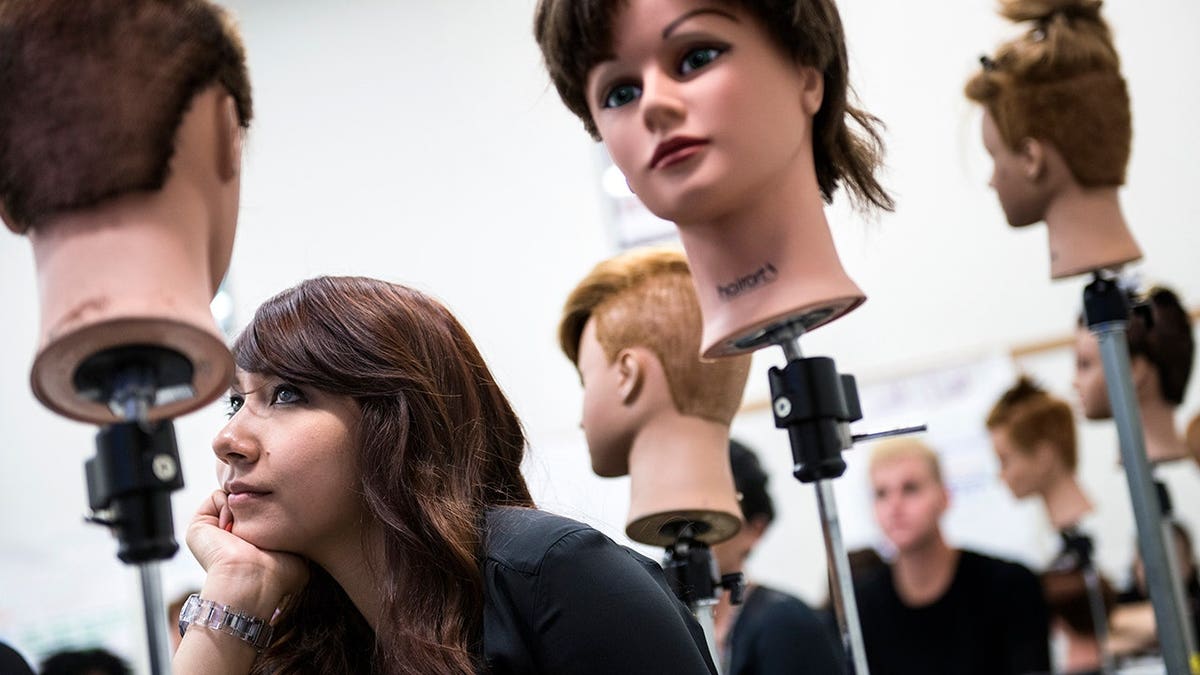
Aliyah Fernandez, a recent graduate of the Hollywood Institute and a mother working as a salon assistant, noted that her education would have been entirely out of reach without federal assistance. Motivated by a desire to build a sustainable career while remaining an active, present parent in her daughter’s life, Fernandez chose the cosmetology track specifically for the schedule flexibility it offers compared to traditional corporate environments.
"I could not have afforded beauty school without federal financial aid," Fernandez stated in an interview. "It was because of that, that I could attend at all. I knew that if I worked full-time 9 to 5, I wouldn’t barely have any time to see her grow up. I really just wanted to be there for her, and I wanted an opportunity to financially support her and be present in her life at the same time."
Similarly, Blythe Fields, an expectant mother currently balancing salon work with evening cosmetology classes, shared comparable experiences regarding the financial hurdles of vocational training. Having previously paid out of pocket for esthetician school—a financial strain that she described as leaving her virtually broke—Fields relied on federal financial aid to sustain her ongoing education. She highlighted the grueling nature of her schedule, which frequently spans 12-hour days, and emphasized that the inherent flexibility of the beauty industry will be essential once her child is born.
Recognizing the existential threat that a denial of NACCAS recognition poses to their schools and future peers, Fernandez, Fields, and other students organized and launched a petition urging the Department of Education to reject the NACIQI’s total termination recommendation. Instead, the petition advocates for the adoption of the career staff’s compromise proposal: a closely monitored improvement period that permits NACCAS to address regulatory deficiencies while preserving the operational status of the schools and the availability of student aid.
Broader Implications for Vocational Education and Skilled Trades
The NACCAS proceeding highlights a broader cultural and economic discussion surrounding the value and perception of vocational training in the United States. While policymakers and the public frequently celebrate traditionally male-dominated skilled trades—such as welding, electrical work, and plumbing—as vital components of the American workforce, beauty and cosmetology programs often face a different tier of administrative scrutiny and cultural dismissal.
Fields pointed directly to this disparity when discussing public perceptions of beauty careers relative to other technical fields. "I think it’s because they’re like male fields, like mainly men are involved in," Fields remarked. "They don’t think about that. They just think, ‘Oh, they went to hair school. It’s easy.’"
This dichotomy places the Trump administration in a complex strategic position. On one hand, the administration’s overarching educational agenda emphasizes rigorous accountability, cracking down on institutional fraud, and demanding that higher education—broadly defined—delivers measurable economic returns for students. On the other hand, vocational and career arts programs form a critical pillar of entrepreneurship and small business creation, particularly for women, minority groups, and working mothers seeking flexible pathways to economic independence.
Furthermore, the NACCAS case serves as an early administrative stress test for the administration’s broader goals regarding accreditation reform. While executive directives have largely targeted ideological compliance and DEI frameworks within traditional four-year universities, the mechanical enforcement of federal regulations across vocational sectors reveals the intricate, high-stakes trade-offs involved in reshaping America’s educational oversight bodies.
As the Department of Education weighs its final decision, the outcome will resonate far beyond the administrative offices of Washington, D.C. For the 1,300 schools and 120,000 students currently navigating the uncertainty, the ruling will determine whether a vital pathway to professional autonomy remains viable or whether a major pillar of vocational education must undergo a painful, disruptive restructuring.
Related posts: