Tesla A Step Closer To Ride Hailing With California Permit

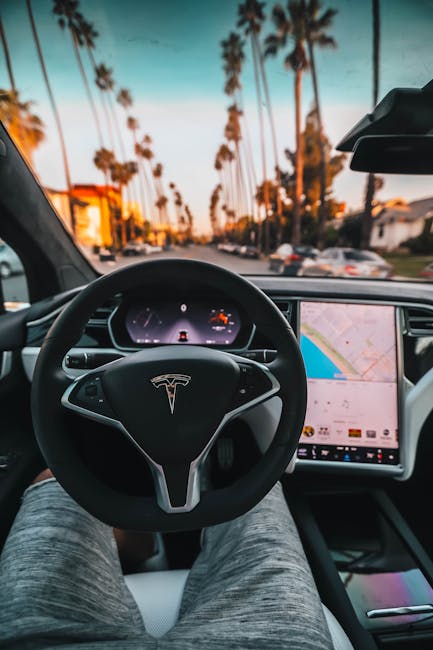
Tesla Inches Closer to Ride-Hailing Dominance with California Permit Approval
The landscape of personal transportation is poised for a significant upheaval as Tesla inches closer to launching its long-anticipated ride-hailing service, "Tesla Network," following a pivotal development: the company has secured a permit from the California Department of Motor Vehicles (DMV). This permit, while specific and not yet a full green light for public operation, represents a crucial step in Tesla’s ambitious plan to transform its fleet of electric vehicles into a decentralized, autonomous taxi service. The implications of this development are far-reaching, impacting not only Tesla’s business model and market position but also the broader automotive and transportation industries, as well as urban planning and the very nature of car ownership.
The California DMV permit is not a blanket authorization for Tesla’s full-fledged autonomous ride-hailing service. Instead, it specifically allows Tesla to test and operate its vehicles with a human safety driver present in a geofenced area of San Mateo County. This is a significant distinction, as it implies the technology is not yet deemed sufficiently robust for driverless operation in all conditions or scenarios. However, the allowance of testing with a safety driver is a critical precursor to demonstrating the system’s reliability and safety for eventual driverless deployment. This phased approach is standard for advanced automotive testing and regulatory approval, allowing authorities to observe real-world performance and gather data before granting wider permissions. The specific geofenced area in San Mateo County likely represents a controlled environment where Tesla can gather valuable data on traffic patterns, road conditions, and user interactions under relatively predictable circumstances.
Tesla’s "Full Self-Driving" (FSD) software has been the cornerstone of its ride-hailing aspirations. While the name is aspirational and has faced scrutiny and debate, Tesla has consistently emphasized its commitment to achieving true autonomous driving capabilities. The FSD beta program, which has been rolled out to a select group of customers, is designed to collect vast amounts of real-world driving data. This data is then used to train and refine the AI algorithms that power the system. The California permit, therefore, signifies a level of confidence from the DMV in the data and progress Tesla has demonstrated, even if it doesn’t equate to full autonomy approval. The company’s iterative development process, relying heavily on crowd-sourced data from its FSD beta testers, has been both a source of innovation and controversy. Critics have raised concerns about the safety and maturity of the system, citing instances of disengagement and accidents. However, Tesla’s supporters argue that this data-driven approach is precisely what is needed to overcome the complex challenges of autonomous driving.
The Tesla Network, as envisioned, will operate on a decentralized model. Tesla owners will have the option to add their vehicles to the network when they are not in use. These vehicles will then be available for ride-hailing services, with Tesla taking a commission on each fare. This model offers several potential benefits. For Tesla owners, it provides an opportunity to generate passive income from their vehicles, offsetting the cost of ownership. For Tesla, it creates a new, recurring revenue stream and significantly expands the utilization of its vehicle fleet. The company has repeatedly stated that FSD will be a key differentiator for its ride-hailing service, promising a potentially lower cost of service compared to traditional ride-hailing companies that have to pay human drivers. This cost advantage, coupled with the potential for higher vehicle uptime, could allow Tesla to significantly undercut competitors. Furthermore, by leveraging its existing customer base and manufacturing capabilities, Tesla can scale its network rapidly once regulatory hurdles are cleared.
The regulatory environment for autonomous vehicles is complex and varies significantly across jurisdictions. California has been at the forefront of developing frameworks for testing and deploying autonomous technology. The state’s approach, while sometimes seen as cautious, aims to balance innovation with public safety. The permit granted to Tesla is a testament to this ongoing evolution. Other states and countries are also grappling with how to regulate this emerging technology. Tesla’s success in California could set a precedent for other regions, encouraging them to adopt similar regulatory pathways or to develop their own frameworks. The interaction between technological advancement and regulatory oversight is a critical dynamic that will shape the future of autonomous transportation. The California DMV’s decision, therefore, carries significant weight beyond the state’s borders.
The implications for the existing ride-hailing giants, such as Uber and Lyft, are profound. These companies have historically relied on human drivers, and the introduction of a viable, lower-cost autonomous alternative could disrupt their business models significantly. While Uber and Lyft have also invested in autonomous vehicle technology, their progress has been slower, and they have faced their own set of challenges. Tesla’s advantage lies in its vertical integration: it designs and manufactures its vehicles, develops its own software, and has a direct relationship with its customers. This control over the entire ecosystem could give it a decisive edge. The competitive landscape will undoubtedly intensify as Tesla moves closer to a public launch of its ride-hailing service.
Beyond the competitive dynamics, the advent of widespread autonomous ride-hailing raises broader societal questions. The potential for reduced car ownership, with more people opting for on-demand mobility services, could lead to significant changes in urban planning, parking infrastructure, and public transportation systems. Cities may see a reduction in congestion if autonomous vehicles are optimized for efficiency and shared usage. However, concerns about increased vehicle miles traveled and the potential for empty vehicles repositioning themselves also exist. The environmental impact is another area of consideration. While Tesla’s vehicles are electric, the overall energy consumption and the manufacturing footprint of a larger fleet need to be analyzed.
The timeline for Tesla’s full autonomous ride-hailing service remains somewhat fluid. The California permit allows for testing with a safety driver, and the transition to driverless operation will require further regulatory approvals, likely involving more rigorous testing and demonstration of safety standards. Tesla’s CEO, Elon Musk, has a history of ambitious timelines, and while some have been met, others have been delayed. The company’s ability to navigate the remaining regulatory hurdles and to ensure the absolute safety and reliability of its FSD system will be critical to the success of Tesla Network. The data gathered from this current phase of testing will be instrumental in demonstrating the system’s maturity to regulators.
The "Tesla Network" also presents an interesting proposition for the automotive industry as a whole. It encourages a shift in perspective from selling cars as static assets to viewing them as dynamic, income-generating tools. This could accelerate the adoption of electric vehicles and autonomous technology across the board, pushing other manufacturers to accelerate their own development and deployment strategies. The service-based economy is expanding, and autonomous ride-hailing is poised to become a significant component of it. Tesla’s early moves position it as a potential leader in this evolving market.
The current permit from the California DMV signifies a pivotal moment. It’s a clear indication that regulatory bodies are moving towards a framework that can accommodate autonomous vehicles, albeit with careful consideration for safety. The detailed requirements and limitations associated with this permit will provide valuable insights into the specific benchmarks Tesla needs to meet. This is not just about Tesla; it’s about the broader acceptance and integration of autonomous technology into everyday life. The journey from a concept to a fully operational autonomous ride-hailing service is paved with technological challenges, regulatory approvals, and public perception. Tesla’s recent permit is a significant stride forward on this complex, yet potentially transformative, path. The ongoing development and refinement of its FSD system, combined with a strategic approach to regulatory engagement, will ultimately determine the scale and impact of the Tesla Network. The world will be watching closely as this new era of transportation unfolds.


