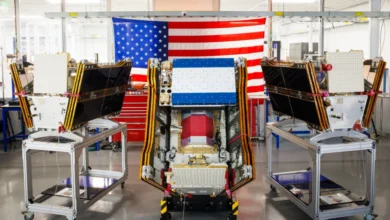
The European Space Agency Hera mission unveils the aftermath of the DART asteroid impact to unlock the secrets of planetary defense

Four years after NASA executed the first successful kinetic impactor experiment in the history of space exploration, a new chapter in planetary defense has begun. In September 2022, the Double Asteroid Redirection Test (DART) spacecraft plummeted into the asteroid Dimorphos at a staggering speed of 13,700 miles per hour. While the mission was hailed as an immediate success—shortening the orbit of the asteroid by 33 minutes—scientists were left with only a partial understanding of the physical toll the collision took on the celestial body. Now, the European Space Agency’s (ESA) Hera spacecraft has arrived at the binary asteroid system, providing high-resolution imagery and data that reveal a landscape far more transformed than researchers originally anticipated.
The arrival of Hera marks a critical evolution in the study of near-Earth objects. While DART provided the "punch," Hera acts as the "forensic investigator," tasked with documenting the structural changes and debris fields left behind in the wake of the 2022 collision. The findings emerging from this mission are expected to provide the foundational data required to build reliable models for future asteroid deflection efforts, ensuring that Earth has a proven methodology should a genuine threat be detected in the future.
A Chronology of the Deflection Experiment
The saga of Dimorphos and its parent asteroid, Didymos, began long before the 2022 impact. For years, planetary scientists identified the binary pair as the ideal laboratory for testing asteroid deflection technology. Because the system orbits the Sun approximately 120 million miles from Earth, it posed zero risk to our planet, allowing for an aggressive, high-stakes experiment without the fear of unintended orbital consequences.
The timeline of the mission unfolded as follows:
- November 2021: The DART spacecraft launched from Vandenberg Space Force Base in California, beginning its ten-month cruise toward the Didymos system.
- September 26, 2022: DART made history by slamming into Dimorphos, releasing approximately 10 billion joules of energy. Telescopes on Earth and the LICIACube satellite confirmed a significant shift in the orbital period of the moonlet.
- October 2024: After a two-year journey following its own launch from Florida, the ESA’s Hera spacecraft successfully rendezvoused with the Didymos system.
- November 2024: Hera began its close-proximity survey, capturing the first detailed images of the crater and the surrounding debris field.
The Physical Transformation of Dimorphos
The primary objective of the Hera mission is to quantify exactly what happened to Dimorphos upon impact. Scientists had theorized two main outcomes: the formation of a localized crater or a global reshaping of the asteroid’s structure. Initial data returned by Hera suggests a surprising reality: both outcomes occurred simultaneously.
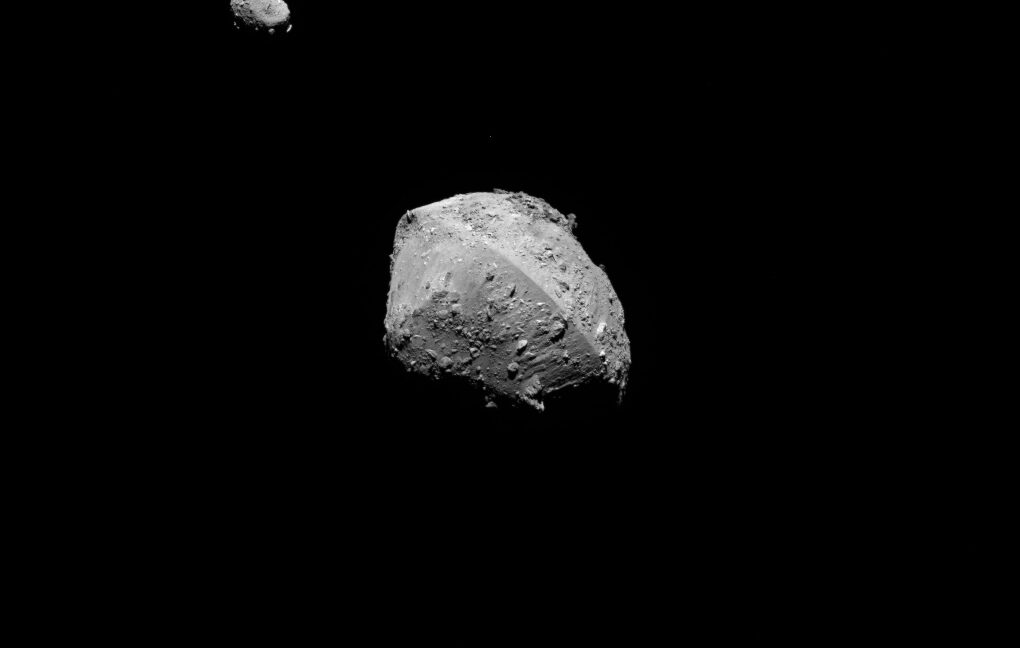
The images released by the ESA reveal a crater of staggering proportions. Spanning a width that rivals the diameter of the asteroid itself, the impact zone has fundamentally altered the geometry of the 500-foot-wide rock. Dr. Patrick Michel, the Hera mission’s principal investigator from the Côte d’Azur Observatory, noted that the scale of the damage defies simple categorization. "We are in a sort of a transition between just cratering and global transformation," Michel stated. The massive crater suggests that Dimorphos may not be a solid piece of rock, but rather a loosely bound "rubble pile"—a finding that could significantly change how NASA and other space agencies plan future interception missions.
Furthermore, the stability of the asteroid has been severely compromised. While Didymos maintains its steady rotation, observations confirm that Dimorphos is now tumbling in its orbit. This erratic motion indicates that the kinetic energy transfer did not merely nudge the asteroid; it fundamentally disturbed its internal cohesion and spin dynamics.
Uncovering the Debris Swarm
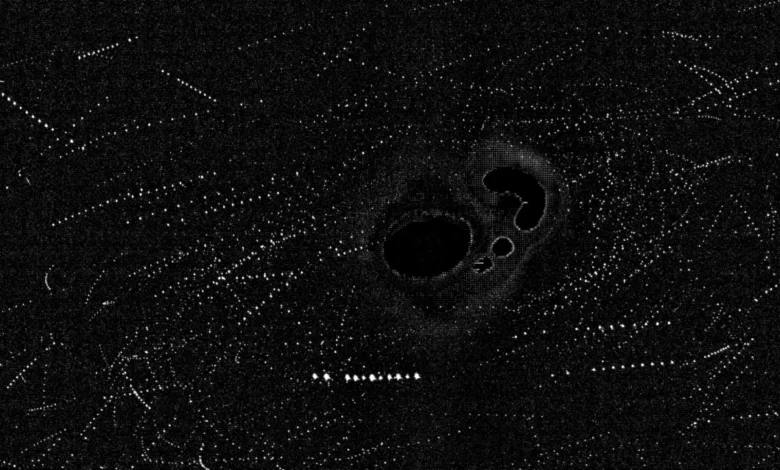
Perhaps the most visually striking discovery made by Hera is the presence of a vast, complex debris field orbiting the asteroid system. Shortly after the DART impact, the Hubble Space Telescope had captured evidence of a dust trail, but Hera’s hyperspectral instrumentation has revealed that this cloud is composed of hundreds of individual boulders.
Using long-exposure imaging, mission specialists digitally removed the primary asteroids to reveal a "panoply of dimmer streaks and dots." Each dot represents a rock fragment, some as small as a football and others the size of a household appliance. The implications of this debris field are significant. While it is highly likely that these fragments were ejected during the DART collision, researchers are exercising caution. As Dr. Naomi Murdoch of the Institut Supérieur de l’Aéronautique et de l’Espace noted, some of these rocks may be ancient relics from the formation of the binary system. Distinguishing between "impact ejecta" and "primordial debris" is a priority for the Hera team, as it will reveal how porous and fragile such asteroids truly are.
Implications for Planetary Defense
The data gathered by Hera over the next six months will be processed to reconstruct the exact physics of the DART impact. This is not merely an academic exercise; it is a critical component of global planetary defense. Near-Earth asteroids are diverse in their composition—ranging from dense, metallic cores to loose collections of gravel—and understanding how different types of asteroids respond to physical impact is essential.
"Once we understand, we have a breakthrough, which really solves planetary defense," Dr. Michel explained. By using the Hera data to anchor predictive computer models, scientists will be able to simulate how a deflection mission might perform against various types of asteroids. If a future threat is identified, the ability to predict whether a kinetic impactor will shatter an asteroid, shift it, or result in a surface crater will determine the success or failure of the effort to protect Earth.
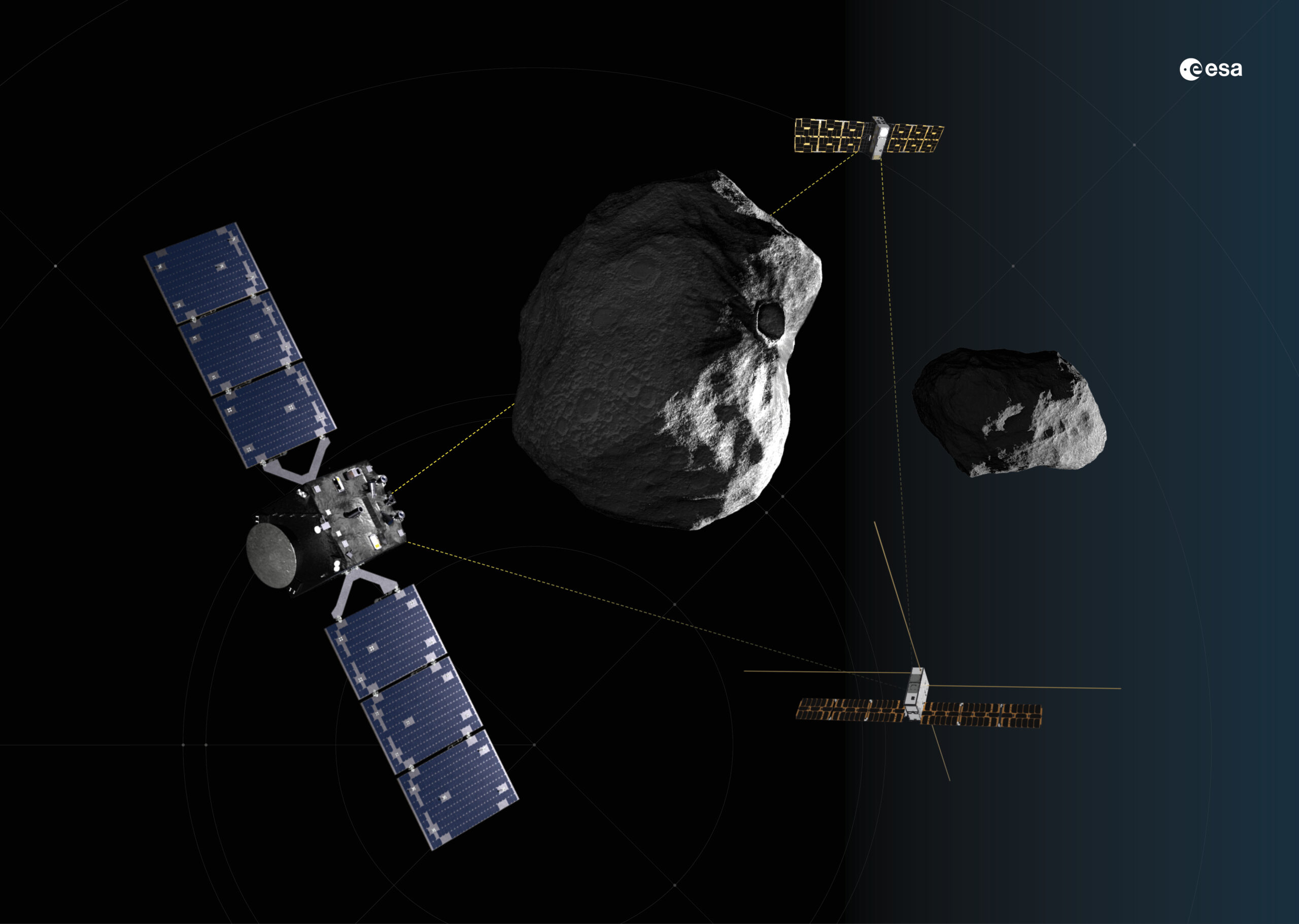
The mission will soon enter its next phase: the deployment of two sub-satellites, Juventas and Milani. These miniature probes will attempt to collect data on the internal structure and mass of the asteroids, providing a "ground truth" that remote telescopes cannot achieve. This level of detail is the final piece of the puzzle that was missing after the DART mission concluded.
A Global Collaborative Effort
The Hera mission represents a landmark moment in international space cooperation. While DART was a NASA-led initiative, the follow-up investigation by the ESA highlights the global nature of planetary defense. By sharing data and resources, the scientific community is building a comprehensive catalog of asteroid behaviors.
As Hera continues its mission, the focus will remain on the long-term consequences of the 2022 impact. The "mess" that DART created—a phrase used by planetary scientists to describe the violent, unexpected structural changes—is the very data needed to ensure that humanity is not caught off guard by a future cosmic visitor. The mission is, at its core, an insurance policy for the planet, proving that with enough scientific rigor and technological capability, the trajectory of a threat can be successfully altered.
As the spacecraft continues to orbit and study the scarred remains of Dimorphos, the scientific community remains optimistic. The journey from the initial, daring suicide mission of DART to the sophisticated, analytical follow-up of Hera marks a mature phase in space exploration, where the focus has shifted from merely demonstrating what we can do to understanding exactly how we do it. The debris, the crater, and the tumbling asteroid are no longer just images of destruction; they are the blueprints for a safer future in the solar system.