American Muslim Reformers Condemn Wajahat Ali Over Warning That Election Loss Will Trigger Radicalization And Unrest

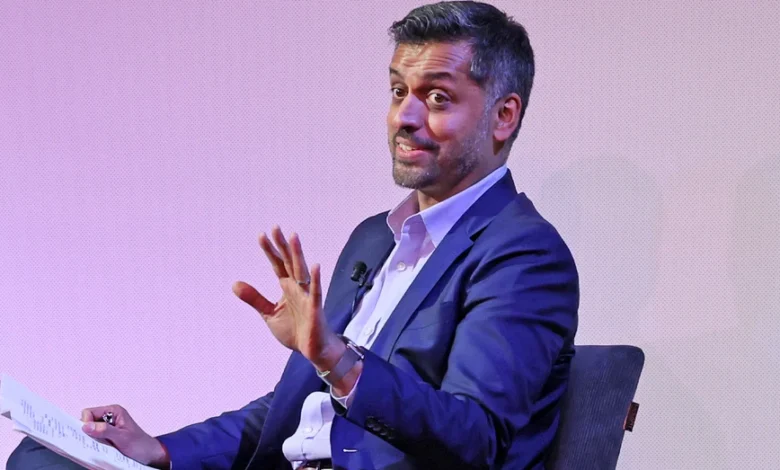
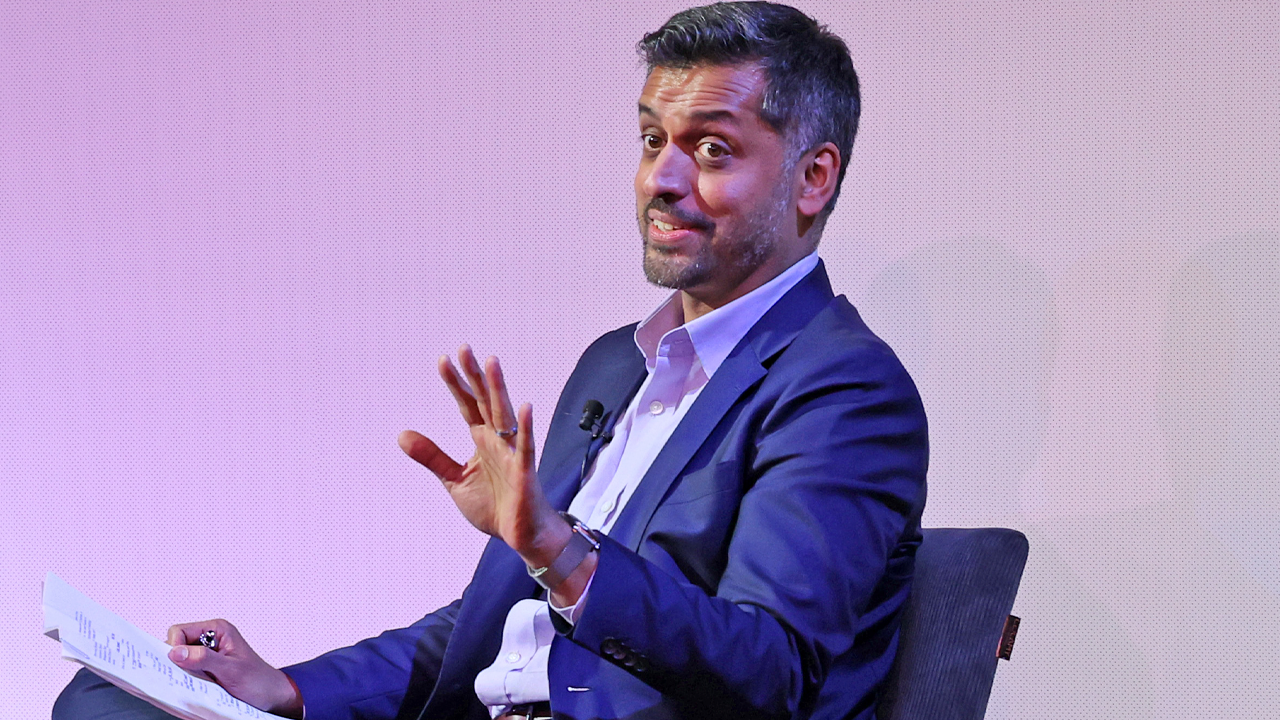
The intersection of progressive American politics, foreign policy debates, and internal religious discourse has sparked a fierce debate following controversial remarks made by political commentator Wajahat Ali regarding the Michigan Senate campaign of Democratic candidate Abdul El-Sayed. Ali’s public warnings that an electoral defeat for El-Sayed would unleash political "radicalization" and "a reckoning" have drawn sharp condemnation from prominent American Muslim reformers. These critics argue that Ali’s language closely mirrors the intimidation tactics and theological-political coercion historically utilized by Islamist movements and authoritarian figures in the Middle East.
The controversy highlights a growing ideological chasm within the American Muslim community. On one side are established advocacy groups and political coalitions that align with progressive and Islamist political frameworks. On the other side are secular, reform-minded activists, intellectuals, and political candidates who advocate for the separation of mosque and state, challenge orthodox political dogmas, and reject adversarial foreign policy stances against Western democratic institutions and Israel.
The Origin of the Controversy and Social Media Backlash
The flashpoint occurred on a Monday when Wajahat Ali took to the social media platform X to comment on the high-stakes Michigan Senate race featuring Abdul El-Sayed. Ali posted a stark assessment of the political stakes, writing that an electoral loss for El-Sayed would represent a watershed moment in Democratic politics. He explicitly warned that "the fire will rise" and predicted that individuals would become "radicalized against corporate, pro-Israel Dems," culminating in a severe political "reckoning." He added that even if El-Sayed were to secure a victory, the political reckoning would remain inevitable.
The remarks drew immediate and intense pushback from political observers, centrist Democrats, and specifically reform-minded Muslim leaders who viewed the language as a veiled threat of unrest or violence tied to democratic outcomes.
Rather than walking back the comments or clarifying his stance, Ali doubled down the following morning. He posted a subsequent message dismissing his critics, attributing the backlash to systemic prejudice. He asserted that the reaction exposed naked Islamophobia and anti-Arab bigotry, claiming that his detractors were merely revealing long-held biases in the open. Ali declined multiple requests for comment from media outlets regarding the controversy, leaving his defenders and critics to debate the implications of his statements.
Muslim Reformers Draw Parallels to Middle East Authoritarian Tactics
Prominent American Muslim reformers quickly mobilized to reject Ali’s rhetoric, arguing that invoking concepts of inevitable radicalization and fiery retaliation undermines the foundational principles of democratic participation.
Dalia Ziada, the Washington, D.C. director at the Institute for the Study of Global Antisemitism and Policy and a prominent Egyptian-born Muslim reformer, argued that Ali’s commentary bore a striking resemblance to the intimidation playbooks utilized by political Islamists during elections in volatile Middle Eastern nations, such as Egypt. Ziada noted that the underlying threat historically communicated by these factions is that rejecting their preferred candidates or political platforms inevitably invites chaos, violence, and radical extremism.
According to Ziada, political figures and commentators who leverage these rhetorical strategies are often utilizing grassroots democratic movements as stepping stones toward political power. She contended that once individuals or factions aligned with such worldviews attain influence, they frequently abandon pluralistic governance norms, and if they fail at the ballot box, they resort to stoking societal unrest. Furthermore, Ziada criticized the heavy focus on demonizing Israel within El-Sayed’s campaign coalition, comparing it to the authoritarian strategy of manufacturing foreign policy crises to distract from domestic political and economic pressures.
Soraya Deen, a Muslim reform activist, attorney, and co-founder of the Los Angeles Women’s Multifaith Alliance, echoed these concerns, emphasizing that the rhetoric should not be dismissed as a routine social media outburst. Deen stated that warnings predicting the rise of fire and radicalization deserve rigorous public scrutiny, stressing that losing an electoral contest can never serve as a valid justification or license for radicalization. She called for a collective rejection of political intimidation, extremism, and grievance-based politics within American civic discourse.
Dr. Zuhdi Jasser, a prominent Muslim reformer, founder of the American Islamic Forum for Democracy, and congressional candidate in Arizona’s 4th Congressional District, offered an even harsher critique. Jasser characterized Ali’s statements as symptomatic of a broader "Jihad First" ideological lens. He argued that the rhetoric reflects decades of anti-American and Islamist obsessions that prioritize geopolitical grievances over domestic civic harmony and constitutional loyalty. Jasser urged both Muslim voters and mainstream Democratic leadership to critically evaluate the messaging propagated by political influencers who claim to speak on behalf of Muslim communities.
Contextualizing El-Sayed’s Political Coalition and Campaign Network
The controversy surrounding Ali’s remarks unfolds against the backdrop of Abdul El-Sayed’s extensive and complex political network in Michigan. El-Sayed’s campaign has attracted a vast coalition of endorsements, digital mobilization efforts, and institutional backing from a diverse array of progressive groups, labor organizations, and prominent Muslim and Palestinian advocacy entities.

An analysis of campaign records and public endorsements reveals a network of roughly 70 Muslim advocacy groups, political influencers, and progressive organizations supporting El-Sayed’s political orbit. Key participants in this coalition include prominent entities such as CAIR Action, Americans for Justice in Palestine Action, Emgage Action, the US Campaign for Palestinian Rights, and various regional caucuses including the Yemeni American Michigan Democratic Caucus and the Michigan Bangladeshi American Democratic Caucus.
Additionally, the campaign’s broader network features prominent progressive lawmakers and political commentators, including Representatives Ilhan Omar and Rashida Tlaib, as well as digital media figures like Hasan Piker. Critics frequently label this coalition a "red-green alliance," uniting left-wing progressive political organizations ("red") with Islamist-aligned or conservative religious advocacy groups ("green"). This coalition shares overlapping policy priorities, notably demanding strict limitations or embargoes on U.S. military aid to Israel, amplifying Palestinian activism, and challenging the moderate establishment wing of the Democratic Party.
Broader Implications for American Democratic Politics
The ideological battle over Ali’s remarks and El-Sayed’s campaign highlights deepening fault lines within the Democratic Party and the broader American political landscape. As progressive factions increasingly integrate foreign policy stances—particularly regarding the Israeli-Palestinian conflict—into domestic electoral politics, the rhetoric surrounding these contests has grown increasingly fraught.
Political analysts note that mainstream democratic norms rely on the peaceful acceptance of election results and the rejection of intimidation or threats of civic unrest. When public commentators suggest that democratic outcomes contrary to their preferences will naturally produce radicalization and reckoning, it tests the limits of acceptable political discourse.
For American Muslim reformers, the episode represents a critical juncture in the ongoing effort to reclaim the narrative of Islam in public life from political Islamists and ideological extremists. By publicly challenging rhetoric that invokes radicalization as an inevitable consequence of political defeat, these reformers are attempting to foster a more secular, pluralistic, and constitutionally anchored approach to civic engagement. As the political cycle continues, the friction between reform-minded advocates and establishment-backed political coalitions is expected to remain a prominent flashpoint in both regional and national politics.