Legal Scholars Debate Whether Sen. Elissa Slotkin’s Warning to Young Trump Administration Hires Could Derail Democratic Oversight

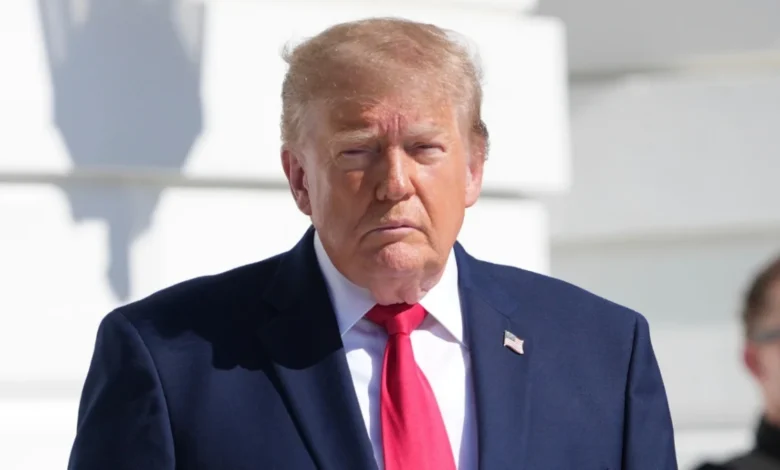
Freshman Michigan Democrat Senator Elissa Slotkin’s recent public warnings urging young Americans to reconsider employment within the Trump administration may inadvertently create a severe legal hurdle for her own party. Legal experts suggest that these deterrence-focused statements could inadvertently hand future Trump officials substantial legal ammunition, potentially complicating or derailing the sweeping congressional investigations Democrats hope to initiate should they regain control of Capitol Hill.
The controversy stems from comments made by Slotkin during an October appearance at the University of Chicago. During the event, the freshman senator outlined her desire for her party to aggressively pursue high-profile "signature cases" against officials who aided Donald Trump, explicitly connecting this strategy to a deterrence message designed to make recent college graduates think twice about joining the administration out of fear of lifelong legal and professional complications.
The Genesis of the Controversy and the Deterrence Strategy
Sen. Slotkin’s remarks, which quickly circulated widely across media platforms, framed congressional investigations not merely as a tool for legislative oversight, but as an explicit deterrent for potential civil servants. Speaking to students and faculty, Slotkin described a scenario where young professionals might hesitate to enter public service under a Republican executive branch, reasoning that they would be "buying [themselves] a ton of problems."
"I want that deterrence message sent," Slotkin declared during the Oct. 13 panel, sparking immediate debates regarding the constitutional boundaries of congressional oversight. While proponents of the strategy view aggressive oversight as a necessary check on executive power, critics—particularly those who have served within past Republican administrations—argue that publicly tying oversight goals to personal deterrence and political punishment crosses a dangerous legal threshold.
This rhetoric has drawn intense pushback from legal analysts who monitor the delicate balance of power between the legislative and executive branches. According to former federal prosecutors and constitutional scholars, public statements of this nature are frequently scrutinized by federal courts when executive branch officials or private citizens challenge congressional subpoenas.
The Legal Framework: Congressional Subpoenas and Supreme Court Precedent
Under the United States Constitution, Congress possesses broad authority to conduct investigations, subpoena witnesses, and review executive branch operations to draft legislation. However, this power is not absolute. The Supreme Court has repeatedly affirmed that lawmakers cannot wield investigative powers solely to punish political opponents, expose private matters for non-legislative purposes, or harass individuals.
The definitive legal standard governing these disputes was heavily shaped by the landmark 2020 Supreme Court decision in Trump v. Mazars USA, LLP. In that case, the high court established a stringent four-factor balancing test to determine the validity of congressional subpoenas seeking personal records from a president. The framework requires federal courts to rigorously examine:
- Whether the asserted legislative purpose warrants the significant step of involving the subpoenaed records;
- Whether the subpoena is as narrowly tailored as possible to achieve that legislative goal;
- Whether the information being sought can be reasonably obtained elsewhere; and
- The nature and extent of the burden imposed on the targeted executive branch official or institution.
While Mazars specifically addressed subpoenas targeting a sitting or former president’s personal records, legal scholars are divided on whether its principles can be extended to subpoenas issued to lower-level political appointees, career civil servants, or private individuals working within an administration.
Divergent Legal Views on the Impact of Political Rhetoric
Abhishek Kambli, a former deputy associate attorney general in Trump’s Justice Department and current partner at Holtzman Vogel, contends that Slotkin’s public statements provide a roadmap for future litigants seeking to quash congressional subpoenas. Kambli argues that when Democrats draft future oversight requests, simply including standard boilerplate language asserting a "legislative purpose" will no longer suffice if targets can point to public comments explicitly outlining retaliatory or deterrent motives.
"If they just throw in boilerplate language that this is for legislative purpose, anyone challenging those subpoenas will have that entire record to demonstrate that it is anything but that," Kambli explained in interviews regarding the strategy. He emphasized that federal courts are not obligated to accept congressional assertions at face value when evaluating constitutional challenges. "They don’t have to bury their head in the sand. I think they have to look at the facts of the case and look at it in terms of how they fit into the broader comments that they made."
Conversely, other legal scholars argue that the impact of such rhetoric may be overstated by political opponents. Michael Morley, a professor at Florida State University College of Law, suggests that federal courts are generally reluctant to invalidate congressional actions based purely on the subjective motivations or political rhetoric of individual lawmakers.
"I don’t think that the fact that there might be partisan motivations for a congressional investigation would ultimately be a valid basis for refusing to comply with a subpoena," Morley noted, adding that courts recognize that a degree of political motivation is inherent in almost all legislative oversight. Furthermore, Morley pointed out that extending the specialized Mazars doctrine beyond presidential records to cover every administration employee would represent a dramatic expansion of judicial intervention in legislative affairs.
Nevertheless, Morley acknowledged that such remarks create "bad atmospherics" for the legislative branch. Even if the comments do not outright invalidate a subpoena, they could make federal judges marginally less inclined to resolve close legal questions in favor of congressional Democrats.
Broader Implications: The "Process as Punishment" Debate
Beyond the technicalities of constitutional law and subpoena enforcement, the debate touches upon broader ethical concerns regarding the recruitment of government personnel. Critics of the proposed oversight strategy warn that threatening lower-level employees with aggressive investigations could inflict severe financial and reputational harm, regardless of whether criminal charges are ever filed.

"There is the idea that the process is the punishment, and there is no doubt that some members of Congress intend to use the process to bankrupt people that can’t afford legal representation," Kambli warned. Defending oneself against a congressional subpoena often requires retaining specialized legal counsel, racking up thousands or millions of dollars in legal fees that can financially ruin young professionals who are simply trying to launch public service careers.
Professor Morley echoed these concerns from a non-partisan standpoint, emphasizing that weaponizing the investigative process against entry-level civil servants or political appointees sets a damaging precedent for American governance. "That’s just not how we want our political disputes to be handled," Morley stated.
Democratic Response and Ongoing Preparations
In response to the growing backlash, Senator Slotkin and her defenders have strongly rejected assertions that her comments constitute a threat against innocent individuals or career civil servants. Slotkin clarified during subsequent media appearances—including an interview with CNN—that her warnings were specifically directed at individuals who deliberately break the law, violate federal ethics rules, or misuse taxpayer funds while executing their official duties. She characterized the mounting criticism from Republicans and legal commentators as "manufactured outrage" designed to shield potential misconduct from future accountability.
Despite the ongoing public debate, House and Senate Democrats are quietly laying the groundwork for a robust oversight and investigation agenda should they manage to flip either chamber of Congress in upcoming midterm elections. Democratic lawmakers have already signaled intentions to probe various facets of the administration’s operations, including family business dealings, potential conflicts of interest, and private funding arrangements for federal infrastructure projects, such as White House renovations. Senator Richard Blumenthal (D-Conn.) has similarly indicated plans to expand inquiries into private donors funding the administration’s initiatives.
As the political landscape heads toward future legislative battles, the intersection of political rhetoric and constitutional law remains a critical flashpoint. Whether Slotkin’s warnings will ultimately serve as an effective deterrent for aspiring public servants or inadvertently supply defense attorneys with the precise evidence needed to dismantle future congressional oversight remains one of the most high-stakes legal questions facing Washington.
Related posts: