Federal Magistrate Judge Rebukes Justice Department Over Unsigned Filings in Former FBI Officials Case

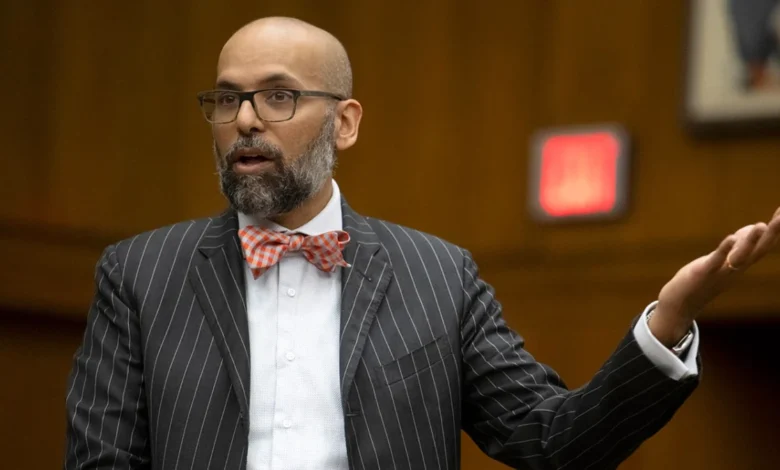
U.S. Magistrate Judge Zia M. Faruqui delivered a sharp reprimand to the Department of Justice during a tense courtroom proceeding in Washington, D.C., lambasting prosecutors for attempting to introduce sudden, late-night felony obstruction charges against two former high-ranking Federal Bureau of Investigation officials without prior judicial clearance.
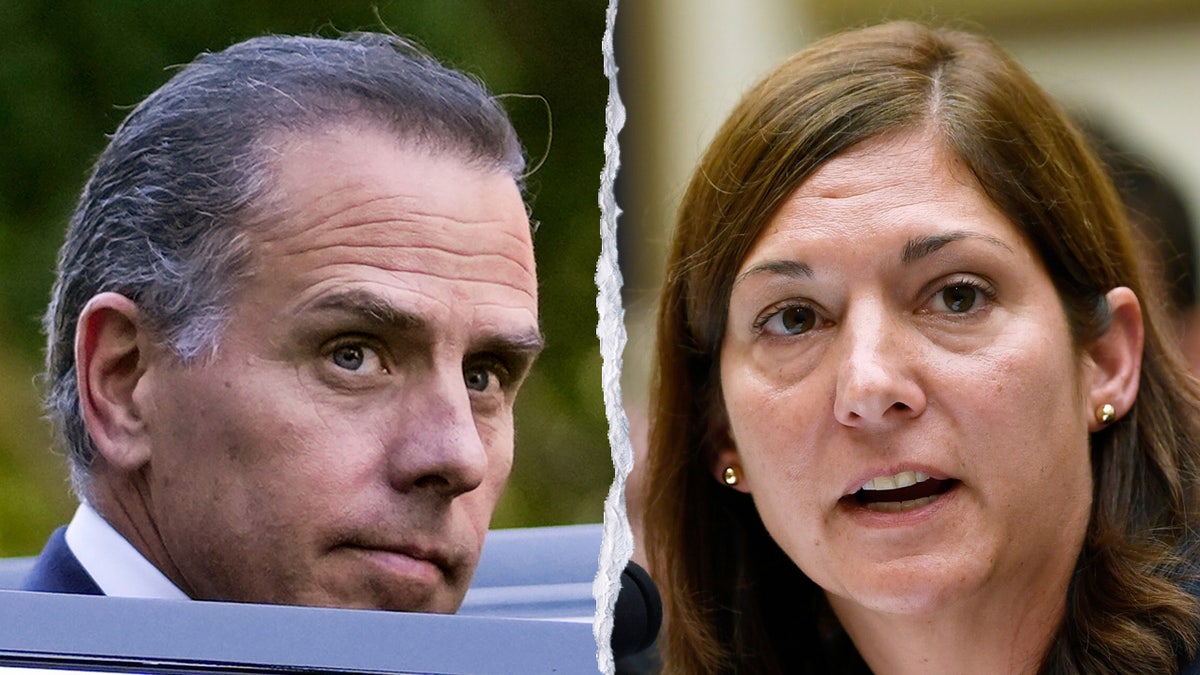
The legal confrontation centers on former FBI officials Nikki Floris and Bradley Benavides, who were arrested and charged in connection with statements they provided to congressional committees regarding the agency’s handling of investigations into Hunter Biden, the son of former President Joe Biden. The case has quickly evolved into a high-stakes legal and political flashpoint, drawing intense scrutiny not only over the substance of the allegations against the former law enforcement veterans, but also regarding the aggressive procedural tactics employed by the U.S. Attorney’s Office for the District of Columbia.
The Midnight Filing and Judicial Rebuke
The procedural controversy unfolded rapidly hours before a scheduled preliminary hearing in which the federal government was legally obligated to establish probable cause for its initial charges. Instead of relying on their original complaint, federal prosecutors submitted a superseding criminal complaint during the overnight hours. The revised legal document sought to tack on new felony obstruction counts against both Floris and Benavides while simultaneously softening several critical factual assertions regarding their alleged involvement in the Hunter Biden investigations.
Crucially, the late-night filing was neither signed nor sworn, and it completely bypassed the standard requirement for prior judicial review and authorization.
Taking the bench, Judge Faruqui did not conceal his profound displeasure with the maneuver, questioning the unprecedented nature of the government’s actions. "I think they should have filed nothing," Faruqui stated during the proceedings, according to courtroom transcripts. "They never had complaints filed on their record that are unsigned, waiting for a judge to make a probable cause finding. I think that it is inappropriate and harms the defendant. I’m frustrated that I got it in the middle of the night, but I’m much more concerned that it’s filed on the public record."

Addressing prosecutor John Borchert directly, Faruqui pressed the government for an explanation regarding the procedural break from historical norms. "Why today on this one case have you changed the entire history of how you charge cases? What is it? It appears that—it makes it look like the United States is afraid of me trying to find probable cause."
Borchert acknowledged during the hearing that it was the first instance in which he had filed new charges against a defendant without securing prior judicial review. Ultimately, Judge Faruqui rejected the superseding complaint, ruling that prosecutors had failed to obtain the mandatory judicial authorization. This decision allowed the scheduled preliminary hearing to proceed strictly on the basis of the original allegations that Floris and Benavides misled Congress.
Background Context and the Core Allegations
The roots of the case stretch back to congressional oversight inquiries concerning the scope, depth, and operational independence of federal investigations involving Hunter Biden. Nikki Floris and Bradley Benavides, both decorated career public servants who held influential positions within the bureau, found their past congressional testimonies scrutinized by investigators.
The Justice Department initially alleged that the two officials deliberately misrepresented their personal involvement and the extent of the bureau’s investigative measures regarding Hunter Biden during hearings on Capitol Hill. According to the initial filings, prosecutors asserted that Floris and Benavides were at the "center" of relevant investigative activities, with Floris specifically accused of participating in "scores of conversations" tied to the matter.
However, the controversial superseding complaint revealed a noticeable softening of this language. In the revised document, prosecutors altered their characterization, describing Benavides and Floris as merely having been "involved in" the Foreign Influence Task Force’s work regarding the younger Biden. Furthermore, references to Floris engaging in "scores of conversations" were dialed back to a broader assertion that she participated in generalized "conversations."
Defense attorneys seized upon these linguistic discrepancies to challenge the underlying credibility and factual integrity of the government’s case. Lawyers for Floris argued that shifting the narrative overnight suggested the original charges were hastily constructed or exaggerated.

Defense Reactions and Allegations of Publicity Stunts
Legal teams representing the indicted former FBI officials mounted a vigorous defense, condemning the DOJ’s handling of the prosecution as an unprecedented breach of standard protocol designed to manipulate public opinion rather than pursue objective justice.
In a scathing joint statement provided to media outlets, Floris’ legal representatives did not mince words regarding the midnight filing. "What is going on at the D.C. U.S. Attorney’s Office? In the middle of the night, the government filed an unsigned and unsworn complaint attempting to fix the issues with their original charge against Ms. Floris and adding a new charge just as meritless as the first one," the statement read.
"In our combined decades of DOJ service, we have never seen or even heard of something like this being filed," the defense team continued. "That’s because the public lodging of criminal charges must be authorized by the grand jury, a judge, or the defendant herself. Here, the government has taken that power for itself in a desperate attempt to delay our client’s right to challenge the charges in court and litigate this case in the media, rather than the courtroom."
Legal experts observing the case have noted that utilizing criminal complaints instead of seeking an indictment through a traditional grand jury is a procedural shortcut traditionally reserved for urgent situations where an imminent threat to public safety exists. The decision by prosecutors to bypass a grand jury in this instance—combined with the timing of the arrests just days before major midterm elections—has fueled widespread accusations from critics that the prosecution is politically motivated.
Judge Faruqui’s Judicial Record and Past Controversies
The presiding judge in the matter, Zia M. Faruqui, is no stranger to intense public scrutiny and political controversy. Appointed to the federal bench in the U.S. District Court for the District of Columbia, Faruqui has previously drawn sharp rebukes from conservative lawmakers and commentators over various judicial decisions, administrative stances, and policy positions.
Critics have frequently targeted Faruqui for his vocal support of diversity, equity, and inclusion (DEI) initiatives within the legal community, as well as his rulings and commentary regarding Immigration and Customs Enforcement (ICE) enforcement actions and pretrial detention standards.
Most notably, Faruqui recently ignited a firestorm of political debate when he formally apologized to Cole Allen, the individual accused of attempting to assassinate President Donald Trump during the 2026 White House Correspondents’ Association Dinner. During that proceeding, Faruqui expressed visible dismay over the government’s treatment of the defendant, specifically criticizing the use of five-point physical restraints on a suspect with no prior criminal record.
"To me, it’s extremely disturbing that he was put in five-point restraints, a person with no criminal history," Faruqui remarked during a prior hearing on the matter. "It’s troubling. I never heard of one Jan. 6 defendant who was put in five-point restraints or in a safe cell. If the only way to keep him safe is the most punitive thing, that’s a problem."
His critics have pointed to these past remarks as evidence of judicial bias, while supporters maintain that Faruqui is a meticulous jurist committed strictly to constitutional protections, procedural due process, and the rule of law.
Broader Implications for the Department of Justice
The direct clash between a federal magistrate judge and the U.S. Department of Justice highlights systemic tensions regarding prosecutorial overreach, transparency, and the integrity of federal charging documents.
By drawing a hard line against the submission of unsigned, unverified documents designed to circumvent a judicial probable cause hearing, Judge Faruqui’s ruling serves as a stark reminder of the judiciary’s gatekeeping role. Legal scholars suggest that the incident could prompt closer judicial oversight of emergency or last-minute filings by federal prosecutors in high-profile political and institutional cases.
As the legal proceedings against Nikki Floris and Bradley Benavides move forward, the defense teams are expected to press their motions challenging the validity of the initial charges and the underlying motivations driving the prosecution. Meanwhile, the Department of Justice faces mounting pressure to justify its unprecedented procedural actions before an increasingly skeptical federal bench.