Climate Superfund Laws Face Uncertain Future as Legal Challenges Mount Against State-Led Fossil Fuel Accountability Efforts

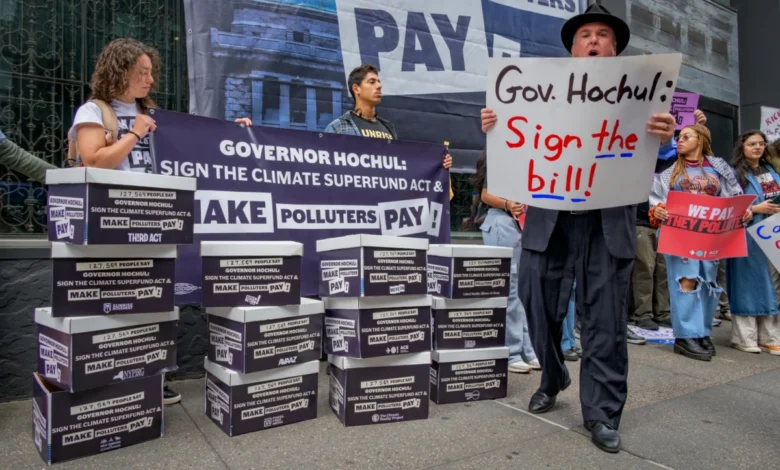
The legal architecture designed to force fossil fuel companies to pay for the consequences of climate change is currently undergoing a period of intense judicial scrutiny. Last week, a federal judge in New York dealt a significant blow to the state’s “Climate Change Superfund Act,” a landmark piece of legislation signed in 2024 that sought to hold major oil and gas corporations financially liable for the damages wrought by a warming planet. The court’s decision to block the law, citing federal preemption under the Clean Air Act, has sent shockwaves through state legislatures across the country, prompting a reevaluation of how state governments can assert control over climate-related costs.
This ruling arrives at a pivotal moment. With Vermont being the only other state to successfully enact a similar statute, the momentum behind climate accountability legislation is now balanced precariously between local political ambition and the impending intervention of the U.S. Supreme Court. As legal experts, lawmakers, and corporate interests prepare for the next phase of this high-stakes battle, the outcome of a looming federal case threatens to render these state-level efforts moot, potentially stripping states of their ability to seek restitution for billions of dollars in climate-driven infrastructure and recovery costs.
A Chronology of the Climate Accountability Movement
The concept of “Climate Superfund” legislation is modeled after the federal Comprehensive Environmental Response, Compensation, and Liability Act (CERCLA) of 1980. That landmark federal law was established to ensure that chemical and petroleum companies were held responsible for the cleanup of toxic waste sites. Climate advocates adapted this framework to address the modern crisis of global warming, arguing that fossil fuel companies—which have long known about the climate-altering effects of their products—should contribute to the immense costs of adapting to the damage they have caused.
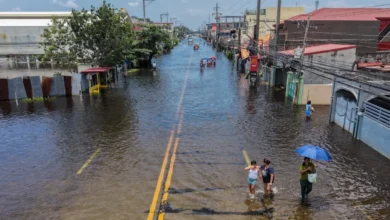
The legislative push intensified following the 2024 enactment of New York’s climate law, which aimed to secure $75 billion from major fossil fuel firms. This funding was earmarked for critical infrastructure projects, including the upgrading of stormwater drainage systems, the construction of seawalls, and the installation of advanced cooling systems for public buildings to combat rising temperatures.
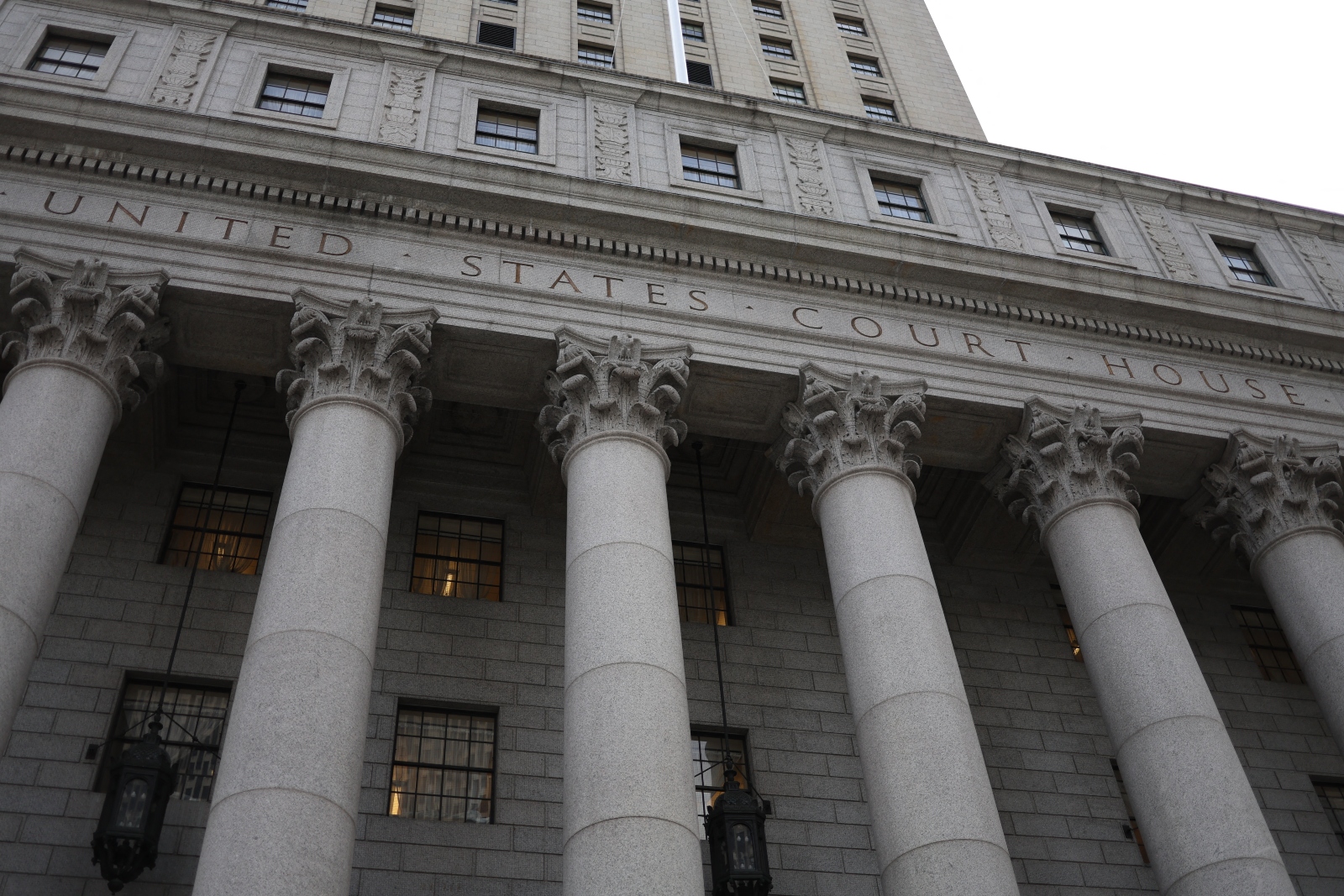
However, the path to implementation has been anything but smooth. Since its passage, the law has been the subject of a relentless series of legal challenges led by a coalition of fossil fuel entities and a bloc of 22 state attorneys general. These plaintiffs argued that the state’s attempt to levy these costs was an overreach that encroached upon federal authority, specifically the Clean Air Act. In the recent ruling, Judge Brenda Sannes of the U.S. District Court for the Northern District of New York sided with the plaintiffs, characterizing the state law as being “simply beyond the limits of state law.”
The Legislative Response: Persistence in the Face of Adversity
Despite the setback in New York, the resolve among lawmakers in other jurisdictions remains remarkably firm. In recent interviews, representatives from states including Connecticut, Hawaii, Rhode Island, and New Jersey have signaled that the New York rulings do not necessarily signal the end of their own legislative efforts.
For many, the legal hurdles in New York are viewed as a temporary obstacle rather than a terminal defeat. Representative Jennifer Boylan of Rhode Island, a vocal proponent of climate accountability, has stated her intention to reintroduce her own version of the legislation in the upcoming session. “I’m full speed ahead,” Boylan remarked, dismissing the notion that the New York court’s decision would cause a mass abandonment of similar bills elsewhere as a “convenient strategy” employed by opponents to instill fear in legislators.
In Hawaii, state Senator Karl Rhoads, who championed a similar bill last year, echoed this sentiment. He suggested that the ruling does not fundamentally alter the necessity for such laws, noting that there is no logical reason for states to halt their pursuit of justice for climate damages. Similarly, in New Jersey, Senator John McKeon has continued to advocate for a climate superfund bill, pointing out that his state operates within a different judicial circuit and under distinct legal precedents, which he believes provides a pathway for his state’s legislation to withstand similar scrutiny.
The Looming Supreme Court Threshold: Suncor v. Boulder County
While state-level debates continue, all eyes are now fixed on the U.S. Supreme Court, which is scheduled to begin hearing Suncor v. Boulder County next week. This case, which originated from a 2018 lawsuit brought by Boulder County and the City of Boulder, Colorado, against energy giants Suncor and Exxon Mobil, represents the most significant threat to the state-led climate accountability movement.
The fundamental question before the Supreme Court is whether these climate lawsuits are fundamentally an attempt to dictate federal climate policy, thereby placing them under the purview of federal, rather than state, law. If the Court rules that federal law preempts state-level attempts to seek damages, the impact would be seismic. Such a decision would likely invalidate all existing and future state-level climate superfund laws, as well as broader categories of litigation, including consumer rights cases, racketeering claims, and antitrust actions.
Pat Parenteau, an emeritus professor at the Vermont Law School, warns of the potential for a catastrophic outcome for states. “Worst case, they rule that federal law—both statutory and constitutional federal law—preempts all of these cases,” Parenteau explained. He noted that such a ruling could leave states with “billions and billions of dollars piling up with no recourse,” effectively insulating the fossil fuel industry from the financial liabilities associated with their contributions to climate change.
The Role of Regulatory Preemption and Judicial Strategy
The legal environment is further complicated by the divergent views of legal scholars regarding how states should proceed. Rachel Rothschild, an assistant professor at the University of Michigan Law School, suggests that while states have the right to pursue their own initiatives—given that they are not strictly bound by the decisions of lower federal courts in other states—a negative ruling from the Supreme Court would create a binding precedent that would be impossible to circumvent.
Conversely, some experts see a potential middle ground. Jonathan Adler, a professor at the William and Mary Law School, suggests that the Supreme Court could provide a “yardstick” for future litigation. If the Court rules in favor of the plaintiffs in Suncor, it might still provide guidance on what specific types of claims are permissible. For instance, the Court could delineate that states may only seek damages for pollution directly traceable to emissions within their own borders, or that they are limited to specific, demonstrated harms. Such a ruling would provide a narrower, yet viable, roadmap for states to follow in drafting future legislation.

Political Backlash and the Future of Climate Accountability
The legal battle has also become a focal point of partisan political maneuvering. Republican attorneys general, particularly from states with significant fossil fuel interests, have been aggressive in their opposition. West Virginia Attorney General JB McCuskey has publicly stated that if any state attempts to pass a policy similar to New York’s, his office will initiate a lawsuit “almost instantaneously.” This aggressive stance is mirrored by industry-backed groups that have intensified their lobbying efforts, calling for the immediate repeal of existing superfund laws in states like Vermont.
In New Hampshire, the struggle to pass climate accountability measures has been largely stymied by a Republican-controlled legislature. Representative Tony Caplan, who previously sponsored a bill to quantify the costs of climate damage to the state, has shifted his focus toward broader decarbonization efforts. Caplan noted that the “lawfare” is likely to continue, acknowledging that even if the current legal landscape is challenging, the pressure for accountability remains a critical issue for many states.
Implications for the Broader Climate Agenda
As the judiciary prepares to weigh in, the implications for the broader climate agenda remain stark. Should the Supreme Court decide to “punt” on the Suncor case—arguing that it has not yet completed its journey through the state court system—it would provide a temporary reprieve for proponents of climate accountability. However, such an outcome would leave the current “bad law” in place, with conflicting rulings across different circuits creating a fragmented legal landscape.
For now, the battle over climate superfund laws remains in a state of suspended animation. The financial burden of climate change—from disaster recovery to the permanent alteration of coastal infrastructure—is not disappearing, and the political pressure to find a source of funding for these costs is only mounting. Whether the states will ultimately succeed in forcing the fossil fuel industry to foot the bill, or whether the federal judiciary will permanently bar such attempts, will likely be determined in the coming months.
Ultimately, the conflict highlights a fundamental tension in American governance: the struggle between state-level innovation in addressing localized environmental impacts and the desire for a unified, federal approach to managing the externalities of the global energy industry. As the nation awaits the Supreme Court’s decision, the outcome of this dispute will undoubtedly shape the trajectory of climate policy for decades to come, defining not only who is responsible for the costs of a warming world but also the extent to which states can act to protect their citizens from the encroaching reality of climate change.