Usman Khawaja claims entire Australian dressing room was aware of 2018 Cape Town ball-tampering plot

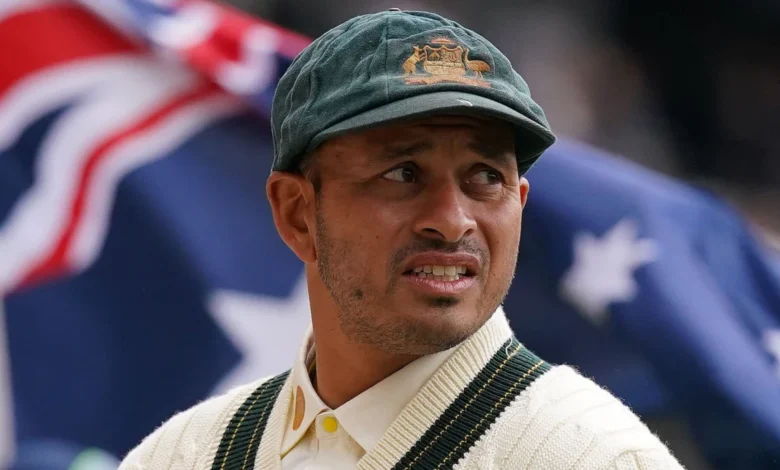
The 2018 ball-tampering scandal, which fundamentally altered the landscape of Australian cricket, has been thrust back into the spotlight following a startling admission from former opening batter Usman Khawaja. In his newly released book, titled Sabr, Khawaja asserts that the knowledge of the illegal plot to manipulate the condition of the ball during the third Test against South Africa was not confined to the three players sanctioned by Cricket Australia (CA) at the time, but was instead shared by the entire dressing room. This revelation challenges the long-standing narrative maintained by governing bodies and several key players for the better part of a decade.
The Cape Town Incident: A Chronology of a Crisis
The controversy erupted on March 24, 2018, at Newlands Cricket Ground in Cape Town. During the third day of the Test, television cameras captured Cameron Bancroft concealing a piece of yellow sandpaper down the front of his trousers after working on the ball. The immediate fallout was swift and severe.
By the end of the match, it was confirmed that the Australian leadership group had orchestrated a plan to alter the ball’s surface to gain an unfair advantage. The subsequent investigation by Cricket Australia resulted in unprecedented disciplinary action: captain Steve Smith and vice-captain David Warner were suspended from international and domestic cricket for 12 months, while Bancroft received a nine-month ban. Darren Lehmann, the then-head coach, eventually resigned from his post, though he was not officially implicated in the scheme by the CA investigation.
Khawaja’s account suggests that the origins of the plot date back even further than the Cape Town match. He reveals that discussions regarding the potential for tampering occurred during the second Test in Port Elizabeth. This timeline implies a more systemic failure of culture within the team than previously acknowledged by the official inquiry, which focused primarily on the actions taken at Newlands.

Breaking the Silence: Khawaja’s Revelations
In his book, Khawaja offers a candid look at the atmosphere within the Australian camp during that turbulent series. He writes, "It was all of us. Not the batters, not the bowlers, not the staff. All of us." This sweeping statement serves as a direct rebuttal to the compartmentalized narrative that painted Smith, Warner, and Bancroft as isolated actors.
Khawaja reflects on his attempts to console his teammates in the immediate aftermath of the scandal. "Even in the change rooms when I was talking to them after the game," he recounts, "I said: ‘Take this as a team. We did this as a team. We knew what was going on. We have to take it as a team’." Despite his insistence that the group share the burden of responsibility, the team’s formal response followed a different path. Khawaja admits he had hoped the truth would surface organically over the years, expressing surprise that it remained a point of contention for eight years. He notes, "I don’t want to be the one who comes out and talks about the truth… I genuinely thought after eight years the truth would have been out by now."
Conflicting Narratives and Official Responses
The sports world has long grappled with the "how much did they know" question regarding the Australian bowling attack. In 2021, the quartet of Pat Cummins, Mitchell Starc, Josh Hazlewood, and Nathan Lyon issued a joint statement to quell persistent rumors. They stated categorically: "We did not know a foreign object was taken onto the field to alter the condition of the ball until we saw the images on the big screen at Newlands."
This denial was prompted by an interview given by Cameron Bancroft, who, when asked if the bowlers were aware of the sandpaper, replied, "I think it’s probably self-explanatory." That ambiguity fueled years of speculation and public distrust. Khawaja’s latest testimony significantly complicates the defense mounted by the bowlers. By asserting that the "entire dressing room" was privy to the plan, he effectively places the responsibility on the collective, suggesting that the bowlers’ joint statement—while perhaps technically true regarding the object—ignored the broader awareness of the intent within the team culture.
Statistical Context and Competitive Pressure
To understand why such a high-stakes team would resort to illicit methods, analysts often point to the intense pressure of the 2018 series. Australia was struggling to maintain dominance in foreign conditions, and the tactical battle against South Africa had become increasingly vitriolic.
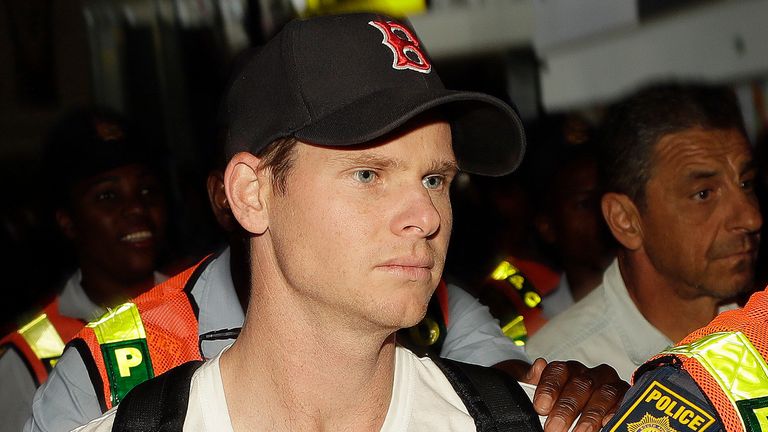
At the time of the scandal, Australia’s bowling attack was under immense scrutiny to deliver reverse swing, a skill that requires the ball to be meticulously maintained. The physical condition of the ball is a critical component of Test match strategy. By using sandpaper, the players were attempting to artificially create the conditions necessary for reverse swing, a move that highlights the desperation within the team to secure a win. The long-term impact on the players’ careers was significant: Smith, Warner, and Bancroft suffered not only financial losses but also a profound loss of reputation that took years to rebuild.
Implications for Australian Cricket
The implications of Khawaja’s disclosure are twofold: institutional and interpersonal. Institutionally, this raises questions about the thoroughness of the 2018 Cricket Australia integrity investigation. If the entire team was aware, the decision to scapegoat three players suggests a desire to contain the damage and protect the broader brand of Australian cricket, rather than conducting a transparent inquiry.
Interpersonally, the revelation may stir resentment among those who felt they bore the brunt of the public’s ire while others escaped unscathed. Khawaja acknowledges this tension, stating, "Obviously, it didn’t work that way, and those three guys got crucified." He believes that bringing this truth to light is a necessary step toward genuine closure. For a team that has since undergone a significant cultural shift under the leadership of figures like Pat Cummins, these revelations could force a final, uncomfortable reckoning with the past.
The Cultural Shift and Moving Forward
Since 2018, Cricket Australia has overhauled its "Code of Conduct" and implemented rigorous mental health and leadership training programs. The "win-at-all-costs" mentality, which many critics argued was the root cause of the Cape Town incident, has been systematically challenged by successive coaching staffs and captains.
However, the lingering question of honesty remains a scar on the team’s history. Khawaja’s book acts as a catalyst for a discussion that many in the sport likely hoped would remain buried. By speaking out, he has prioritized personal integrity over the preservation of a curated team narrative. Whether this will lead to a formal reopening of inquiries or simply remain a chapter in the history of a disgraced era remains to be seen.

As the cricketing world digests these revelations, the focus will inevitably return to the players involved. Steve Smith, now a veteran of the game, and David Warner, who recently retired from international duty, have both spent the last eight years attempting to move past the stigma of "Sandpaper-gate." Khawaja’s assertion that the team should have stood together—and indeed, that the team did know—highlights a failure of leadership that transcended the captaincy of Steve Smith.
In the final analysis, the Cape Town ball-tampering scandal was not merely an error in judgment by three individuals, but a reflection of a collective culture that had lost its ethical compass. By shedding light on the full scope of that awareness, Khawaja provides the final piece of a puzzle that has haunted the sport for nearly a decade. Whether this brings the "relief" he hopes for or further complicates the legacies of the 2018 squad is a matter that will likely be debated for years to come. The truth, as Khawaja suggests, has finally emerged from the shadows, leaving a indelible mark on the annals of Test cricket history.