The Methane Imperative: Understanding the Climate Crisis’s Most Potent Lever for Immediate Global Cooling

Methane is a colorless, odorless, and highly potent greenhouse gas that has emerged as the second most significant contributor to anthropogenic climate change, trailing only carbon dioxide in its total warming impact. Despite its shorter atmospheric lifespan—approximately 12 years compared to the centuries-long persistence of CO2—methane possesses an extraordinary ability to trap heat, with a global warming potential over 80 times that of carbon dioxide on a 20-year timescale. As global temperatures continue to climb, the role of methane in both driving and responding to climate change has placed it at the center of international climate policy and environmental scientific research.
The Chemistry and Sources of Atmospheric Methane
At its molecular level, methane is a hydrocarbon (CH4) consisting of a single carbon atom bonded to four hydrogen atoms. It is generated through both natural and human-led processes. Natural emissions originate largely from wetlands, where anaerobic microorganisms known as archaea engage in methanogenesis—a respiration process that occurs in oxygen-deprived environments. Termites, wild animals, geological seeps, and thawing permafrost also contribute to the natural methane budget.

However, since the onset of the Industrial Revolution, human activities have fundamentally altered the atmospheric balance. Approximately 60 percent of current methane emissions are directly attributable to human industry, primarily driven by three sectors: agriculture, fossil fuel production, and waste management. Within agriculture, enteric fermentation—the digestive process in ruminant livestock like cattle and sheep—remains the largest single human-linked source. Simultaneously, the fossil fuel industry contributes through intentional venting, flaring, and, more critically, fugitive emissions from leaky pipelines and infrastructure.
A Chronology of Methane Oversight and Policy
The global awareness of methane’s climate impact has evolved significantly over the last two decades. While the Kyoto Protocol (1997) included methane as one of the six primary greenhouse gases subject to reduction targets, it was often overshadowed by the focus on carbon dioxide.
A shift occurred in the early 2020s as advancements in satellite remote sensing—such as the deployment of instruments like TROPOMI and GHGSat—began to reveal the true scale of "super-emitting" events. These technologies allowed scientists to pinpoint massive, localized leaks in the oil and gas sector that were previously invisible to ground-based reporting.

This technological leap set the stage for the 2021 COP26 summit in Glasgow, where the United States and the European Union spearheaded the Global Methane Pledge. This initiative committed participating nations to a collective goal of reducing human-caused methane emissions by at least 30 percent from 2020 levels by 2030. As of 2025, over 150 nations have signed onto this pledge, signaling a global consensus on the urgency of methane mitigation. Despite these pledges, emissions data from 2023 and 2024 indicate that atmospheric concentrations continue to hit record highs, underscoring a significant implementation gap between diplomatic promises and industrial reality.
The Data Gap: Bottom-Up vs. Top-Down Measurements
One of the most persistent challenges in methane management is the discrepancy between how emissions are calculated. Historically, the industry has relied on "bottom-up" accounting, which uses emission factors—multiplying the number of equipment pieces by an estimated average leak rate. This method frequently underestimates actual emissions because it fails to account for "fat-tail" distributions, where a small fraction of malfunctioning equipment or major accidents is responsible for the vast majority of total leakage.
Conversely, "top-down" methods—utilizing satellites, aircraft, and high-altitude sensors—provide a more accurate, objective view of the atmosphere. Studies comparing these methodologies have repeatedly found that official government inventories, including those from the U.S. Environmental Protection Agency (EPA), often undercount methane emissions from the oil and gas sector by as much as 60 percent. This realization has forced regulators to demand more stringent, sensor-based reporting requirements, moving away from relying on company-reported estimates.

The Bridge Fuel Myth and Economic Implications
For years, the natural gas industry promoted its product as a "bridge fuel," arguing that because natural gas produces roughly half the carbon dioxide of coal when burned, it was a necessary transition step toward renewable energy. However, this narrative has been increasingly debunked by life-cycle analyses.
When methane leakage during extraction, processing, and transportation is factored into the total warming potential of liquefied natural gas (LNG), the climate benefits of gas over coal effectively vanish. Recent research published in 2023 suggests that, over a 20-year horizon, the warming impact of LNG can actually exceed that of coal if leak rates exceed a relatively low threshold. Furthermore, the massive buildout of LNG export terminals, particularly in the United States, risks "locking in" fossil fuel infrastructure for decades, potentially stalling the necessary transition to wind, solar, and battery-based power grids.
Positive Feedback Loops: The Climate Tipping Point
Perhaps the most alarming aspect of methane is its involvement in positive climate feedback loops. As the planet warms, ecosystems that store methane begin to release it, which in turn causes further warming.

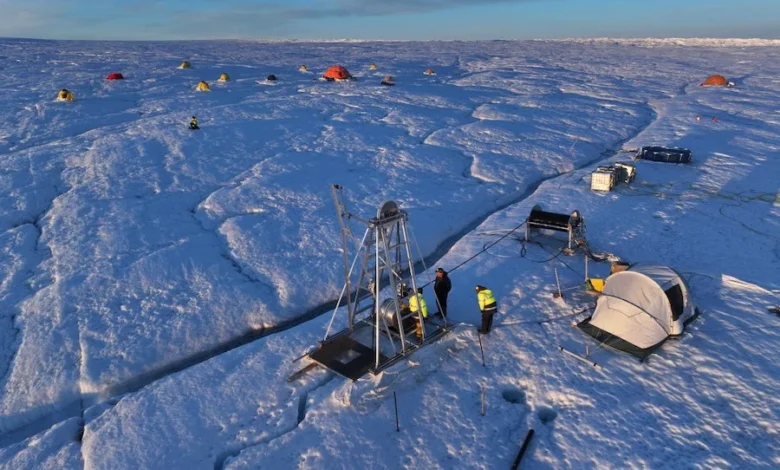
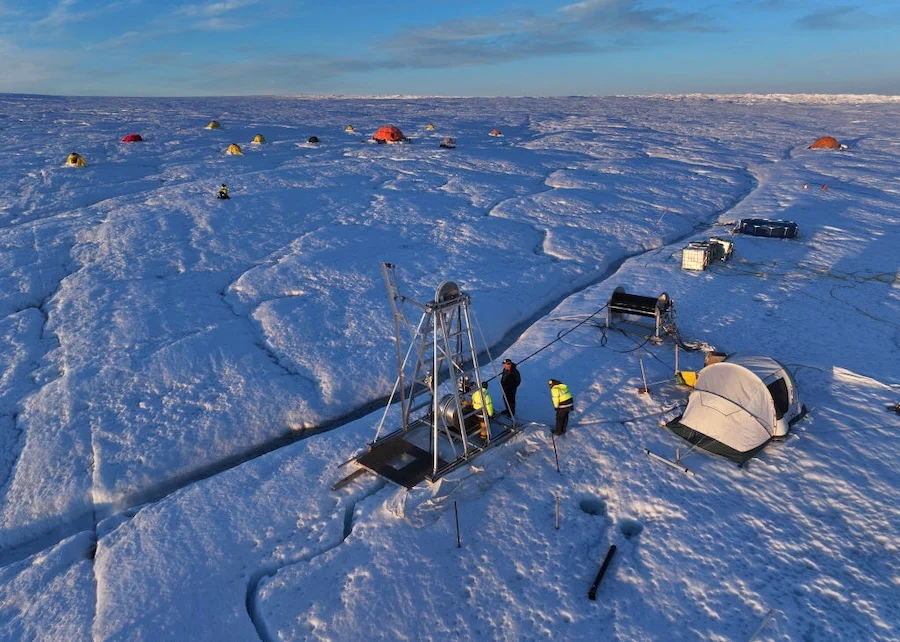
The most prominent example is the Arctic permafrost. Vast quantities of carbon and methane are locked beneath the frozen tundra. As these areas thaw, microbial activity accelerates, releasing greenhouse gases that had been sequestered for millennia. Similarly, rising temperatures in tropical regions have expanded wetland areas, leading to what scientists call "exceptional growth" in wetland methane emissions. These feedback loops create a "vicious cycle" where climate change acts as a catalyst for its own intensification, making the rapid reduction of human-caused methane even more vital to prevent hitting irreversible tipping points.
Public Health and Co-Benefits of Reduction
The case for reducing methane is not limited to climate mitigation; it also offers immediate public health benefits. Methane is a precursor to ground-level ozone, a potent respiratory irritant. Ozone exposure is linked to thousands of premature deaths annually due to cardiovascular and respiratory failure, and it significantly damages agricultural yields by stunting plant growth.
Estimates from the Global Methane Assessment suggest that every million metric tons of methane avoided could prevent thousands of asthma-related hospitalizations and protect significant portions of the global wheat and soybean supply. By tackling methane, policymakers are not only stabilizing the climate but also cleaning the air in industrial and agricultural corridors.

Strategies for Mitigation
Achieving the 34 percent reduction in methane by 2030—the target identified by the IPCC to keep the 1.5°C climate goal within reach—requires a multi-pronged approach:
- Fossil Fuel Infrastructure: The most immediate gains can be made by implementing leak detection and repair (LDAR) programs, phasing out routine venting and flaring, and upgrading pneumatic controllers to electric versions. The International Energy Agency (IEA) estimates that many of these measures can be implemented at low or even negative cost, as the captured methane can be sold rather than wasted.
- Agricultural Innovation: Livestock emissions can be addressed through dietary supplements, such as specific seaweed additives that have shown the potential to reduce methane production in cattle by over 50 percent. Furthermore, shifting to "Alternative Wetting and Drying" in rice cultivation can significantly curb emissions from flooded paddies.
- Waste Management: Transitioning to a circular economy is essential. Diverting organic waste from landfills to composting facilities, and installing methane capture technology at wastewater treatment plants, can turn potential pollutants into useful energy sources.
Conclusion: The Urgency of Now
The current state of methane emissions presents a defining paradox: it is one of our most dangerous climate threats, yet it is also our greatest opportunity for rapid progress. Because methane is short-lived, any success in cutting emissions will result in a near-term decline in its atmospheric concentration, offering a tangible "cooling effect" within years rather than decades.
As global leaders and corporations face increasing pressure to fulfill the promises made in the Global Methane Pledge, the focus must shift from ambition to enforcement. The era of relying on voluntary industry reporting is coming to a close, replaced by an era of satellite-verified accountability. For the global community, the mandate is clear: by treating methane as a priority pollutant rather than a manageable byproduct, we can effectively dampen the rate of global heating and provide a critical buffer for the climate systems that sustain life on Earth.