Following the Cinematic Footsteps of Panem: Where Was The Hunger Games: Sunrise on the Reaping Filmed


The enduring cinematic footprint of Suzanne Collins’ dystopian universe continues to expand as Lionsgate brings the sixth installment of the franchise to the silver screen. Following the release of The Ballad of Songbirds and Snakes, audiences are once again transported to the authoritarian nation of Panem in The Hunger Games: Sunrise on the Reaping. Set 24 years prior to the events of the original trilogy, the narrative explores the origins of the milestone 50th Hunger Games—the Second Quarter Quell—and chronicles the formative experiences of a young Haymitch Abernathy, a character made iconic by Woody Harrelson in the initial film adaptations.
This latest prequel introduces a fresh generation of talent alongside established cinematic heavyweights. Newcomer Joseph Zada steps into the demanding role of the young Haymitch, joined by Whitney Peak as Lenore Dove Baird, while an ensemble cast featuring Ralph Fiennes, Glenn Close, Elle Fanning, and Kieran Culkin populates the complex political and social hierarchy of the Capitol. Directed by Francis Lawrence, who has helmed the majority of the franchise’s cinematic entries, the production leans heavily into authentic, physical locations rather than relying solely on green screens and computer-generated imagery. This dedication to practical geography has taken the international production crew from the rugged terrain of northern Spain to the striking, industrialized landscapes of Germany.
A Detailed Production Timeline and Franchise Chronology
To fully understand the geographical scope of Sunrise on the Reaping, one must examine the timeline of the franchise both in terms of narrative chronology and production history. Suzanne Collins first introduced readers to the world of Panem in 2008 with the publication of The Hunger Games, followed by Catching Fire in 2009 and Mockingjay in 2010. The cinematic adaptations began in 2012 under Lionsgate, rapidly establishing a global cultural phenomenon that grossed billions of dollars worldwide.

The prequel era commenced with the release of The Ballad of Songbirds and Snakes, which focused on the 10th Hunger Games and the early life of Coriolanus Snow. Sunrise on the Reaping shifts the timeline forward to the 50th Hunger Games, an event historically significant within the lore because it featured double the standard number of tributes—four from each district instead of two—resulting in 48 young contestants entering the arena.
Pre-production for the film began quietly as scripts were finalized, with principal photography officially kicking off in mid-2024 across various European sites chosen for their distinct architectural and natural contrasts. The deliberate choice to space out these prequels allows Lionsgate to maintain a consistent cinematic universe while exploring different socio-political eras of Panem before the catalyst of Katniss Everdeen’s rebellion.
The Arena: Somiedo Natural Park and the Wilds of Asturias
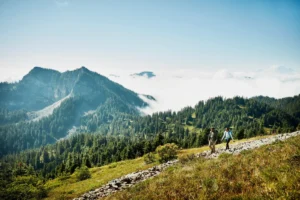
Within the narrative mechanics of the franchise, the arena is designed by Gamemakers to be a psychological and physical torture chamber, shifting between lethal natural hazards and awe-inspiring beauty. For the Second Quarter Quell, director Francis Lawrence and supervising location manager Pedro Aráez selected the breathtaking Somiedo Natural Park, situated within the Asturias region of northern Spain.
Recognized as a UNESCO Biosphere Reserve, Somiedo Natural Park provided the production with glacial valleys, sprawling meadows, ancient beech forests, and dramatic mountain ranges. This untouched landscape served as the primary backdrop for the tributes’ initial bloodbath around the Cornucopia, as well as the grueling weeks of survival that followed.

"Somiedo is a spectacular place," noted Pedro Aráez during production notes released by the studio. "The valleys, forests, and mountains have a very wild, untouched feeling, which was exactly what the filmmakers were looking for. It’s remote, dramatic, and visually unique. When you arrive there, you immediately understand why it was chosen."
Adjacent locations within Asturias further expanded the physical boundaries of the arena. The Teverga beech forest, known locally as the Hayedo de Montegrande, was utilized for dense, claustrophobic woodland skirmishes where tributes sought shelter from both human adversaries and engineered environmental threats. Additionally, the high-altitude Saliencia Lakes and the Lago de la Cueva provided crystal-clear glacial water backdrops that contrasted sharply with the brutal violence unfolding along their shores.
Architectural Marvels: Reimagining the Capitol in Berlin and Oviedo
While the arena represents the primitive brutality required to maintain the Capitol’s grip on the districts, the seat of government itself demands hyper-modernity, clinical precision, and oppressive scale. To achieve this aesthetic, production designers turned to distinct European architectural landmarks.
The ominous Launch Room—where tributes are held in subterranean pods arranged in a clinical circle prior to their ascent into the arena—was filmed inside Berlin’s iconic Velodrom. Designed with cold, silver metallic finishes and a steeply circular geometry intended for professional cycling, the venue provided the precise sterile environment required to mirror Capitol technology.

For the iconic Tribute Parade, where contestants are showcased to the citizens of Panem on rolling chariots, the production utilized Berlin’s historic Olympiastadion. This venue offers structural grandeur and historical weight, serving as a fitting substitute for the massive public plazas of the Capitol where Katniss Everdeen famously earned her moniker as "the girl on fire" in earlier cinematic iterations.
Meanwhile, the residential and administrative heart of the Capitol found its visual anchor in Oviedo, Spain. The Edificio Calatrava, designed by renowned Spanish architect Santiago Calatrava, served as a primary exterior and interior stand-in for government buildings. Characterized by its striking, organic, claw-like ribs and soaring white skeletal frames, the complex embodies the futuristic yet domineering design philosophy associated with President Snow’s regime. The 14th-century Ehreshoven Castle, located near Cologne, Germany, was also incorporated into the shooting schedule, providing aristocratic interiors that hint at the private lives of the Capitol’s elite.
Industrial Decay: Constructing District 12 in Germany
At the opposite end of Panem’s socio-economic spectrum lies District 12, a impoverished coal-mining region characterized by soot, hardship, and industrial exhaustion. To capture the bleak atmosphere of Haymitch Abernathy’s home, the production secured permissions to film at the Landschaftspark Duisburg-Nord in western Germany.
Spanning roughly 200 hectares, this former ironworks and smelting factory complex offered an expansive canvas of decaying industrial architecture, rusted blast furnaces, and derelict industrial structures. While the site is normally celebrated as a recreational park featuring light installations by British artist Jonathan Park and hosting cultural events like the Ruhr Games, its raw, unpolished aesthetic made it an ideal double for the coal-dependent landscapes of District 12.

Further scenes depicting the outskirts of the district and the humble, timber-framed homes of its working-class residents were filmed at the Lindlar Quarry, also located in Germany. Here, temporary village sets were constructed to simulate the precarious living conditions forced upon the district’s inhabitants.
Broader Economic and Cultural Implications of Location-Based Filmmaking
The strategic reliance on authentic European locations for The Hunger Games: Sunrise on the Reaping underscores a broader shift in major studio filmmaking toward sustainable, localized production economies. By utilizing established parks, stadiums, and industrial monuments rather than constructing entirely digital environments, Lionsgate has minimized post-production digital rendering timelines while injecting substantial capital into regional European economies.
Local tourism boards in Asturias, Berlin, Cologne, and Duisburg have anticipated significant economic upturns, colloquially known as "set-jetting," wherein fans travel internationally to visit the physical sites seen in major motion pictures. Previous entries in the Hunger Games franchise similarly galvanized tourism in locations such as North Carolina and various European capitals, demonstrating the enduring influence of popular media on global travel trends.
As production wraps and promotional campaigns ramp up ahead of the film’s scheduled release, the anticipation surrounding Sunrise on the Reaping reflects the franchise’s continued viability. By blending high-stakes narrative progression with grounded, tangible geography, the creative team has ensured that the descent into the 50th Hunger Games maintains the visceral realism that defined the series from its inception.