The Largest Global Survey of Physicists Reveals Profound Uncertainty Regarding the Fundamental Nature of the Universe

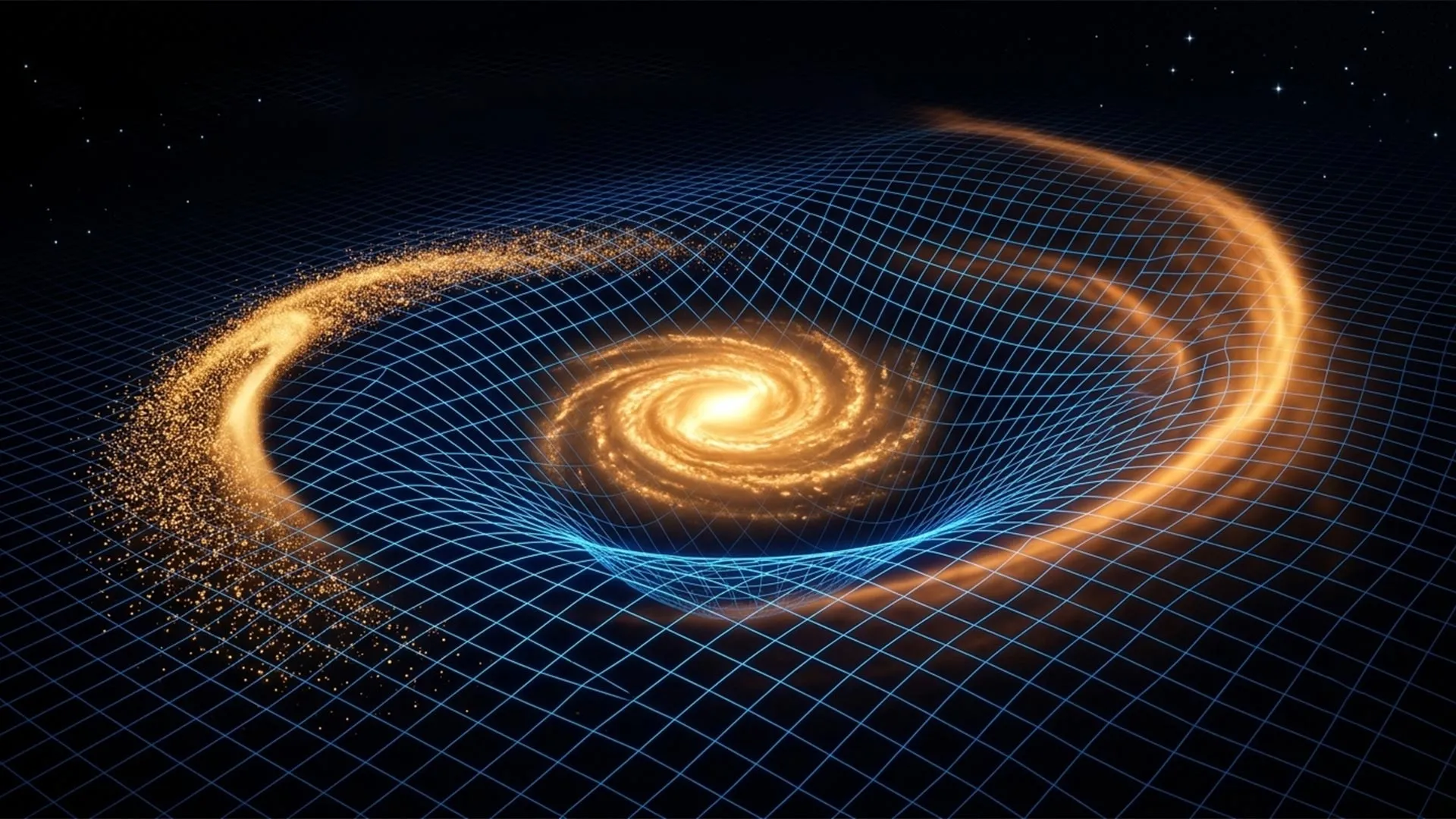
The bedrock of modern physics, long perceived by the public as a field of settled, immutable laws, is currently undergoing a profound internal reckoning. A comprehensive global survey, the largest of its kind ever conducted, has unveiled a striking lack of consensus among the world’s leading physicists on the most fundamental questions defining our existence. From the nature of the dark sector to the incompatibility of general relativity and quantum mechanics, the scientific community remains deeply divided, suggesting that the "frontier" of physics is not a wall of established truth, but a wide-open landscape of competing hypotheses.
The study, led by Dr. Niayesh Afshordi of the Perimeter Institute and the University of Waterloo, in collaboration with Phil Harper and the American Physical Society’s Physics Magazine, serves as a digital census of the current state of theoretical and experimental physics. The results paint a portrait of a discipline that is intellectually vibrant but theoretically fractured, where "standard answers" are increasingly being challenged by new, conflicting data.
A Departure from the Standard Model
For decades, the ΛCDM (Lambda Cold Dark Matter) model has served as the "Standard Model of Cosmology." It posits a universe dominated by dark energy and cold dark matter, with the cosmological constant (Lambda) acting as the driving force behind the universe’s accelerated expansion. However, the survey reveals that this cornerstone of modern cosmology no longer commands a majority of support among the physics community.
This erosion of confidence is likely tied to recent observational developments, most notably the findings from the Dark Energy Spectroscopic Instrument (DESI). DESI’s recent data suggests that dark energy may not be the static constant Einstein once envisioned, but rather a dynamic force that evolves over time. If confirmed, this would necessitate a fundamental rewrite of the ΛCDM model. The survey’s results reflect this hesitation: when asked about the validity of the Standard Model, a significant portion of respondents expressed skepticism, signaling that the community is bracing for a potential paradigm shift.
Chronology of a Shifting Paradigm
The history of modern physics has been characterized by the slow consolidation of consensus, followed by sudden, disruptive discoveries.
- 1915: Albert Einstein publishes the General Theory of Relativity, providing the mathematical framework for gravity that remains the gold standard today.
- 1920s–1930s: The birth of Quantum Mechanics introduces the probabilistic nature of the subatomic world, creating the "incompatibility problem" that persists to this day.
- 1998: Observations of distant supernovae reveal the accelerating expansion of the universe, leading to the adoption of the ΛCDM model and the inclusion of "Dark Energy."
- 2010s: The search for dark matter particles, such as WIMPs (Weakly Interacting Massive Particles), dominates experimental efforts, yielding consistent null results.
- 2024: The current survey captures a community that has largely moved past the era of easy certainty, with researchers now weighing a diverse array of alternative models.
The Big Bang and the Limits of Time
One of the most profound revelations from the survey concerns the "Big Bang." In popular parlance, the Big Bang is frequently synonymous with the "beginning of time." However, the survey indicates that 68% of physicists reject this simplistic interpretation. Instead, the consensus—if it can be called that—is that the Big Bang represents a specific developmental epoch in the early universe, characterized by extreme density and heat.
This distinction is vital. By framing the Big Bang as a phase of development rather than an absolute "T=0" event, physicists are acknowledging that our current mathematical tools, particularly general relativity, break down at the singularity point. This leaves the question of whether time had a definitive beginning entirely open, providing fertile ground for theories like the "Big Bounce" or cyclic universe models.
Cosmic Inflation: A Tenuous Majority
Cosmic inflation—the theory that the universe underwent an exponential, near-instantaneous expansion in the first fraction of a second—remains one of the most significant pillars of early-universe cosmology. Yet, even this theory is struggling to maintain its status as a foundational truth. Only 51% of survey respondents expressed agreement with the theory of inflation.
This thin majority highlights a growing divide between those who see inflation as a necessary explanation for the uniformity of the cosmic microwave background and those who view it as a mathematically over-determined "patch" that lacks empirical confirmation. The division here is not merely academic; it represents a deep-seated philosophical disagreement over how much complexity should be added to our models to account for observations.
The Dark Matter Dilemma
Perhaps the most glaring evidence of theoretical impasse is the lack of consensus regarding dark matter. Despite dark matter being hypothesized to constitute approximately 27% of the universe’s mass-energy content, physicists are nowhere near a consensus on its identity.
- 17% support the hypothesis of a low-mass particle (such as axions or dark photons).
- 12% advocate for MOND (Modified Newtonian Dynamics) or other gravity-based alternatives that eliminate the need for dark matter entirely.
- 21% favor a hybrid approach, suggesting that the "dark sector" may be as complex and multi-faceted as the visible matter sector.
This fragmentation suggests that the hunt for dark matter is entering a "post-WIMP" era, where researchers are moving away from the assumption that the dark sector is composed of a single, easily detectable particle.
The Quantum Gravity Impasse
The quest for a "Theory of Everything"—a framework that reconciles the smooth curvature of general relativity with the discrete, jittery nature of quantum mechanics—has remained the "holy grail" of physics for over half a century. The survey results show that no single approach has emerged victorious.
String theory, once the undisputed titan of theoretical research, is now supported by only 19% of respondents as the most likely path forward. Loop quantum gravity, its primary competitor, sits at 12%. Perhaps most telling is that 18% of the respondents believe that gravity may not be quantizable at all, suggesting a fundamental limit to our ability to unify these two pillars of science. The persistence of these competing theories suggests that the bridge between the macro and micro worlds remains elusive, perhaps because our underlying assumptions about both gravity and quantum mechanics require a radical revision.
Implications: The Value of Disagreement
While some might view this lack of consensus as a sign of intellectual stagnation, the architects of the study argue the opposite. According to Dr. Afshordi, the absence of a unified, majority-backed path forward is actually an indicator of a "genuinely alive" frontier.
"Scientific truth is not decided by a vote," Afshordi noted in his analysis. "Consensus, or its absence, tells us where the evidence feels settled and where researchers still see room for radically different ideas."
This perspective suggests that physics is currently in a state of productive tension. The lack of consensus acts as a diagnostic tool, identifying the specific subfields where the current "standard" models have reached their explanatory limit. In the history of science, periods of intense disagreement have frequently preceded major breakthroughs. When the existing framework can no longer explain the data—as with the potential evolution of dark energy—the resulting friction creates the necessary conditions for new, revolutionary theories to emerge.
The Path Forward
The data from the American Physical Society’s survey provides a road map for the next generation of researchers. By quantifying the uncertainty, the survey highlights the necessity for better data, more rigorous theoretical stress-testing, and a willingness to explore connections between seemingly disparate subfields.
The "cracks" in the current model, to use the metaphor provided by the researchers, are not signs of failure. Instead, they are the very points through which new light can enter. As we move further into the 21st century, the field of physics appears poised to move beyond the rigid constraints of 20th-century paradigms. The uncertainty revealed by this survey may well be the precursor to a new era of discovery—one that could ultimately redefine our understanding of time, gravity, and the composition of the cosmos itself.
For the scientific community, the challenge now is to navigate this period of disagreement with the same rigor and objectivity that defined the great discoveries of the past, acknowledging that the map of the universe is still largely being drawn.